Raleigh is one of the most active cities in North Carolina. From greenway miles along the Neuse River to training runs through Umstead Park, runners here take advantage of year-round outdoor access. But with that consistency comes a common problem: IT band pain and hip pain that just won’t go away.
If you’re a runner in Raleigh dealing with tightness on the outside of your knee, deep hip discomfort, or pain that flares up mid-run, you’re not alone. IT band syndrome and hip-related overuse injuries are among the most common issues seen in sports medicine and chiropractic sports rehab clinics.
Understanding why these injuries happen — and why they’re so common locally — can help you prevent setbacks and recover smarter.
What Is IT Band Syndrome?
The iliotibial (IT) band is a thick strip of connective tissue that runs from the outside of your hip down to the outside of your knee. Its job is to stabilize your hip and knee during walking and running.
When the IT band becomes irritated or tight, it can rub against the outer portion of the knee joint. This leads to:
- Sharp or burning pain on the outside of the knee
- Pain that worsens after a few miles
- Discomfort when running downhill
- Tightness along the outer thigh
This condition is commonly referred to as IT band syndrome — and it’s particularly prevalent among distance runners in Raleigh.
Why Raleigh Runners Are Especially Prone to IT Band & Hip Pain
1. Hills and Elevation Changes
While Raleigh isn’t mountainous, many popular running routes include rolling hills. Repeated uphill and downhill running increases strain on the lateral hip muscles and IT band. Downhill running, in particular, increases friction near the knee.
2. Greenway Surfaces
Greenways are great for reducing joint impact compared to concrete. However, slight banking or uneven surfaces can subtly alter stride mechanics, increasing stress on one side of the body.
3. Year-Round Training
Unlike colder climates, Raleigh runners often train 12 months per year. That consistency is great for performance but increases cumulative load on hips and knees.
4. Rapid Mileage Increases
Many runners ramp up training too quickly before races like the Raleigh Half Marathon or City of Oaks Marathon. Sudden mileage jumps are one of the leading causes of IT band irritation.
The Hip Connection: Why It’s Not Just About the Knee
Many runners assume IT band pain is a knee problem. In reality, it often starts at the hip.
Weak or fatigued hip stabilizers — particularly the gluteus medius — allow the thigh to rotate inward during running. This places increased tension on the IT band and lateral knee structures.
Common contributors include:
- Weak glutes
- Limited hip mobility
- Pelvic imbalance
- Core instability
- Poor running mechanics
When hip dysfunction isn’t addressed, knee pain keeps returning — even if symptoms temporarily improve.
That’s why structured care like sports rehabilitation focuses on movement correction rather than just reducing inflammation.
Signs Your IT Band or Hip Pain Is Becoming Chronic
Acute soreness can happen during heavy training cycles. But if you notice:
- Pain starting earlier into each run
- Pain lingering after workouts
- Discomfort when climbing stairs
- Tenderness on the outer hip
- Recurring flare-ups after rest
You may be dealing with a developing overuse injury.
Ignoring early symptoms often leads to longer recovery times later.
How Biomechanics Play a Role
Running is repetitive. Each step places 2–3 times your body weight through your hips and knees. Small alignment issues compound quickly.
Common biomechanical factors include:
- Overpronation
- Leg length discrepancies
- Pelvic tilt
- Restricted lumbar mobility
- Anterior pelvic rotation
When spinal alignment and pelvic positioning are off, it changes how force travels through the hips and knees.
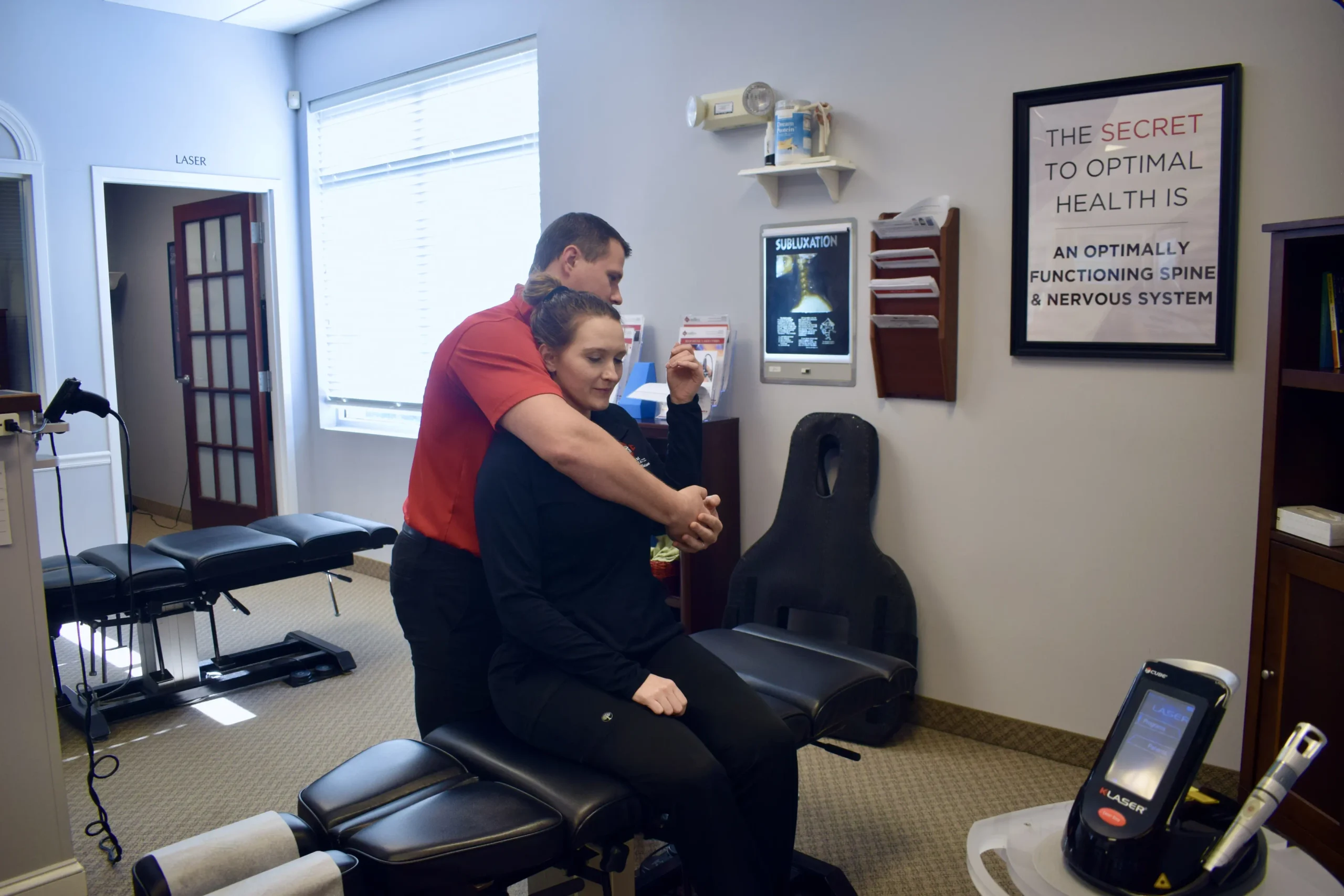
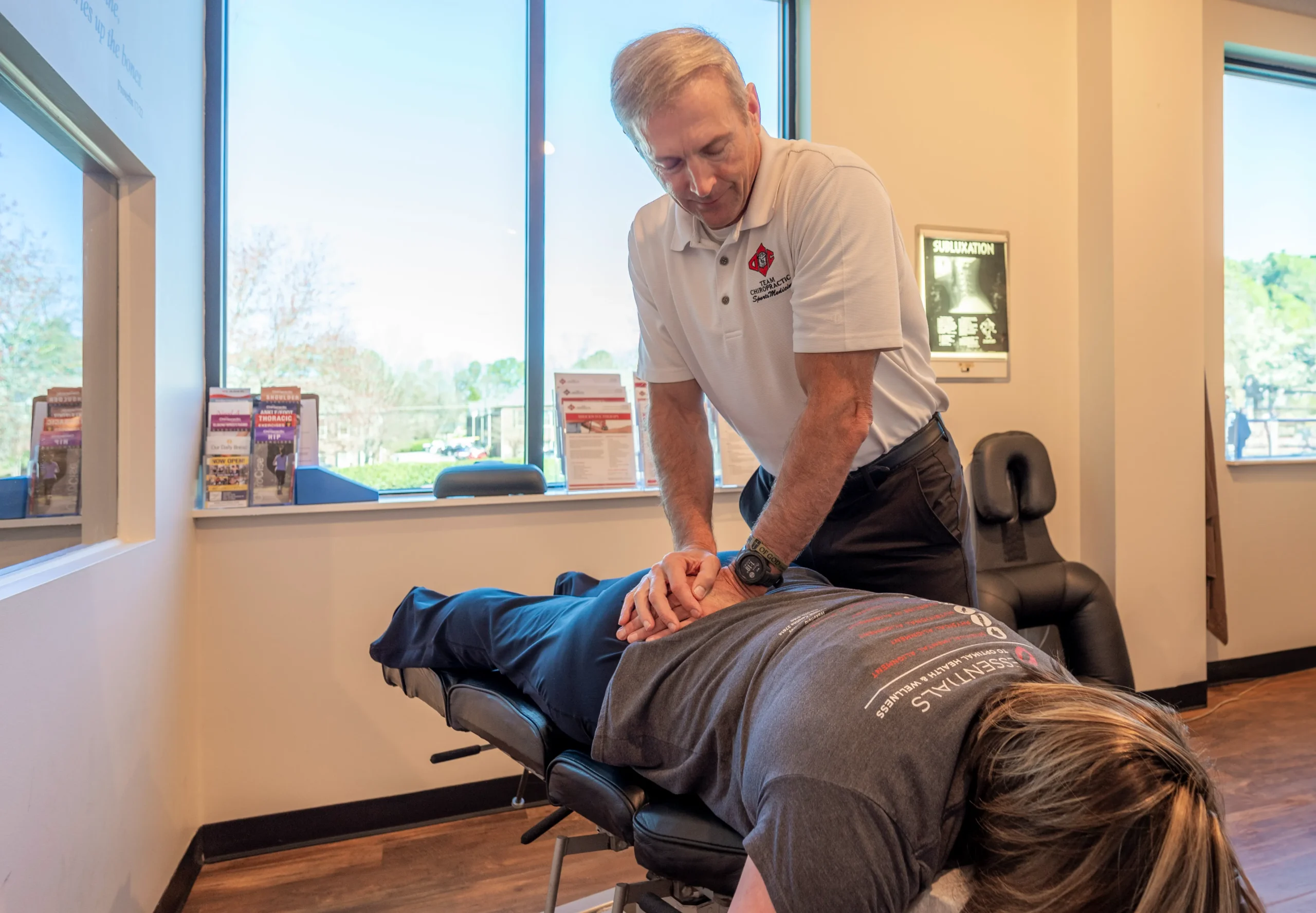
That’s why some runners benefit from combining corrective exercise with care like chiropractic adjustments to restore proper joint motion.
IT Band Pain vs. Hip Bursitis vs. Glute Tendinopathy
Not all lateral hip pain is IT band syndrome.
Runners in Raleigh frequently experience:
Greater Trochanteric Bursitis
Inflammation of the fluid-filled sac on the outside of the hip.
Glute Tendinopathy
Chronic irritation of the glute tendon where it attaches to the hip.
Referred Pain from the Lower Back
Lumbar dysfunction can mimic hip pain.
A proper evaluation helps determine whether your pain originates in the hip joint, surrounding soft tissue, or spine.
Why Rest Alone Rarely Solves the Problem
Many runners try:
- Foam rolling
- Stretching
- Ice
- Short-term rest
While these may temporarily reduce symptoms, they don’t correct underlying weakness or mechanical dysfunction.
Once you resume training, pain often returns.
That’s where structured sports injury treatment can help identify movement faults contributing to repeated strain.
How Sports Rehabilitation Helps Raleigh Runners
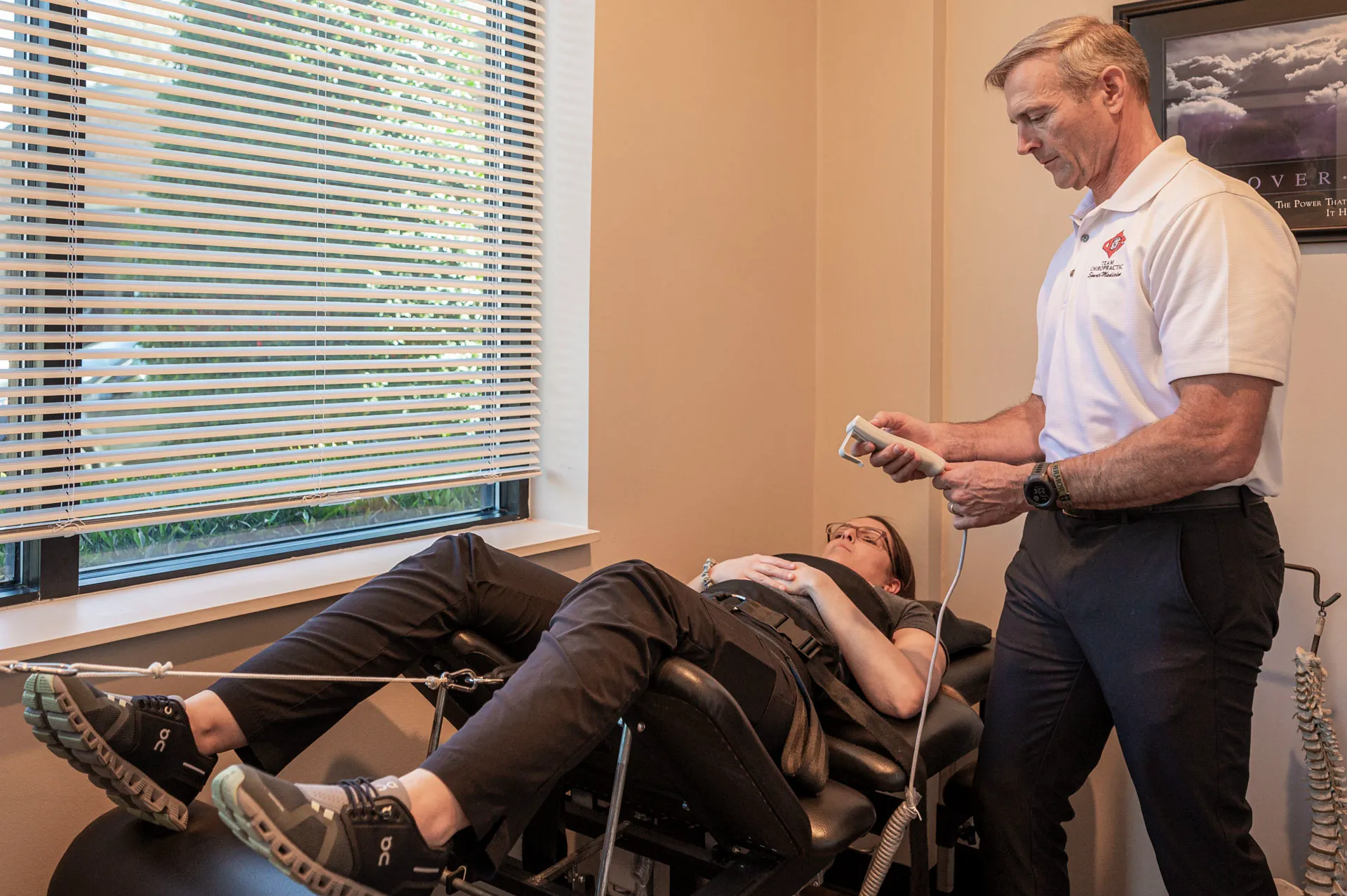
A comprehensive approach to IT band and hip pain usually includes:
Movement Assessment
Identifying imbalances in hip stability and stride mechanics.
Corrective Strengthening
Targeting glutes, core, and hip stabilizers to reduce tension on the IT band.
Mobility Restoration
Improving joint range of motion in the hip and lumbar spine.
Soft Tissue Work
Reducing adhesions and tightness along the lateral thigh through methods such as soft tissue release.
Gradual Return-to-Run Programming
Preventing flare-ups by rebuilding mileage strategically.
This layered approach addresses both symptoms and root causes.
The Role of Shockwave Therapy for Chronic Tendon Pain
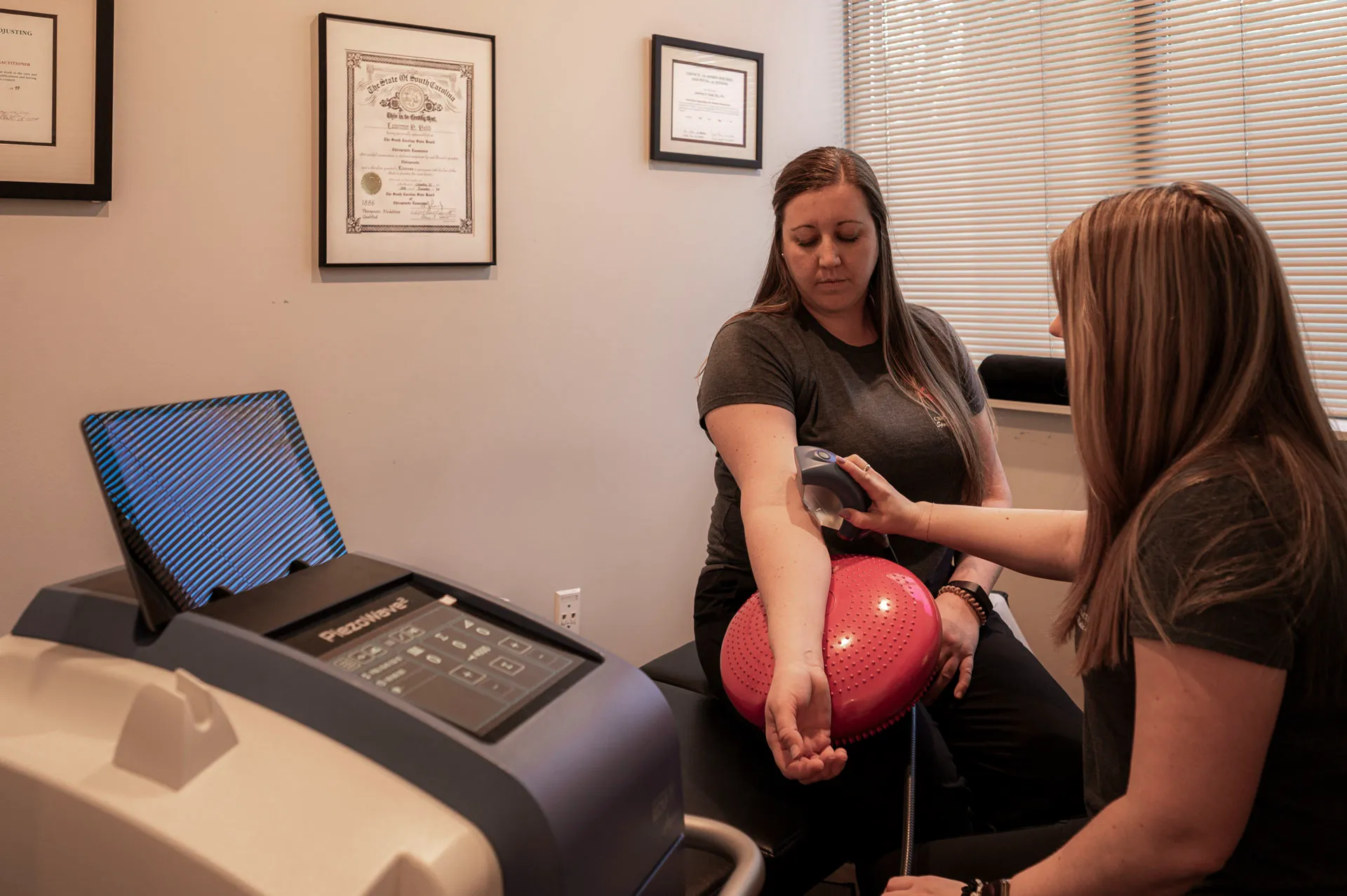
If hip pain progresses into chronic tendon irritation, regenerative options like shockwave therapy may be considered.
Shockwave therapy stimulates blood flow and tissue repair in chronically irritated tendons — particularly in cases of glute tendinopathy or stubborn IT band pain.
For runners who’ve struggled with recurring symptoms for months, this can provide an additional layer of healing support without injections or surgery.
Preventing IT Band & Hip Pain as a Runner in Raleigh
Prevention strategies include:
- Increasing mileage gradually (no more than 10% per week)
- Incorporating hip-strengthening exercises
- Rotating running shoes
- Avoiding repetitive cambered surfaces
- Cross-training to reduce repetitive load
Many runners also benefit from periodic check-ins with a sports-focused provider to maintain alignment and mobility during heavy training cycles.
When to Seek Professional Help
Consider seeking evaluation if:
- Pain alters your running gait
- Symptoms persist beyond 1–2 weeks
- You feel weakness in one hip
- Pain wakes you at night
- Discomfort returns every training cycle
Addressing issues early often prevents months-long setbacks.
Why Local Care Matters for Raleigh Runners
Training in North Carolina’s heat and humidity adds additional stress to muscles and connective tissue. Fatigue increases the risk of compensation and form breakdown late in runs.
Runners preparing for events in Raleigh, Wake Forest, or surrounding areas benefit from proactive care that supports performance and injury prevention.
Structured programs like sports rehabilitation provide targeted recovery while helping athletes maintain conditioning safely.
The Bottom Line
IT band and hip pain are incredibly common among runners in Raleigh — but they’re not inevitable.
These injuries usually stem from mechanical imbalances, hip weakness, repetitive stress, or subtle alignment issues. While rest and stretching may temporarily reduce discomfort, lasting improvement requires correcting the root cause.
By combining movement assessment, strengthening, mobility work, and targeted therapies when needed, runners can reduce flare-ups, improve stride efficiency, and stay consistent in training.
If hip or lateral knee pain keeps interrupting your miles, it may be time to address what your body has been trying to tell you — before a small irritation becomes a season-ending injury.