
Acupuncture in Raleigh, NC
Team Chiropractic provides acupuncture in Raleigh for patients seeking a conservative option for pain, muscle tension, headaches, joint discomfort, and recovery support. Acupuncture is available exclusively at our Millbrook office and is recommended according to each patient’s symptoms, health history, and individual needs.
Get in Touch
What Is Acupuncture?
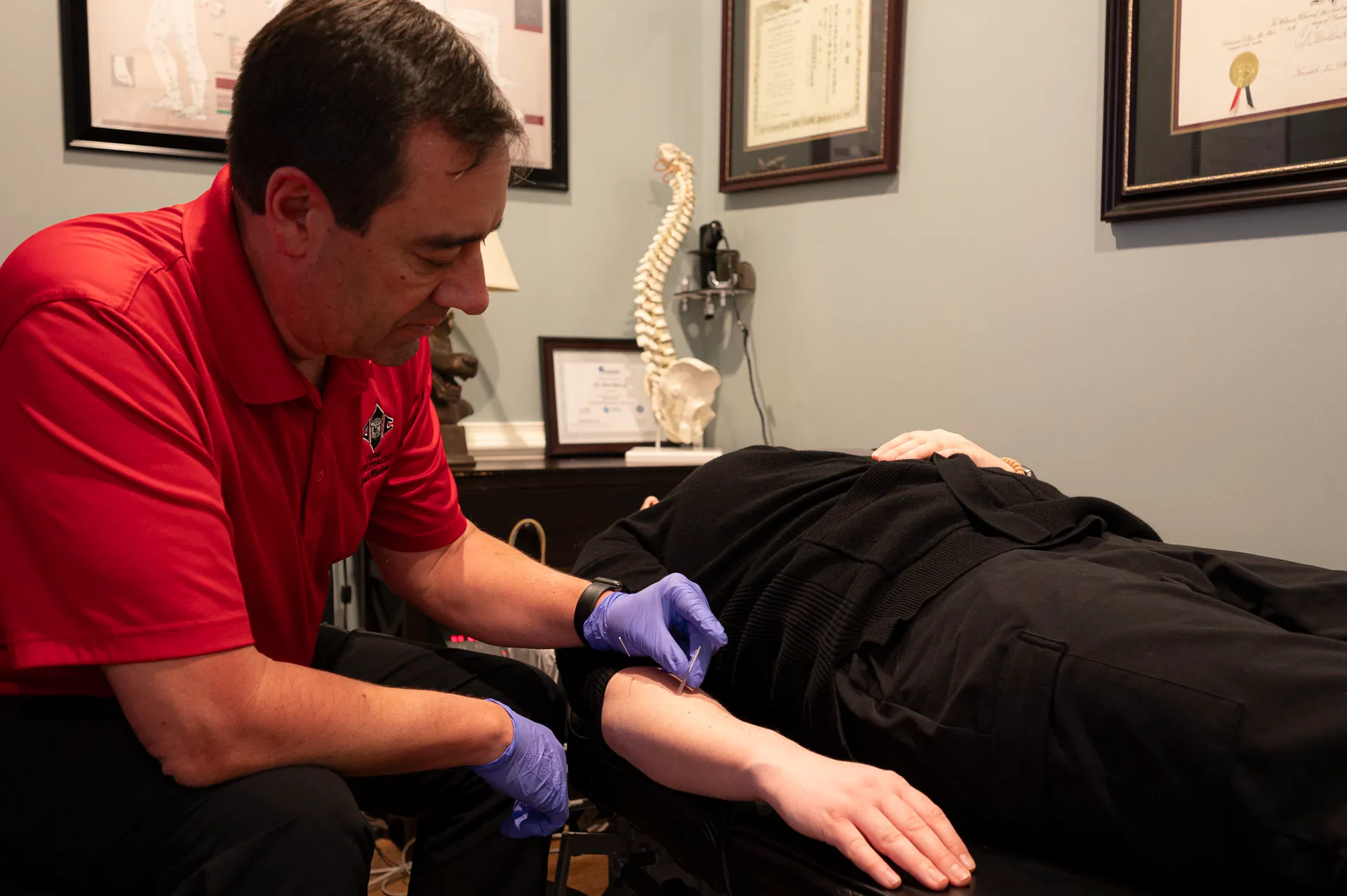
Acupuncture involves placing very thin needles at selected points on the body. The location, number, and depth of the needles are chosen according to the patient’s symptoms and treatment goals.
Although acupuncture originated within traditional Chinese medicine, it is now used in many modern healthcare settings. Research suggests that it may influence nervous system activity and produce local effects within the tissues where needles are placed. Its exact mechanisms are not completely understood.
Patients commonly consider acupuncture because it:
- Does not require surgery
- Does not involve injecting medication
- Can be adapted to different symptoms and comfort levels
- May be used independently or alongside other forms of care
- Is most commonly used in the United States for pain-related concerns
Acupuncture is not automatically appropriate for every symptom or health condition. Team Chiropractic begins with an evaluation to determine whether it may be a reasonable part of your care.
Reasons Patients Consider Acupuncture
Back and Neck Pain
Headaches and Migraines
Joint Pain and Stiffness
Sports and Overuse-Related Discomfort
How Acupuncture May Affect the Body
Fine Needles Stimulate Selected Points
Very thin needles are carefully placed at specific locations chosen according to your symptoms and individualized treatment plan.
The Nervous System May Respond
Research suggests acupuncture may influence nervous system activity involved in pain processing and other physical responses.
Local Tissues May Be Affected
Needle placement may produce local effects in muscles, connective tissue, and other structures surrounding the treatment area.
Treatment Is Adjusted Over Time
Your response is monitored so the selected points, visit frequency, and overall plan can be modified when appropriate.

Acupuncture for Pain, Tension, and Other Concerns
Pain is the most common reason adults in the United States pursue acupuncture. Depending on the person, that discomfort may be localized to one area or may interfere with sleep, work, exercise, and other daily activities.
Acupuncture may be considered for concerns such as:
- Lower, middle, or upper back pain
- Neck pain and restricted movement
- Knee or other joint discomfort
- Recurring muscle tension
- Headaches and migraines
- Sports-related soreness
- Overuse-related discomfort
- Symptoms occurring during injury recovery
Some patients also report that acupuncture sessions feel calming and use treatment as part of a broader plan for managing stress-related physical tension. However, acupuncture should not replace appropriate medical or mental health care for anxiety, depression, sleep disorders, or other health conditions.
The goal is not to claim that one treatment can resolve every symptom. Team Chiropractic considers what you are experiencing, what may be contributing to it, and whether acupuncture fits appropriately alongside any other care you receive.

How Team Chiropractic Determines Whether Acupuncture Is Appropriate
Health History Review
Symptom and Activity Assessment
Physical and Movement Evaluation
Personalized
Care

What to Expect During an Acupuncture Appointment
Your appointment begins with a review of your symptoms, recent changes, and goals for treatment. If it is your first visit, additional time may be used to discuss your health history and determine whether acupuncture is appropriate.
During the treatment:
- You will be positioned comfortably based on the areas being treated.
- The provider will explain which parts of the body need to be accessible.
- Fine, sterile, single-use needles will be placed at selected points.
- You may notice a brief pinch, pressure, heaviness, warmth, or tingling.
- The needles may remain in position while you rest for a period of time.
- Your provider will remove and safely dispose of each needle after treatment.
Many patients find acupuncture manageable and relaxing, but experiences vary. You should tell your provider if you feel sharp pain, dizziness, nausea, or any other unexpected discomfort during the appointment.
The number and frequency of appointments depend on your symptoms, response, and goals. Team Chiropractic will not assume that every patient needs the same treatment schedule.
How Acupuncture May Fit Into a Broader Care Plan
Chiropractic Adjustments
Chiropractic adjustments use controlled movements to address restricted joints and support comfortable movement. When appropriate, adjustments and acupuncture may address different components of a pain or mobility concern.
Soft Tissue Release
Soft tissue release uses targeted manual techniques to address muscular tension and restricted movement. It may complement acupuncture when tight or overworked muscles are contributing to discomfort.
Sports Rehabilitation
Sports rehabilitation may include individualized mobility, stability, strength, and movement recommendations. Acupuncture may be incorporated when pain or muscle tension is limiting recovery or a gradual return to activity.
Spinal Decompression Therapy
Spinal decompression may be considered for certain back, neck, or disc-related concerns. If both services are appropriate, acupuncture may be used to address pain or tension while decompression serves a separate purpose within the care plan.
What to Know Before, During, and After Acupuncture
A few practical steps can help you feel more comfortable and give your provider the information needed to plan treatment safely.
Before Your Appointment
- Eat a light meal or snack rather than arriving extremely hungry.
- Drink water and avoid excessive alcohol before treatment.
- Wear loose, comfortable clothing when possible.
- Bring an updated list of medications and supplements.
- Tell us about pregnancy, bleeding concerns, implanted devices, recent procedures, or changes in your health.
- Do not stop prescribed medication unless the prescribing provider instructs you to do so.
During Your Appointment
- Ask questions before treatment begins.
- Let your provider know if you feel nervous about needles.
- Mention any sharp pain, dizziness, nausea, or unusual sensations immediately.
- Avoid moving suddenly while the needles are in place.
- Remember that the number and location of needles can vary between patients and visits.
After Your Appointment
- Rise slowly from the treatment table.
- Drink water and pay attention to how you feel.
- Mild soreness, temporary tenderness, or minor bruising can occur.
- Follow any activity or at-home recommendations provided.
- Contact the office if you experience an unexpected or concerning reaction.
- Seek medical attention for severe or rapidly worsening symptoms.
Your provider will monitor your response and discuss whether the treatment plan should continue, change, or involve another form of care.

Acupuncture Safety and When Medical Evaluation Comes First
Acupuncture is generally considered safe when it is performed properly using sterile, single-use needles. Minor effects can include temporary soreness, light bleeding, or bruising at a needle site. Serious complications are uncommon but can occur when treatment is delivered improperly.
Before treatment, tell your provider if you are pregnant, take anticoagulants or other medications that affect bleeding, have a bleeding disorder, are immunocompromised, have an active infection, or use an implanted electrical device. This information can affect whether acupuncture or a particular technique is appropriate.
Acupuncture should not be used to delay diagnosis or necessary medical treatment. Seek timely medical care for symptoms such as:
- Chest pain or difficulty breathing
- Sudden weakness, numbness, confusion, or trouble speaking
- A new or unusually severe headache
- Loss of consciousness
- High fever or signs of a serious infection
- Major trauma or suspected fracture
- New bowel or bladder changes
- Rapidly worsening pain or neurological symptoms
Team Chiropractic can help determine whether your concern appears appropriate for conservative care. When the findings suggest that testing, urgent treatment, or another healthcare provider is needed, we will explain the recommended next step.
Why Choose Team Chiropractic for Acupuncture?
Individualized Treatment
The points selected and recommended visit schedule are based on your symptoms and response—not a standard protocol given to every patient.
Integrated Care Options
When appropriate, acupuncture can be coordinated with chiropractic adjustments, soft tissue work, rehabilitation, or other conservative services.
Clear Explanations
We explain what treatment involves, why it is being considered, and what you may reasonably expect before beginning care.
Convenient Millbrook Location
Acupuncture is available at our established Raleigh office on West Millbrook Road, with recommendations and follow-up provided by the same care team.
Schedule Today!
Tuesday: 7:30AM–12PM & 3PM–6PM
Wednesday: 7:30AM–12PM
Thursday: 7:30–12PM & 3PM–6PM
Friday: 7:30AM–12PM
Saturday & Sunday: Closed
Where does Team Chiropractic offer acupuncture?
Acupuncture is offered exclusively at Team Chiropractic’s Millbrook office at 309 W Millbrook Road, Suite 199, Raleigh, NC 27609. It is not currently available at the Wakefield office.
Does acupuncture hurt?
Acupuncture needles are very thin. Some patients feel little or nothing during insertion, while others notice a brief pinch, pressure, warmth, heaviness, or tingling. Tell your provider if you experience sharp or persistent pain.
What conditions can acupuncture help with?
Acupuncture is most commonly used for pain-related concerns, including back pain, neck pain, joint discomfort, and certain headaches. It may also be considered for muscle tension and recovery-related symptoms. Whether it is appropriate depends on your health history and evaluation.
How many acupuncture appointments will I need?
There is no standard number for every patient. Recommendations depend on the type and duration of your symptoms, your overall health, your response to treatment, and your goals. Your plan can be adjusted as progress is evaluated.
Can I receive acupuncture and a chiropractic adjustment?
Possibly. Acupuncture and chiropractic adjustments serve different purposes and may be included within the same broader care plan when both are appropriate. Your provider will determine whether combining services makes sense for your findings.
Is acupuncture safe?
Acupuncture is generally considered safe when performed properly with sterile, single-use needles. Minor soreness, temporary tenderness, light bleeding, or bruising may occur. Provide a complete health and medication history so potential precautions can be reviewed.
Should I eat before an acupuncture appointment?
It is generally helpful to eat a light meal or snack beforehand instead of arriving on an empty stomach. Avoid alcohol before treatment and drink enough water throughout the day.
What should I wear to my appointment?
Wear loose, comfortable clothing that allows the provider to reach the area being treated. Depending on the treatment points, you may be asked to adjust or change clothing while appropriate draping and privacy are maintained.
Is acupuncture covered by insurance?
Coverage varies by insurance carrier, plan, diagnosis, and provider requirements. Contact your insurer and the Millbrook office before treatment if you have questions about acupuncture benefits or expected costs.
Do I need a referral for acupuncture?
Many patients can schedule without a referral, but insurance requirements and medical circumstances vary. Contact your insurance carrier if you are unsure whether your plan requires authorization or a referral.
Can acupuncture replace medical treatment or medication?
No. Acupuncture should not be used to delay needed medical evaluation or replace prescribed treatment without speaking with the appropriate healthcare provider. Do not stop taking medication unless the prescribing provider directs you to do so.