
Chiropractic Care for Bad Posture in Raleigh, NC
If prolonged sitting, screen use, or repetitive positions leave you with neck, shoulder, or back discomfort, Team Chiropractic can help identify contributing factors. We provide personalized chiropractic care for posture-related pain, tech neck, stiffness, and mobility concerns in Raleigh and Wakefield.
Get in Touch

How Posture Can Affect Comfort and Movement
Posture is not about holding your body in one “perfect” position all day. It describes how your body is positioned and supported while you sit, stand, work, drive, exercise, and move through daily life.
Remaining in the same position for an extended period can place repeated demands on certain muscles and joints. Over time, you may notice:
- Tightness through the neck, shoulders, or upper back
- Lower-back discomfort after sitting or standing
- Stiffness when changing positions
- Muscle fatigue near the end of the workday
- Reduced comfort while exercising or completing daily tasks
- Headaches that occur alongside neck tension
Posture is only one possible contributor to these symptoms. At Team Chiropractic, we consider your health history, work environment, activity level, previous injuries, and movement patterns before recommending care.
Signs Your Daily Posture May Be Contributing to Discomfort
Posture-related symptoms often become more noticeable after a long workday, extended drive, workout, or period of screen use. They may temporarily improve when you stand, stretch, walk, or change positions.
Signs worth discussing with a chiropractor include:
- Recurring neck stiffness: Your neck feels tight or difficult to move after working, driving, or using a phone.
- Upper-back and shoulder tension: The muscles around your shoulder blades regularly feel tired, tight, or sore.
- Lower-back discomfort: Sitting or standing for an extended period causes aching or pressure through your lower back.
- Frequent position changes: You struggle to remain comfortable at your desk and constantly shift or readjust.
- Limited movement: Turning your head, reaching overhead, or bending feels more restricted than usual.
- Headaches with neck tension: Headaches appear alongside tightness at the base of your skull, neck, or shoulders.
- Symptoms that return with the same activity: Discomfort repeatedly develops during computer work, driving, lifting, or other routine tasks.
These symptoms can have several possible causes. An evaluation helps determine whether joint restrictions, muscle tension, an injury, workstation habits, or another concern may be involved.
What Can Contribute to Posture-Related Pain?
Prolonged Sitting and Computer Work
Frequent Phone and Tablet Use
Repetitive Work and Daily Habits
Previous Injuries and Movement Limitations
Tech Neck and Desk-Related Discomfort
“Tech neck” is an informal term for neck and upper-back discomfort associated with spending long periods looking at phones, tablets, laptops, and other screens. It may involve neck stiffness, shoulder tension, reduced range of motion, or headaches associated with tight neck muscles.
Desk-related discomfort is rarely caused by one position alone. Screen height, chair support, keyboard placement, working time, stress, previous injuries, and how often you move can all play a role.
Moving regularly is often more practical than attempting to hold a rigid position throughout the day. A properly arranged workstation can support you, but even a well-designed setup cannot replace regular movement and position changes.
If neck tension or limited motion continues despite modifying your workspace, Team Chiropractic can evaluate whether joint restrictions, muscle tension, or other musculoskeletal factors may be contributing. Patients with persistent symptoms can also learn more about our approach to neck pain relief.
A MORE COMPLETE ASSESSMENT
How Team Chiropractic Evaluates Posture Concerns
Health History and Symptom Review
We begin by discussing your symptoms, work habits, previous injuries, exercise routine, and health history. This helps identify patterns and determines whether additional medical evaluation may be appropriate.
Posture and Movement Observation
Your doctor may observe how you sit, stand, walk, bend, turn, or complete other relevant movements. The goal is to identify positions or movement patterns connected to your symptoms—not to force your body into a single ideal posture.
Joint and Mobility Assessment
The evaluation may include checking joint motion, muscle tension, flexibility, strength, and areas of tenderness. Additional testing or imaging may be recommended when clinically appropriate.
Personalized Recommendations
Your doctor will explain the findings and discuss whether chiropractic care, movement changes, at-home exercises, another service, or referral to a different healthcare provider is appropriate.
CARE BASED ON YOUR FINDINGS
What Posture-Related Care May Include
Chiropractic Adjustments
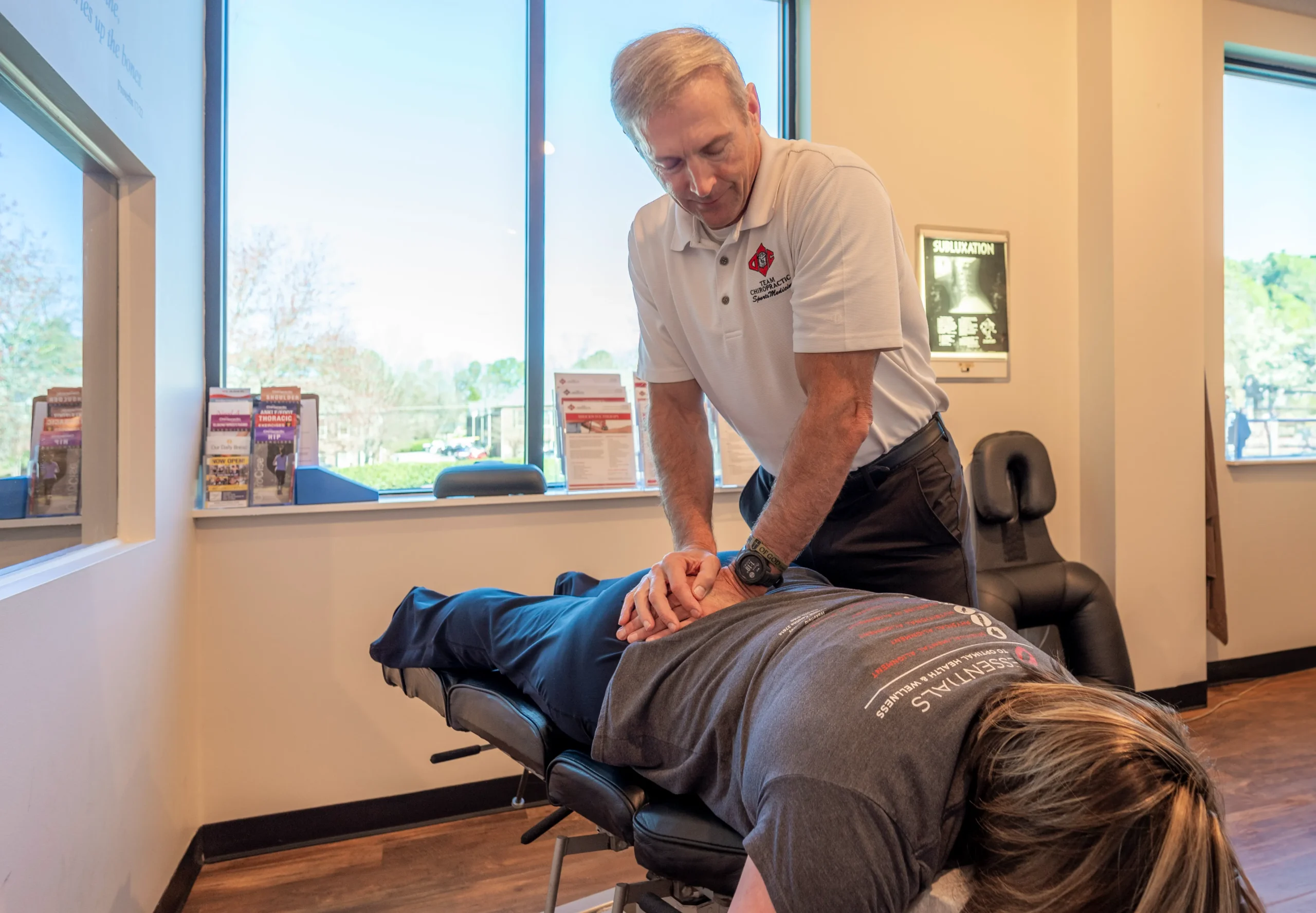
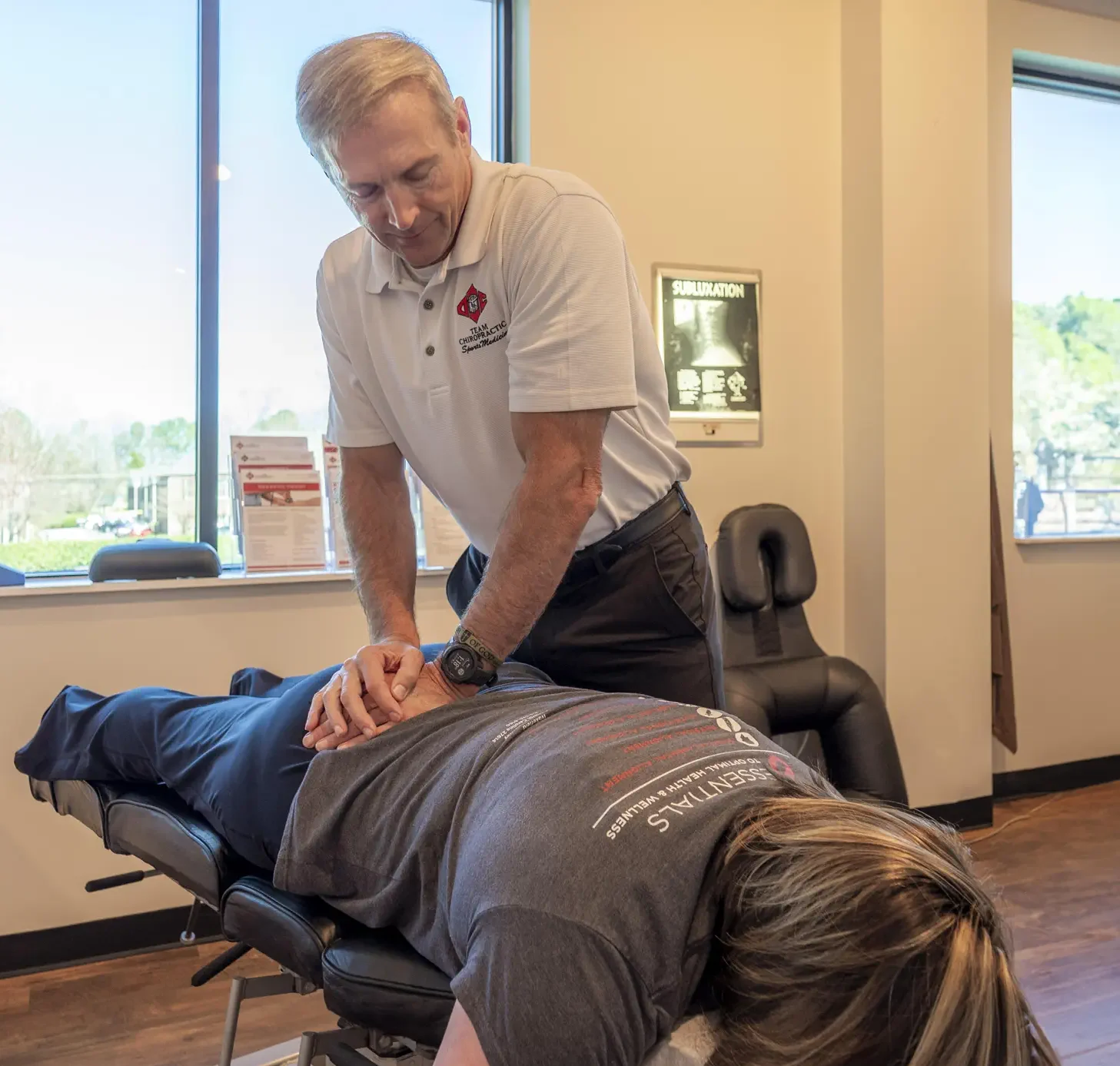
Chiropractic adjustments use controlled movements to address restricted joints and support mobility. The technique and amount of force are selected according to the patient, symptoms, and area being treated.
Soft Tissue Release
Soft tissue release uses targeted manual techniques to address muscular tension and restricted movement. It may be incorporated when tight or overworked muscles are contributing to neck, shoulder, or back discomfort.
Spinal Re-Engineering
Spinal re-engineering may combine chiropractic care with individualized exercises and other recommendations intended to address movement and structural concerns. Whether it is appropriate depends on your examination findings and goals.
Custom Orthotics
The way your feet interact with the ground may influence movement through your ankles, knees, hips, and lower back. When lower-body mechanics appear relevant, your doctor may discuss whether custom orthotics should be considered as part of your care.
What You Can Do Between Visits
Your daily routine can be just as important as what happens during an appointment. Recommendations should be adapted to your symptoms, physical abilities, and work environment, but helpful starting points may include:
- Change positions regularly. Alternate between sitting, standing, and walking when your schedule allows instead of trying to maintain one position all day.
- Bring frequently used items closer. Position your keyboard, mouse, phone, and work materials so you are not repeatedly reaching or twisting.
- Adjust your screen. Place your main screen where you can view it without constantly looking sharply downward or rotating your head.
- Use supportive seating. Adjust your chair so your feet are supported and your work surface is comfortable to reach.
- Build movement into your day. Short walks and brief movement breaks can reduce the amount of time spent in one position.
- Follow individualized exercises. If your doctor recommends mobility or strengthening exercises, use the frequency and technique provided rather than relying on a generic online routine.
- Pay attention to patterns. Notice which activities, positions, or times of day affect your symptoms so you can discuss them during your next visit.
The goal is not to monitor every movement or sit rigidly. It is to create a routine that gives your body more opportunities to move comfortably.
Why Raleigh Patients Choose Team Chiropractic
Posture-related discomfort can involve more than the way someone sits or stands. Team Chiropractic evaluates the person as a whole, considering symptoms, movement, previous injuries, daily responsibilities, and individual goals before recommending care.
Patients choose our team for:
- Individual evaluations: Recommendations are based on your findings rather than a standard posture-correction program.
- Multiple conservative care options: When appropriate, care may incorporate adjustments, soft tissue techniques, corrective exercises, orthotics, or other available services.
- Experienced doctors: Our Doctors of Chiropractic bring backgrounds involving sports medicine, exercise science, extremity care, acupuncture, and injury-related care.
- Clear explanations: We explain what we find, which factors may be relevant, and why a particular recommendation is being made.
- Two convenient offices: Patients can seek care at our Raleigh chiropractic office on West Millbrook Road or our Wakefield chiropractic office in North Raleigh near Wake Forest.
Our goal is to help you better understand your symptoms and make informed decisions about your care—not simply tell you to “sit up straight.”

When Posture Symptoms Need Medical Evaluation
Progressive Numbness or Weakness
Significant Injury or Sudden Severe Pain
Fever or Other Signs of Illness
Balance or Bowel and Bladder Changes
Can a chiropractor help with bad posture?
Chiropractic care may help address joint restrictions, muscle tension, and mobility concerns that contribute to posture-related discomfort. It may also include guidance on movement, workstation habits, and individualized exercises. Results vary, and no treatment can guarantee a permanent change in posture.
Is there one correct posture everyone should maintain?
No single position is ideal for every person or activity. A comfortable, supported position can be helpful, but regularly changing positions and moving throughout the day are also important. Your needs may differ based on your body, symptoms, work, and health history.
Can poor posture cause neck or back pain?
Prolonged or repetitive positions may contribute to muscle fatigue, stiffness, and discomfort in some people. However, neck and back pain can have many causes, so an evaluation is needed before assuming posture is the primary problem.
What is tech neck?
Tech neck is a nonmedical term for neck and upper-back discomfort associated with extended screen use, particularly when someone repeatedly looks downward at a phone, tablet, or laptop. Symptoms may include stiffness, muscle tension, limited movement, or headaches associated with neck tension.
How does Team Chiropractic evaluate posture?
The evaluation may include a review of your symptoms and health history, observation of relevant movements, and an assessment of joint motion, muscle tension, flexibility, or strength. Your doctor may recommend additional testing or imaging when appropriate.
Will I need X-rays for a posture evaluation?
Not every patient needs X-rays. Your doctor will consider your symptoms, history, examination findings, age, and other clinical factors before recommending imaging. If imaging is suggested, the reason should be explained to you.
How long does it take to improve posture-related discomfort?
There is no universal timeline. Progress depends on the cause and duration of your symptoms, your health history, daily activities, recommended care, and how consistently contributing habits can be modified. Your doctor can provide more individualized expectations after completing an evaluation.
Can I improve my workstation without buying new equipment?
Often, yes. Adjusting the position of your existing chair, screen, keyboard, mouse, or frequently used items may improve comfort. Small changes combined with regular movement breaks can be more useful than purchasing equipment that does not fit your body or workspace.
When should I schedule an evaluation?
Consider scheduling an evaluation when discomfort repeatedly returns, interferes with work or sleep, limits movement, or does not improve after changing positions and modifying your routine. Sudden severe symptoms, significant weakness, major trauma, or bowel and bladder changes require more urgent medical attention.