
K-Laser Therapy in Raleigh & Wake Forest, NC
Team Chiropractic provides noninvasive K-Laser therapy for patients managing joint pain, soft-tissue injuries, back or neck discomfort, and activity-related concerns. This Class IV laser treatment may be used independently or alongside other services based on your evaluation, symptoms, and recovery goals.
Get in Touch
What Is K-Laser Therapy?
K-Laser therapy is a form of photobiomodulation that delivers selected wavelengths of visible and near-infrared light to a targeted area. The light interacts with components within the tissue and may influence biological processes associated with pain, circulation, and tissue recovery.
Important characteristics of K-Laser therapy include:
- Class IV technology: K-Laser is a higher-powered therapeutic laser intended for professional use. The Class IV designation relates to the device’s output and required safety precautions.
- Noninvasive application: Treatment does not involve incisions, injections, or medication.
- Condition-specific settings: Power, wavelength, treatment time, and application technique can be adjusted according to the area and treatment goal.
- Targeted treatment: The laser is applied directly over or around the area being addressed.
- Brief appointments: Laser application often takes only several minutes, although treatment time varies by area and plan.
- No required downtime: Most patients can resume routine activities after an appointment unless their underlying injury requires activity modifications.
- Part of a broader plan: K-Laser may be used alone or combined with other appropriate chiropractic and rehabilitative services.
K-Laser therapy does not diagnose the source of pain or replace a proper examination. Team Chiropractic evaluates your concern first to determine whether laser treatment is appropriate and what role it may have in your care.
K-Laser vs. Cold Laser, Red Light, and Shockwave Therapy
The terms “laser therapy,” “cold laser,” and “red light therapy” are sometimes used interchangeably, but they can describe devices with different power levels, delivery methods, and intended uses.
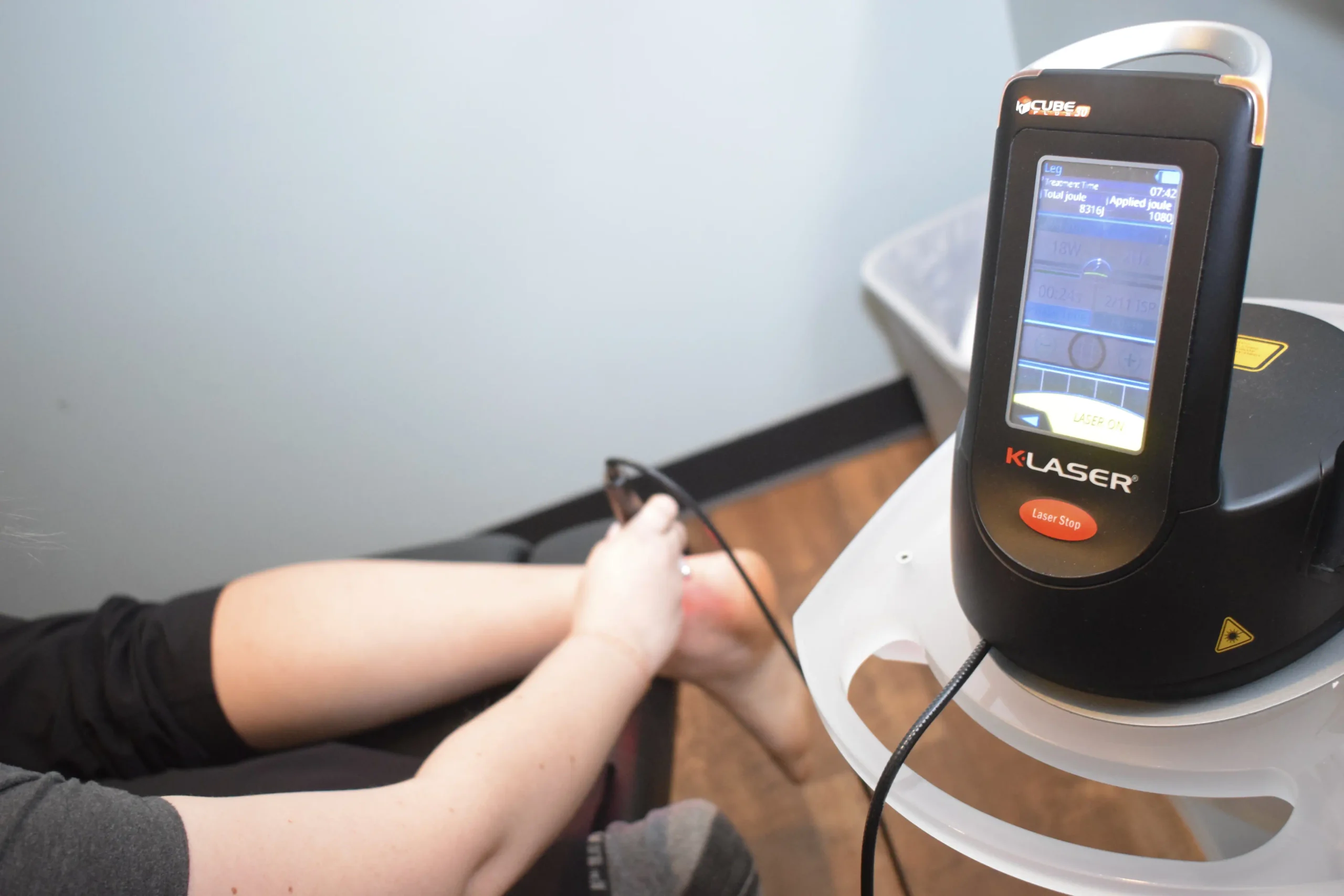
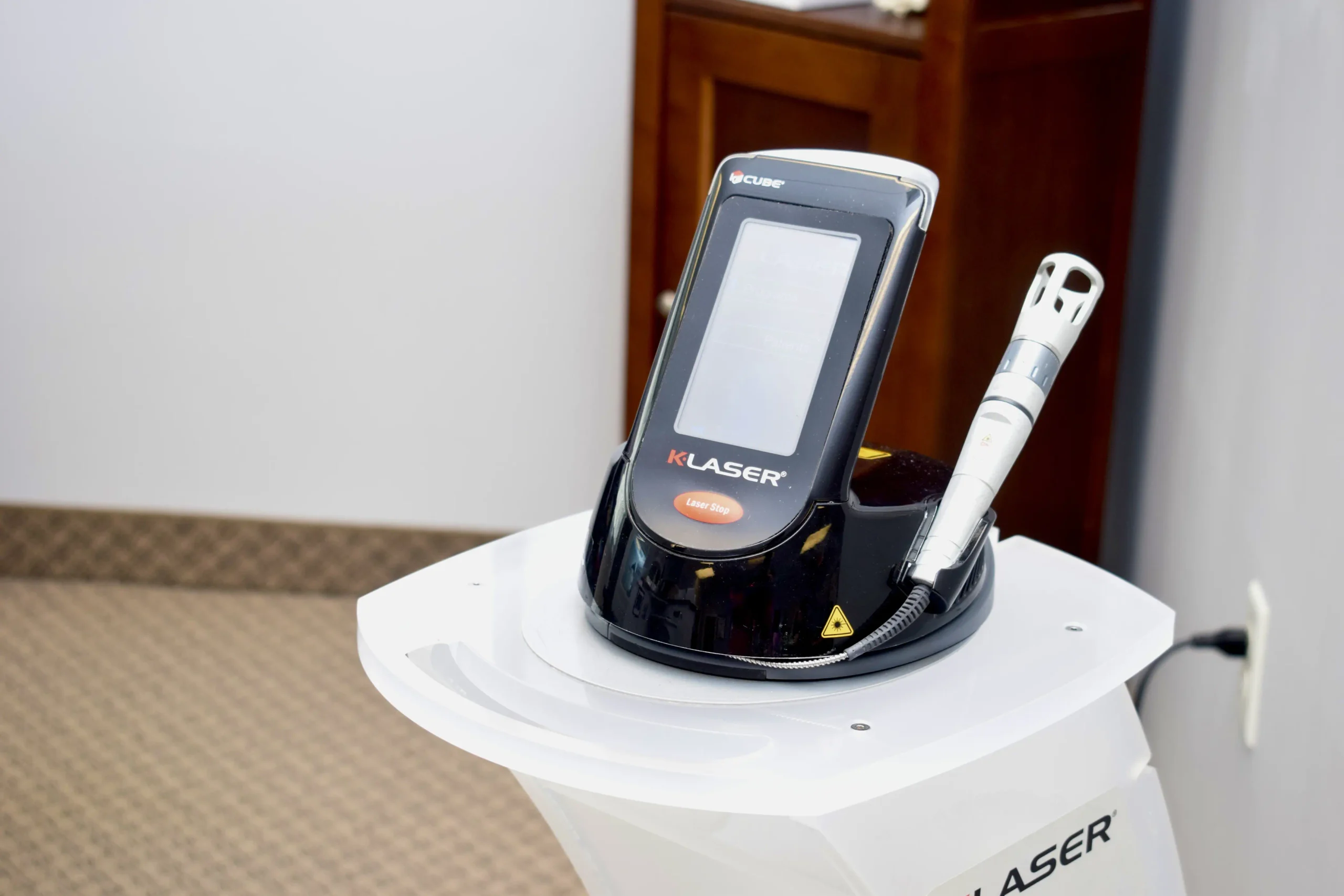
Cold laser therapy generally refers to lower-powered Class IIIb laser or low-level light therapy. These devices typically deliver energy more slowly and may be applied to stationary points. K-Laser is a Class IV system capable of delivering more energy over a shorter period, so it is normally moved across the treatment area and requires specific safety procedures. Higher power does not automatically mean that it is appropriate for every condition.
Red light therapy is a broad term that may include consumer LED panels, handheld devices, and professional equipment. Wavelength, power, dosage, treatment area, and device quality can differ substantially. An at-home red-light product should not be assumed to provide the same treatment as a professionally operated Class IV laser.
Shockwave therapy uses acoustic pressure waves rather than light. It may be considered for certain chronic tendon, fascia, and soft-tissue concerns. The experience is also different: shockwave creates a tapping or pulsing sensation, while K-Laser commonly produces gentle warmth. Neither service is universally better; Team Chiropractic recommends an option according to the tissue involved, duration of symptoms, examination findings, and treatment goals.
Conditions and Injuries Evaluated for K-Laser Therapy
Tendon and Soft-Tissue Injuries
Laser therapy may be incorporated for tendon irritation, muscle strains, ligament sprains, plantar fascia discomfort, Achilles concerns, and other soft-tissue injuries. Treatment is selected according to the involved tissue and whether the condition is recent, recurring, or longstanding.
Joint Pain and Stiffness
K-Laser may be considered for discomfort affecting the shoulder, elbow, wrist, hip, knee, ankle, or other joints. It does not reverse arthritis or structural degeneration, but it may be used to support pain management, comfortable movement, and a broader functional care plan.
Back Pain and Neck Pain
Laser therapy may be used when muscular tension, soft-tissue irritation, or another appropriate musculoskeletal factor contributes to back or neck discomfort. Radiating pain, significant weakness, trauma, or other concerning symptoms may require imaging or additional medical evaluation first.
Sports and Repetitive-Use Injuries
Athletes and active patients may develop overuse concerns, strains, sprains, or tendon problems that affect training and everyday movement. K-Laser may be one part of a plan that also addresses mobility, strength, workload, and a gradual return to activity.
How Does K-Laser Therapy Work?
Light Reaches the Treatment Area
Visible and near-infrared wavelengths are directed toward the tissues identified during your evaluation.
Tissue Absorbs the Light Energy
Light may be absorbed by specific molecules within the tissue, initiating local photochemical activity.
Local Processes May Respond
The resulting biological response may support pain modulation, circulation, and tissue recovery in appropriately selected cases.
Treatment Is Adjusted Over Time
Settings and treatment areas can be modified according to your comfort, symptoms, and response to previous appointments.
What Does K-Laser Therapy Feel Like?
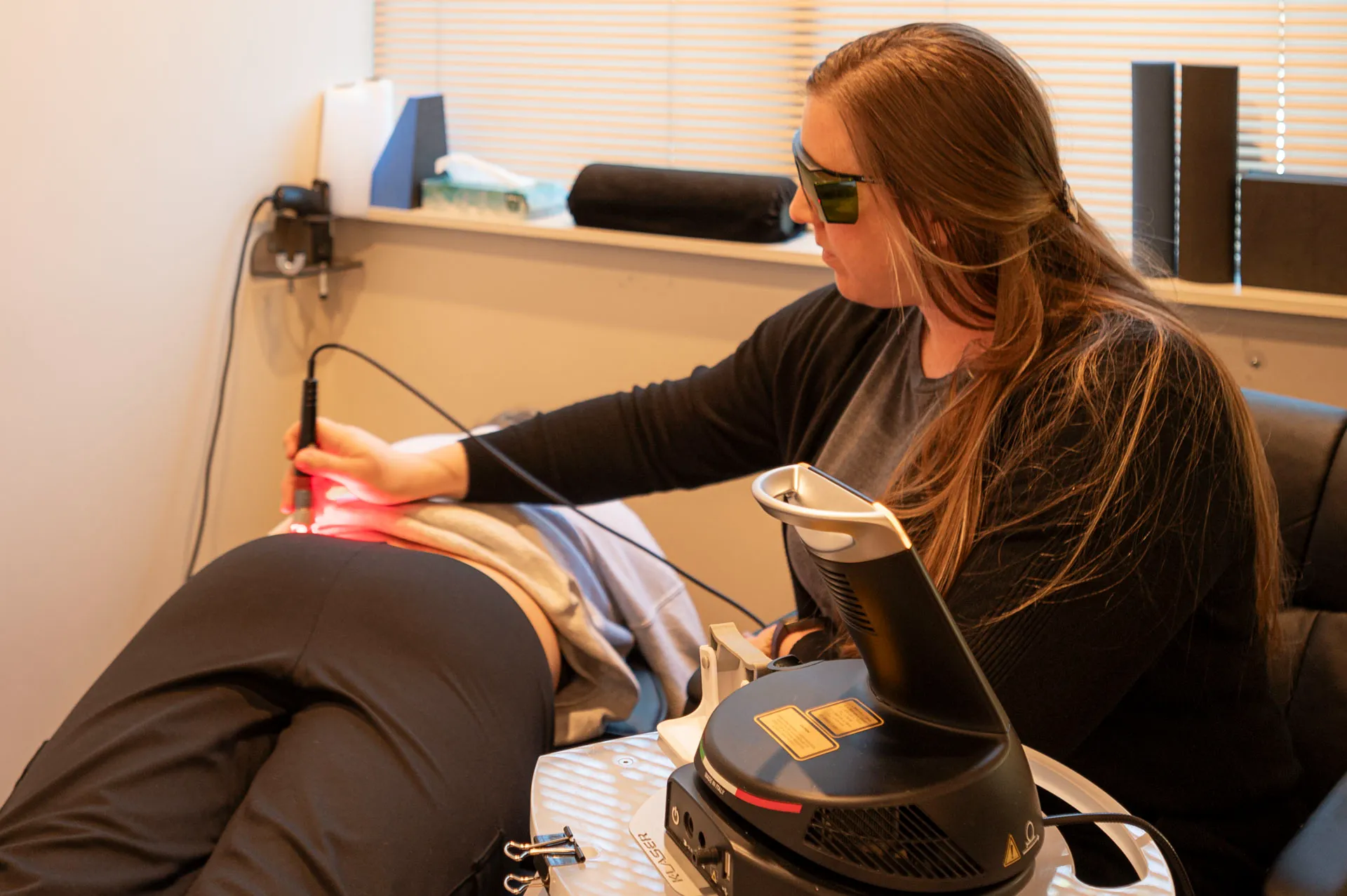
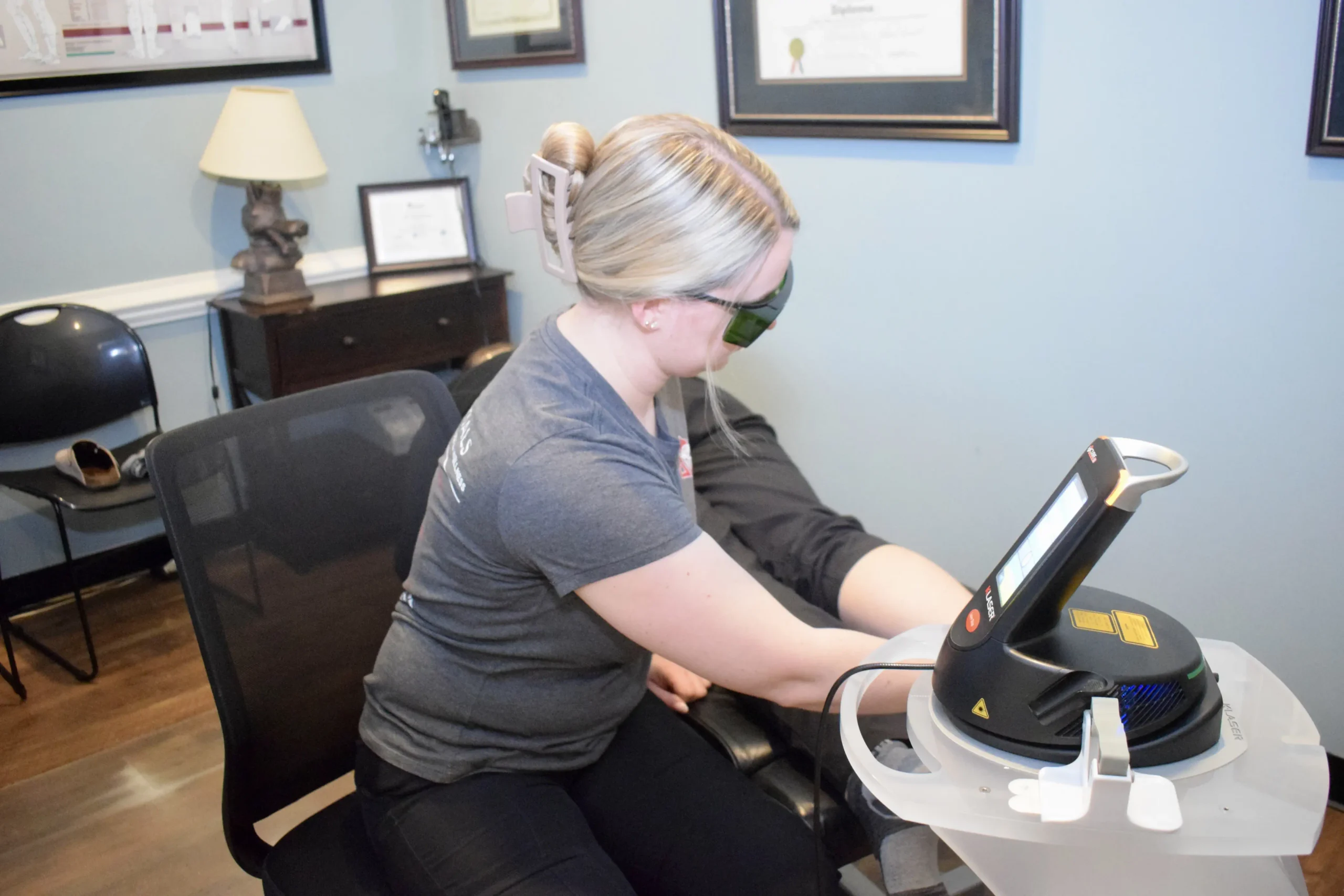
Most patients remain comfortably seated or positioned on a treatment table while the laser handpiece is moved over the selected area. Depending on the settings, application method, and treatment location, you may feel gentle or gradually increasing warmth.
K-Laser therapy should not feel like burning or cause sharp pain. Tell the provider immediately if the area becomes uncomfortably hot or if you notice an unexpected sensation. The treatment settings or application technique can be changed.
The skin is generally not punctured or damaged, and anesthesia is not needed. You and anyone else required to remain in the treatment area will wear laser-specific protective eyewear throughout the application.
Some patients notice no immediate change after a session, while others report a temporary change in comfort or mobility. An immediate response is not required for the treatment to have a role in the plan, and early symptom relief does not necessarily mean that the underlying concern has fully recovered.
Who May Be a Candidate for K-Laser Therapy?
Patients With a Recent Musculoskeletal Injury
Patients With Persistent Tendon or Soft-Tissue Concerns
Patients With Joint or Movement-Related Pain
Patients Seeking an Additional Conservative Option
K-Laser Therapy for Acute Injuries vs. Chronic Pain
An acute injury is recent and may involve pain, swelling, bruising, or difficulty using the affected area. Before beginning K-Laser therapy, Team Chiropractic evaluates how the injury occurred and whether imaging, activity restrictions, or another form of medical care should come first.
A chronic concern has persisted or repeatedly returned over a longer period. These problems may involve more than tissue irritation alone. Joint mobility, strength, repetitive activities, workload, previous injuries, and movement habits may all need to be considered.
Acute concerns may be treated on a different schedule from chronic problems. Longstanding symptoms may also require more emphasis on rehabilitation, activity modification, or another service in addition to laser therapy.
In either situation, feeling temporarily better does not always mean that an injured area is ready for unrestricted activity. Progress should be evaluated through function, movement, and activity tolerance as well as pain.
How Team Chiropractic Evaluates Patients for K-Laser Therapy
Health History and Safety Screening
We review your health conditions, medications, previous procedures, and factors that could affect whether laser therapy is appropriate.
Symptom and Injury Assessment
Your doctor asks when the problem began, how it developed, and which activities make it better or worse.
Movement and Tissue Evaluation
The examination may include joint motion, strength, tenderness, mobility, neurological checks, or other tests relevant to the symptomatic area.
Personalized Care Recommendation
We explain whether K-Laser may help support your plan, how it would be used, and whether another service or medical referral is more appropriate.
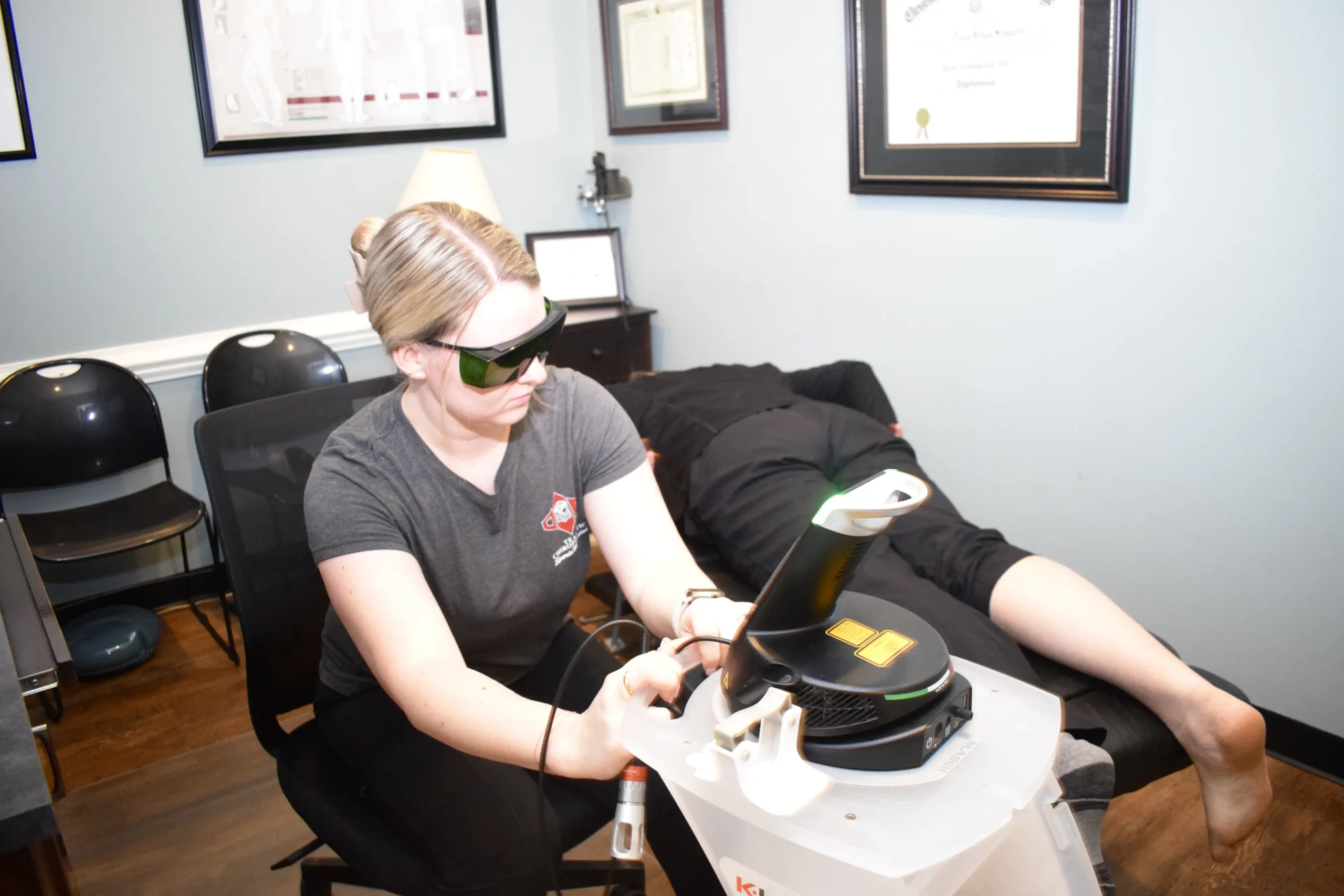
What to Expect During K-Laser Therapy
You can begin with a free consultation to discuss your concern and learn whether Team Chiropractic may be an appropriate place to start. A physical examination, imaging, and K-Laser treatment are separate services and are not automatically included in the free consultation.
If you move forward, your doctor will complete the necessary evaluation and determine whether laser therapy is appropriate. Before treatment, the area will be positioned so the provider can safely reach the skin. Clothing, braces, or topical products may need to be moved or removed from the immediate treatment area.
You and the provider will wear laser-specific protective eyewear. The provider will then select settings based on the area, tissue, skin characteristics, symptoms, and treatment goal. The handpiece is moved according to the treatment protocol while the provider monitors your comfort.
Laser application is generally brief, although the exact length depends on the size and number of areas being addressed. Afterward, you may be asked how the area feels or moves. Most patients do not require recovery time from the laser itself, but activity recommendations may still apply because of the underlying injury.
How Often Is K-Laser Therapy Needed?
There is no single treatment schedule that applies to every patient. Frequency may depend on:
- Whether the concern is acute or chronic
- The tissue and body area involved
- The severity and duration of symptoms
- Your activity level and recovery demands
- Other services included in your plan
- How your symptoms and function respond
Some patients may receive appointments closer together at the beginning of care, followed by reassessment and a change in frequency. Others may need only a limited trial to determine whether K-Laser is contributing meaningfully to their progress.
Team Chiropractic may monitor pain patterns, range of motion, strength, tenderness, activity tolerance, and the ability to complete relevant tasks. If progress is limited or your symptoms change, the plan should be reconsidered rather than continuing the same treatment indefinitely.
Services That May Be Combined With K-Laser Therapy
Chiropractic Adjustments
Controlled adjustments may be used when restricted joint movement appears relevant to your symptoms. K-Laser may be applied separately to an appropriate muscular, joint, or soft-tissue area.
Soft Tissue Release
Soft tissue release uses targeted manual techniques to address muscular tension and restricted movement. It may be combined with K-Laser when both tissue sensitivity and movement limitations are present.
Sports Rehabilitation
Rehabilitation may address strength, mobility, control, workload, and the gradual return to exercise or sport. K-Laser can serve as an adjunct, but it does not replace the physical work required to restore function.
Spinal Decompression Therapy
Spinal decompression may be considered for selected spinal or disc-related concerns after an appropriate evaluation. K-Laser may address a different component of the care plan, such as related soft-tissue discomfort.
Why Choose Team Chiropractic for K-Laser Therapy?
Individual Evaluation
We assess your symptoms and relevant physical findings before recommending K-Laser therapy.
Condition-Specific Treatment
The area, settings, application, and schedule are selected according to your needs and response.
Integrated Care Options
Laser therapy may be coordinated with chiropractic, soft-tissue, decompression, or rehabilitation services when appropriate.
Two Convenient Locations
K-Laser therapy is available through our Raleigh chiropractic office and Wakefield chiropractic office near Wake Forest.
Schedule Today!
Tuesday: 7:30AM–12PM & 3PM–6PM
Wednesday: 7:30AM–12PM
Thursday: 7:30–12PM & 3PM–6PM
Friday: 7:30AM–12PM
Saturday & Sunday: Closed
FAQs About K-Laser Therapy
What is K-Laser therapy?
K-Laser therapy is a form of photobiomodulation that uses visible and near-infrared laser light. The treatment is applied to selected musculoskeletal areas to support pain management and tissue recovery as part of an individualized care plan.
Is K-Laser the same as cold laser therapy?
Not exactly. Cold laser generally refers to lower-powered Class IIIb or low-level laser therapy. K-Laser is a Class IV therapeutic laser capable of delivering more energy over a shorter period and requires specific operating and safety procedures.
Is K-Laser the same as red light therapy?
No. Red light therapy can refer to many LED and laser devices with substantially different power levels, wavelengths, dosages, and intended uses. A consumer red-light product should not be assumed to provide the same treatment as an in-office Class IV K-Laser.
Does K-Laser therapy hurt?
K-Laser therapy is generally comfortable. You may feel mild or gradually increasing warmth as the device moves over the treatment area. Tell the provider immediately if the area feels uncomfortably hot, sharp, or painful.
Why do I need protective eyewear?
Class IV lasers can pose an eye-injury risk if operated improperly. Everyone required to remain in the treatment area wears wavelength-appropriate protective eyewear, and the laser should never be directed toward the eyes.
How long does a K-Laser appointment take?
Laser application commonly lasts only several minutes, but treatment time depends on the size, depth, and number of areas being addressed. Additional time may be needed for evaluation or other services included in the visit.
How many K-Laser sessions will I need?
There is no standard number. Your recommended schedule depends on the condition, duration of symptoms, examination findings, activity demands, other care being provided, and response to treatment.
Can K-Laser therapy help with arthritis?
K-Laser may be considered to support pain management and comfortable movement in some patients with arthritis-related joint symptoms. It does not reverse arthritis or restore permanently damaged joint structures.
Can K-Laser therapy be used for tendonitis?
Laser therapy may be incorporated into care for certain tendon concerns, including repetitive-use and activity-related problems. Successful recovery may also require changes in workload, strengthening, mobility work, or other treatment.
Can K-Laser be used for back or neck pain?
It may be considered when an appropriate muscular, joint, or soft-tissue factor contributes to back or neck discomfort. It is not appropriate for every cause of spinal pain, so an evaluation is required first.
Are there side effects from K-Laser therapy?
Some patients may experience temporary warmth, mild redness, tenderness, or a short-lived change in symptoms. Burns and eye injuries are potential risks if a Class IV laser is used improperly, which is why correct settings, application technique, and protective eyewear are essential.
Is there downtime after treatment?
K-Laser itself generally does not require downtime. However, an underlying injury may still require activity restrictions or a gradual return to work, exercise, or sport.
Is K-Laser therapy used during pregnancy?
K-Laser therapy is generally avoided during pregnancy as a precaution. Tell Team Chiropractic if you are pregnant, could be pregnant, or are trying to become pregnant before beginning laser treatment.
Can K-Laser be combined with chiropractic adjustments?
Yes. K-Laser and chiropractic adjustments address different aspects of care and may be combined when both are appropriate. Neither service is automatically required simply because the other has been recommended.
Is K-Laser therapy available at both Team Chiropractic offices?
Yes. K-Laser therapy is available through Team Chiropractic’s Raleigh office on West Millbrook Road and Wakefield office in North Raleigh near Wake Forest. Contact your preferred office to confirm scheduling availability.
Does insurance cover K-Laser therapy?
Coverage varies by insurance carrier, plan, diagnosis, and service. Contact Team Chiropractic and your insurance provider before beginning care if you have questions about coverage or out-of-pocket costs.
Can I begin with a free consultation?
Yes. The free consultation allows you to discuss your concern and determine whether Team Chiropractic may be a suitable place to begin. Examination, imaging, and K-Laser treatment are separate services and are not automatically included.
When should pain receive medical evaluation before laser therapy?
Seek prompt medical evaluation for major trauma, rapidly worsening pain, fever, unexplained swelling, suspected infection, progressive numbness or weakness, loss of coordination, bowel or bladder changes, chest pain, or other severe or unfamiliar symptoms. K-Laser should not delay necessary emergency or medical care.