
Chiropractor for Back Pain in Raleigh, NC
Team Chiropractic provides personalized evaluations and conservative care for lower, middle, and upper back pain in Raleigh and Wakefield. Whether your discomfort began recently or has persisted for months, our doctors can help identify contributing factors and explain which care options may be appropriate.
★★★★★
4.9 Rating
Get in Touch
Fill out the form below and our team will get back to you as soon as possible. We’re here to help you feel your best!
Back Pain Can Affect People in Different Ways
Back pain is not one condition with one solution. It can involve muscles, ligaments, joints, discs, nerves, or other structures, and more than one factor may contribute at the same time.
Understanding where the pain occurs, how it feels, and what affects it can provide useful information during an evaluation.
- Lower back pain: Discomfort in the lumbar area may affect bending, lifting, sitting, standing, walking, exercising, or sleeping.
- Middle back pain: Pain through the thoracic region may feel tight, sore, sharp, or restricted, particularly during twisting or deep movement.
- Upper back pain: Discomfort between or around the shoulder blades may be associated with prolonged sitting, repetitive movements, muscle tension, or injury.
- Localized pain: Some symptoms remain in one specific area and become more noticeable during particular movements.
- Radiating pain: Pain may extend into the buttock, hip, leg, ribs, shoulder, or another nearby area. The direction of symptoms can help guide the evaluation.
- Intermittent pain: Symptoms may come and go depending on activity, position, workload, sleep, or other factors.
- Persistent pain: Some discomfort remains present for weeks or months and may involve physical, lifestyle, and health-related contributors.
Team Chiropractic evaluates the pattern of your symptoms instead of assuming that every person with back pain has the same underlying problem.
Symptoms That May Accompany Back Pain
Back pain can range from a mild, localized ache to severe discomfort that makes normal movement difficult. The symptoms you experience may change throughout the day or vary depending on your activities.
Signs that may warrant an evaluation include:
- A dull or persistent ache: The discomfort may remain in one area or spread across a larger portion of the back.
- Sharp pain with movement: Bending, lifting, twisting, standing, or changing positions may trigger a sudden increase in pain.
- Stiffness: Your back may feel restricted when you wake up, stand after sitting, or begin moving after remaining in one position.
- Muscle tightness or spasms: Muscles may feel tense, guarded, or difficult to relax.
- Reduced range of motion: You may have difficulty bending forward, rotating, standing upright, or completing normal activities.
- Pain after sitting or standing: Symptoms may become more noticeable during desk work, driving, household tasks, or jobs that require prolonged standing.
- Discomfort that interrupts sleep: Finding a comfortable sleeping position or turning in bed may become difficult.
- Pain that travels: Symptoms may extend into the buttock, hip, or leg and may sometimes include tingling, numbness, or weakness.
- Difficulty returning to activity: Exercise, lifting, work responsibilities, or recreational activities may become uncomfortable.
Pain that travels into a leg, particularly when accompanied by numbness, tingling, or weakness, may require evaluation for nerve involvement. Learn more about how Team Chiropractic approaches sciatica symptoms.
What Can Contribute to Back Pain?
Muscle and Ligament Strain
Joint and Movement Restrictions
Disc and Nerve-Related Concerns
Repetitive Demands and Physical Conditioning
Chiropractic Evaluation for Lower Back Pain in Raleigh
The lower back supports much of the body’s weight while allowing you to bend, rotate, walk, lift, and complete everyday activities. Because the lumbar region is involved in so many movements, lower back pain can interfere with nearly every part of the day.
Some people develop pain after lifting, exercising, falling, or making a sudden movement. Others notice symptoms gradually during desk work, driving, repeated bending, prolonged standing, or physically demanding tasks. Lower back pain can also return periodically without one obvious triggering event.
An evaluation should consider more than the location of the discomfort. Team Chiropractic may assess:
- When and how the pain began
- Which positions or movements affect it
- Whether symptoms remain localized or travel elsewhere
- Joint motion and muscle tension
- Strength, sensation, reflexes, or balance when relevant
- Previous injuries and recurring episodes
- Work, exercise, sleep, and daily movement demands
- Whether imaging or medical referral may be appropriate
Lower back pain that extends into the buttock or leg is not automatically sciatica. Radiating symptoms can have different causes, so the pattern and examination findings matter when determining the next step.
Middle and Upper Back Pain
Middle- and upper-back discomfort can feel different from lumbar pain. Symptoms may occur along the spine, between the shoulder blades, around the ribs, or across the muscles of the upper back.
Possible contributors include:
- Prolonged desk or computer work: Remaining in one position may fatigue the muscles supporting the upper back and shoulders.
- Repetitive reaching or lifting: Work, exercise, and household tasks can place repeated demands on the thoracic region.
- Joint or rib restrictions: Discomfort may become more noticeable during rotation, reaching, or deep breathing.
- Muscle tension: Stress, physical workload, sleep position, and repetitive activity may contribute to tightness around the shoulder blades.
- Previous injuries: Falls, sports injuries, and auto accidents can affect muscles and joints throughout the middle and upper back.
- Posture-related strain: Workstation habits and prolonged positions may be relevant, although posture is rarely the only factor involved.
Team Chiropractic evaluates whether the symptoms appear musculoskeletal and whether chiropractic care may be appropriate. Chest pain, difficulty breathing, severe abdominal symptoms, fever, or unexplained upper-back pain may require prompt medical evaluation.
Patients whose discomfort is connected to prolonged sitting or screen use can also explore our approach to posture-related pain.
Acute, Subacute, and Chronic Back Pain
Healthcare professionals often describe back pain according to how long it has been present. These timeframes help organize the evaluation, but duration alone does not reveal the cause or determine which care will be appropriate.
- Acute back pain begins suddenly and generally lasts from a few days to several weeks. It may follow lifting, exercise, a fall, an awkward movement, or another identifiable event, although a specific cause is not always clear.
- Subacute back pain lasts approximately four to 12 weeks. Symptoms may be improving slowly, remaining unchanged, or interfering with a return to normal activity.
- Chronic back pain lasts longer than 12 weeks. Persistent pain may involve a combination of joint, muscle, nerve, activity, sleep, stress, health, and lifestyle factors.
- Recurrent back pain improves and then returns periodically. Identifying patterns involving movement, workload, exercise, sitting, or previous injuries may help guide recommendations.
Chronic pain does not necessarily mean that ongoing tissue damage is occurring, and severe pain does not always indicate a severe structural injury. At the same time, recurring or persistent symptoms deserve a thoughtful evaluation rather than a one-size-fits-all treatment plan.
Team Chiropractic considers the duration of your symptoms alongside your health history, physical findings, daily demands, and personal goals.
How Team Chiropractic Evaluates Back Pain
Health and Symptom History
Your doctor will ask when the pain began, where it occurs, what it feels like, and which activities or positions affect it. Previous episodes, injuries, health conditions, medications, work demands, and exercise habits may also be discussed.
Physical and Movement Evaluation
The examination may include observing how you bend, stand, walk, rotate, or complete other relevant movements. Your doctor may assess joint motion, muscle tension, tenderness, strength, flexibility, and functional limitations.
Neurological Screening
When symptoms suggest possible nerve involvement, your doctor may evaluate sensation, reflexes, strength, coordination, or other neurological findings. Progressive weakness, significant numbness, or other concerning findings may require medical referral.
Findings and Recommendations
Your doctor will explain the examination findings and discuss whether chiropractic care may be appropriate. Recommendations may include in-office care, activity guidance, individualized exercises, imaging, monitoring, co-management, or referral to another healthcare provider.
Back Pain Care Based on Your Findings
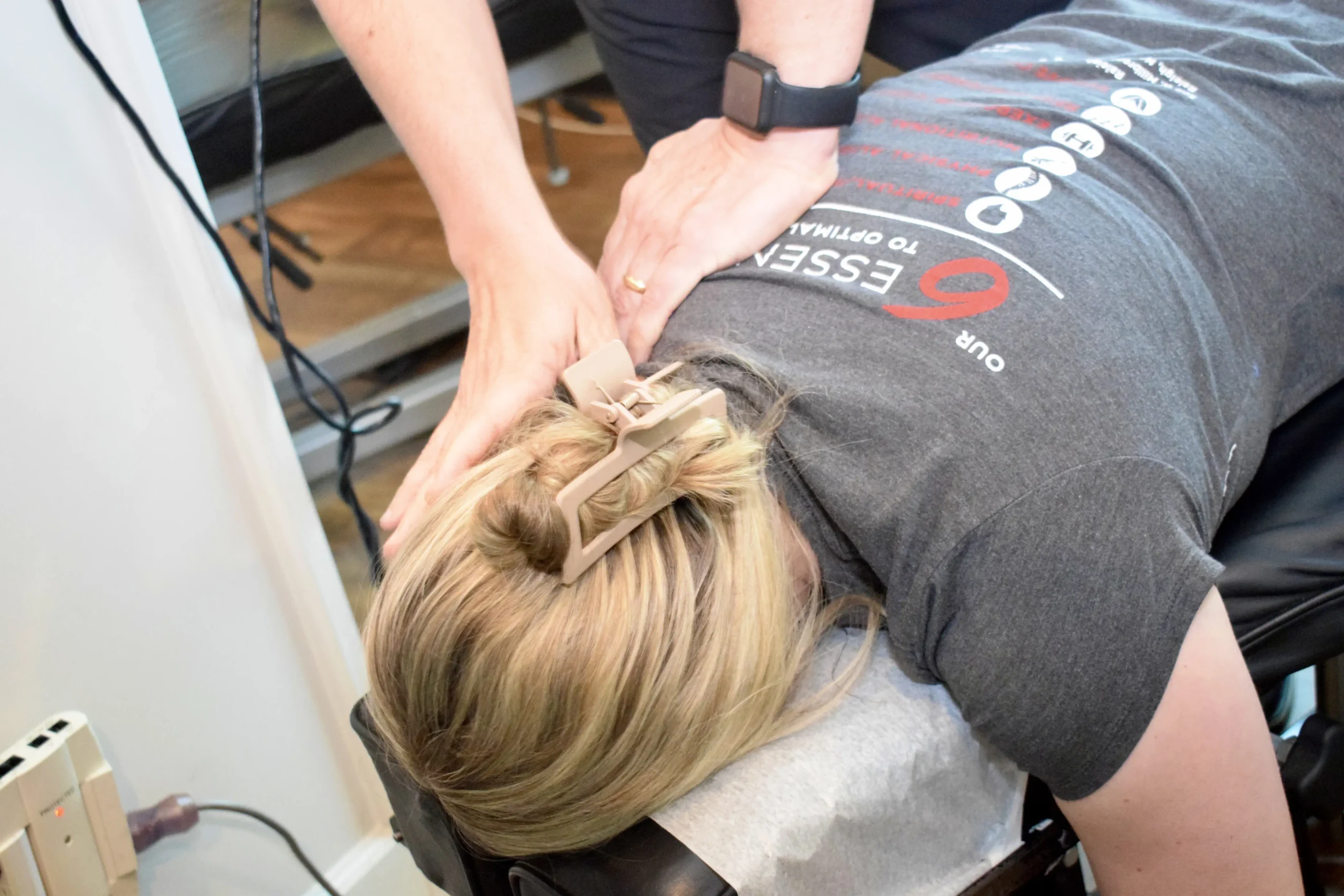
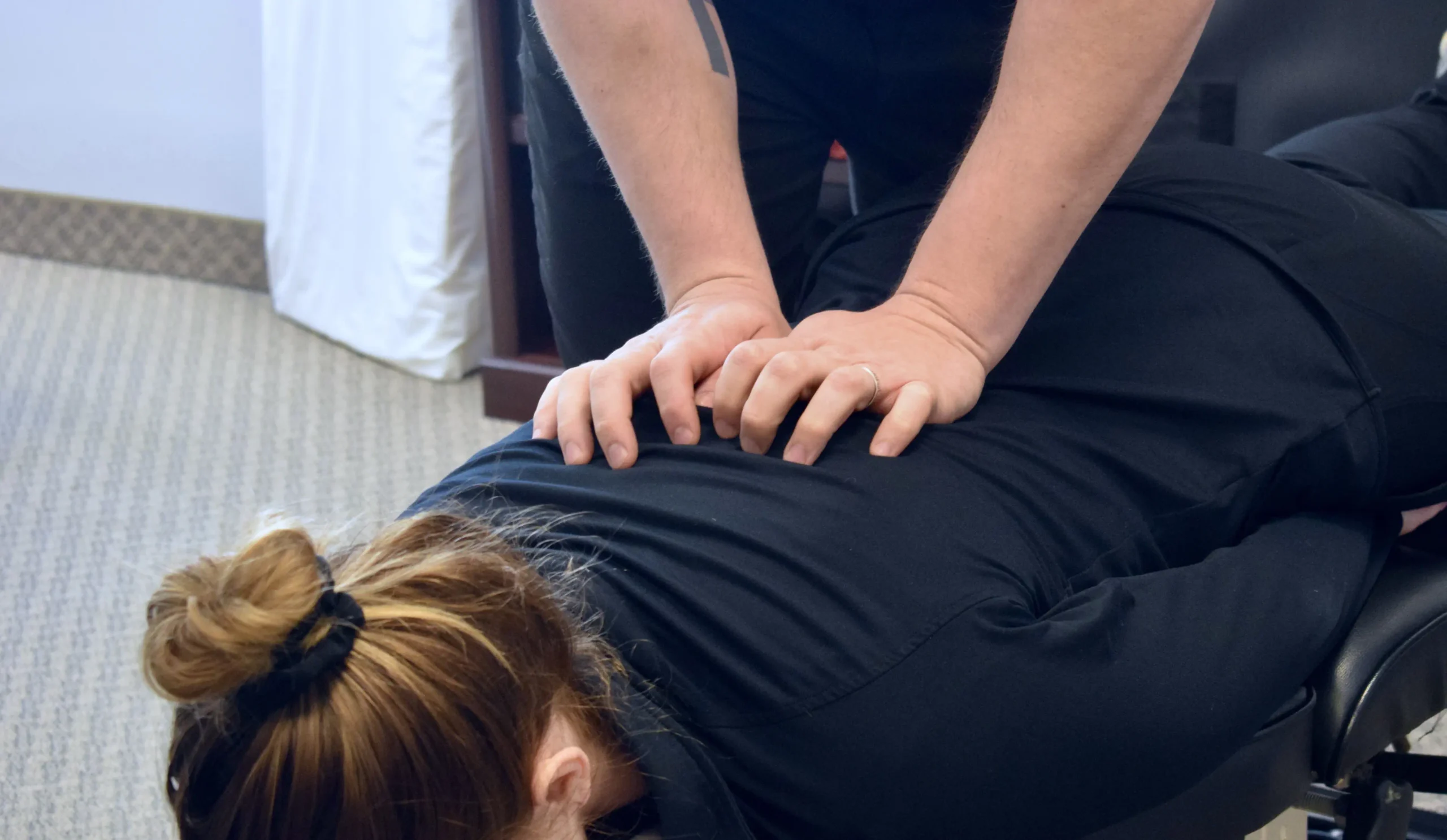
Chiropractic Adjustments
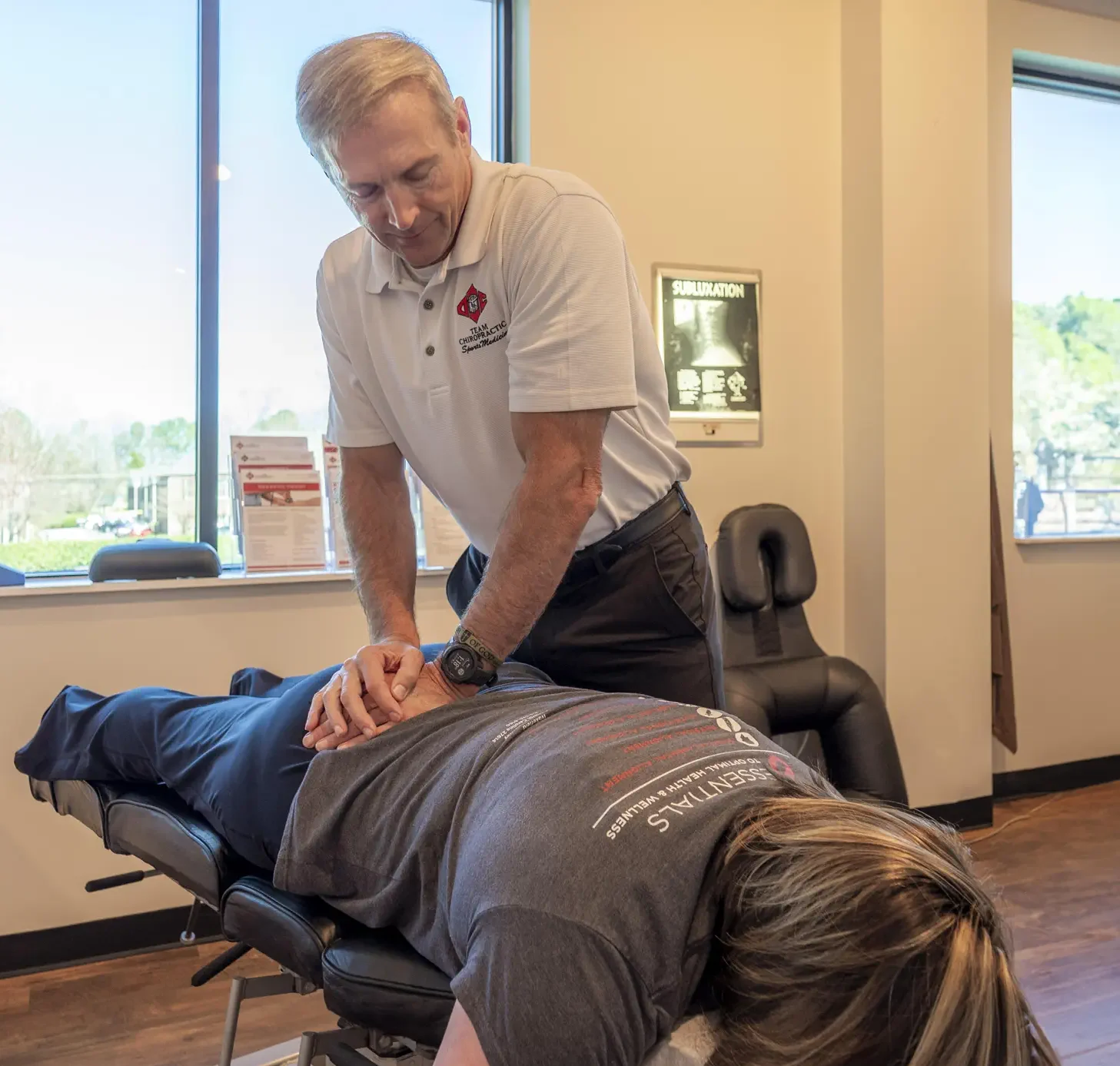
Chiropractic adjustments use controlled movements to address restricted joints and support mobility. The technique, positioning, and amount of force are selected according to the patient and the area being treated.
Soft Tissue Release
Soft tissue release uses targeted manual techniques to address muscle tension and restricted movement. It may be incorporated when tight, guarded, or overworked muscles are contributing to discomfort.
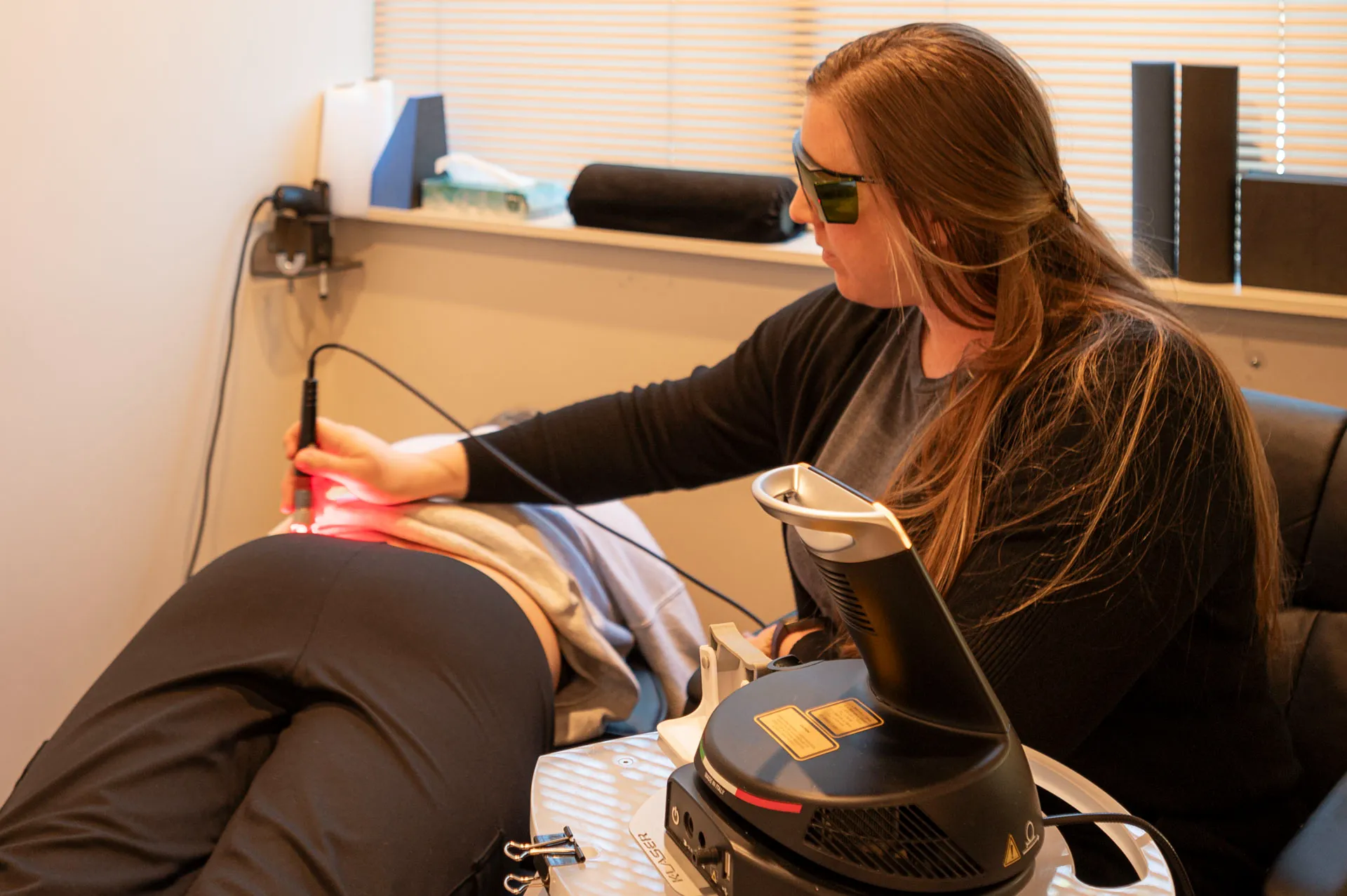
K-Laser Therapy
K-Laser therapy may be incorporated for certain painful or irritated soft-tissue areas as part of a broader care plan. Its suitability depends on the condition, tissues involved, health history, and other clinical factors.
Spinal Decompression Therapy
Spinal decompression uses controlled traction to change pressure on the spine. It may be considered for certain patients with disc-related findings or radiating symptoms after an appropriate evaluation.
Spinal Re-Engineering
Spinal re-engineering may combine chiropractic care with individualized exercises and other recommendations intended to address movement and structural concerns. Whether it is appropriate depends on your findings and goals.
Supporting Your Recovery Between Visits
Back pain recovery is not always a straight line. Symptoms can fluctuate as activity, workload, sleep, exercise, and other factors change. Your recommendations should be based on your specific condition, but several general principles may support the recovery process.
Remaining gently active is often more helpful than prolonged bed rest for uncomplicated back pain. That does not mean ignoring severe symptoms or immediately returning to every activity. Instead, the goal is to find a reasonable level of movement that does not significantly worsen your condition.
Your plan may include:
- Gradually returning to work, exercise, or household activities
- Changing positions instead of remaining seated or standing for extended periods
- Using lifting and movement strategies discussed with your provider
- Completing individualized mobility or strengthening exercises
- Monitoring which activities improve or aggravate symptoms
- Adjusting your workstation or daily routine when relevant
- Prioritizing sleep and allowing time for recovery
- Attending recommended follow-up evaluations
- Reporting new, worsening, or radiating symptoms
Avoid relying on generic online exercises when you do not know what is causing the pain. A movement that helps one type of back pain may aggravate another. Team Chiropractic can provide guidance based on your findings and modify recommendations as your function changes.
Why Raleigh Patients Choose Team Chiropractic
Individualized Evaluations
We consider your symptoms, health history, previous injuries, movement, daily activities, and goals before recommending care. The same treatment is not automatically used for every patient with back pain.
Multiple Conservative Care Options
Depending on your findings, care may incorporate adjustments, soft tissue techniques, spinal decompression, K-Laser therapy, spinal re-engineering, activity guidance, or other appropriate recommendations.
Experienced Chiropractic Team
Our Doctors of Chiropractic bring backgrounds involving sports medicine, exercise science, extremity care, acupuncture, and injury-related care. When a concern falls outside appropriate chiropractic management, the team can recommend referral or coordinated care.
Two Raleigh-Area Offices
Patients can seek back pain care at our Raleigh chiropractic office on West Millbrook Road or our Wakefield chiropractic office in North Raleigh near Wake Forest.
Schedule Today!
Tuesday: 7:30AM–12PM & 3PM–6PM
Wednesday: 7:30AM–12PM
Thursday: 7:30–12PM & 3PM–6PM
Friday: 7:30AM–12PM
Saturday & Sunday: Closed

When Back Pain May Require Imaging or Medical Referral
Not every episode of back pain requires an X-ray, MRI, or CT scan. Imaging recommendations should be based on your history, examination findings, symptoms, and risk factors—not ordered automatically simply because your back hurts.
Imaging or medical referral may be considered when:
- Pain began after a significant fall, collision, or other trauma
- A fracture or serious structural injury is suspected
- Weakness, numbness, or neurological symptoms are progressing
- Symptoms suggest significant nerve involvement
- Pain remains severe or does not improve as expected
- There is a history of cancer, infection, osteoporosis, or another relevant medical condition
- Examination findings do not appear consistent with uncomplicated musculoskeletal back pain
- A specialist’s evaluation may change the appropriate course of care
Seek immediate medical attention for back pain accompanied by:
- New loss of bowel or bladder control
- Numbness around the groin, inner thighs, or saddle area
- Severe or progressive leg weakness
- Fever or signs of a serious infection
- Significant unexplained weight loss
- Severe abdominal or chest pain
- Difficulty breathing
Pain following major trauma - Rapidly worsening neurological symptoms
Team Chiropractic’s role includes recognizing when conservative chiropractic care may be appropriate and when another form of evaluation should come first. If referral is recommended, your doctor will explain the concern and the suggested next step.
Conditions That May Overlap With Back Pain
Sciatica
Sciatica describes symptoms involving the sciatic nerve, often including pain, tingling, numbness, or weakness that travels from the lower back or buttock into the leg. Not every case of lower back pain is sciatica.
Posture-Related Discomfort
Prolonged sitting, repetitive positions, workstation setup, and movement habits may contribute to back discomfort in some patients. Posture is evaluated as one potential factor rather than assumed to be the sole cause.
Auto Accident Injuries
A collision can affect muscles, ligaments, joints, discs, and other structures in the back. Accident-related symptoms require an evaluation that considers the direction of impact, symptom onset, medical care already received, and possible need for imaging.
Joint Pain
Hip, sacroiliac, shoulder, or other joint concerns may affect movement and contribute to discomfort around the back. An evaluation can help determine which areas appear relevant.
Sports Injuries
Back pain may develop after a sudden sports injury, repetitive training, overuse, or returning to activity too quickly. Recommendations should reflect the athlete’s symptoms, sport, training demands, and recovery goals.
Can a chiropractor help with lower back pain?
Chiropractic care may be appropriate for certain types of mechanical or musculoskeletal lower back pain. An evaluation is needed to determine what may be contributing, whether chiropractic care is suitable, and whether imaging or referral should be considered.
What causes lower back pain?
Lower back pain may involve muscle or ligament strain, joint restrictions, disc-related changes, nerve irritation, repetitive movements, prolonged positions, injuries, or other health conditions. More than one factor may contribute, and a specific cause is not always identifiable.
What is the difference between back pain and sciatica?
Back pain may remain localized or spread across the back. Sciatica generally refers to symptoms involving the sciatic nerve, often including pain, tingling, numbness, or weakness that travels into the buttock or leg. An evaluation can help distinguish between these symptom patterns.
What happens during a back pain evaluation?
Your doctor will review your symptoms, health history, previous injuries, and daily activities. The physical evaluation may include movement, joint motion, muscle tension, strength, sensation, reflexes, or other relevant findings.
Will I need X-rays for back pain?
Not every patient needs X-rays. Imaging recommendations depend on your symptoms, history, examination findings, risk factors, and whether the results are likely to affect your care. Your doctor should explain why imaging is or is not being recommended.
Can I schedule an appointment for chronic back pain?
Yes. Team Chiropractic evaluates both recent and persistent back pain. Chronic symptoms may involve multiple contributing factors, so recommendations are based on your history, examination findings, daily activities, and previous care.
How long does back pain take to improve?
There is no universal recovery timeline. Progress depends on the type of back pain, how long it has been present, your health history, daily demands, examination findings, and recommended care. Your doctor can provide more individualized expectations after an evaluation.
Should I rest if my back hurts?
Short-term activity modification may be appropriate, but prolonged bed rest is generally not recommended for uncomplicated back pain. The appropriate level of movement depends on your symptoms and condition, so follow individualized guidance from a qualified healthcare provider.
Is spinal decompression appropriate for all back pain?
No. Spinal decompression may be considered for certain patients with disc-related or radiating symptoms, but it is not appropriate for every type of back pain. An evaluation is necessary before it is recommended.
Can pregnancy cause back pain?
Pregnancy can change posture, joint loading, and movement, which may contribute to back discomfort. Pregnant patients should receive care adapted to their stage of pregnancy, symptoms, and health history. Learn more about prenatal chiropractic care.
Does Team Chiropractic accept insurance for back pain care?
Coverage depends on the insurance carrier, plan, recommended services, and applicable requirements. Contact the office or your insurer before your visit if you have questions about chiropractic benefits.
Do I need a referral to see a chiropractor for back pain?
Many patients can schedule a chiropractic consultation without a physician’s referral. However, referral and coverage requirements can vary by insurance plan and medical situation.