
Pediatric Chiropractor for Kids in Raleigh, NC
Team Chiropractic provides personalized, age-appropriate chiropractic care for toddlers, school-age children, teenagers, and young athletes in Raleigh and Wakefield. We evaluate musculoskeletal pain, mobility concerns, posture-related discomfort, and injuries before determining whether chiropractic care is appropriate.
Get in Touch
What Is Pediatric Chiropractic Care?
Pediatric chiropractic care evaluates and addresses musculoskeletal concerns in children. It is not one standard treatment applied to every child, and it should not simply reproduce an adult chiropractic appointment with less force.
A pediatric chiropractic evaluation may consider:
- The child’s age, size, and stage of development
- Current symptoms and when they occur
- Previous injuries, falls, or medical conditions
- Sports, exercise, school, and recreational activities
- Joint motion, muscle tension, balance, and mobility
- Backpack, desk, device, and sleep habits
- Recommendations from the child’s pediatrician or another healthcare professional
- Whether chiropractic care or another type of evaluation is more appropriate
Care should be adapted as a child grows. A toddler, elementary-school student, teenager, and competitive athlete have different physical demands, communication abilities, and healthcare needs.
Team Chiropractic focuses on musculoskeletal evaluation and age-appropriate care. Pediatric chiropractic should not be presented as a treatment for childhood illnesses, behavioral conditions, developmental disorders, or every concern associated with growth.


Why Parents Visit a Pediatric Chiropractor
Children may not always describe pain in the same way an adult would. A younger child might avoid an activity, move differently, or complain only at certain times. Older children and teenagers may notice symptoms during school, sports, exercise, work, or prolonged screen use.
Parents may schedule an evaluation when a child experiences:
- Recurring neck, back, or joint discomfort
- Stiffness or difficulty moving normally
- Symptoms following a minor fall or activity-related injury
- Discomfort associated with sports or repetitive training
- Pain while carrying a backpack or sitting through school
- Muscle tension after prolonged phone, tablet, or computer use
- Difficulty returning comfortably to normal activity
- A movement or posture concern that continues despite routine changes
- A recommendation from a pediatrician, coach, athletic trainer, or other provider
- Symptoms that repeatedly return with the same activity
Not every ache requires chiropractic care, and symptoms should not automatically be attributed to posture, growth, or a joint restriction. The purpose of an evaluation is to identify relevant musculoskeletal findings and determine the appropriate next step.
Pediatric Chiropractic Through Each Stage of Childhood
Toddlers and Preschoolers
School-Age Children
Teenagers
Young Athletes
Conditions a Pediatric Chiropractor May Evaluate
Back Pain
Back discomfort may follow sports, play, a fall, repetitive activity, prolonged sitting, or carrying a poorly fitted backpack. Persistent, severe, nighttime, or unexplained back pain requires careful screening because childhood back pain should not automatically be treated as a routine strain.
Neck Pain
Neck stiffness or discomfort may appear after an injury, extended device use, repetitive positions, or physical activity. Symptoms accompanied by severe headache, fever, weakness, neurological changes, or significant trauma require medical evaluation.
Joint Pain
Children may report discomfort involving the shoulders, hips, knees, ankles, or other joints during activity. Evaluation helps determine whether joint motion, muscular factors, training demands, an injury, or another concern may be involved.
Posture-Related Discomfort
Sitting through school, studying, gaming, and using devices may contribute to temporary stiffness or muscle fatigue. Care should focus on symptoms and movement rather than forcing a child into one rigid or “perfect” posture.
Sports Injuries
Strains, sprains, falls, repetitive loading, and overuse can affect young athletes. Some injuries may be appropriate for conservative care, while suspected fractures, concussions, growth-plate injuries, or significant instability require medical assessment.
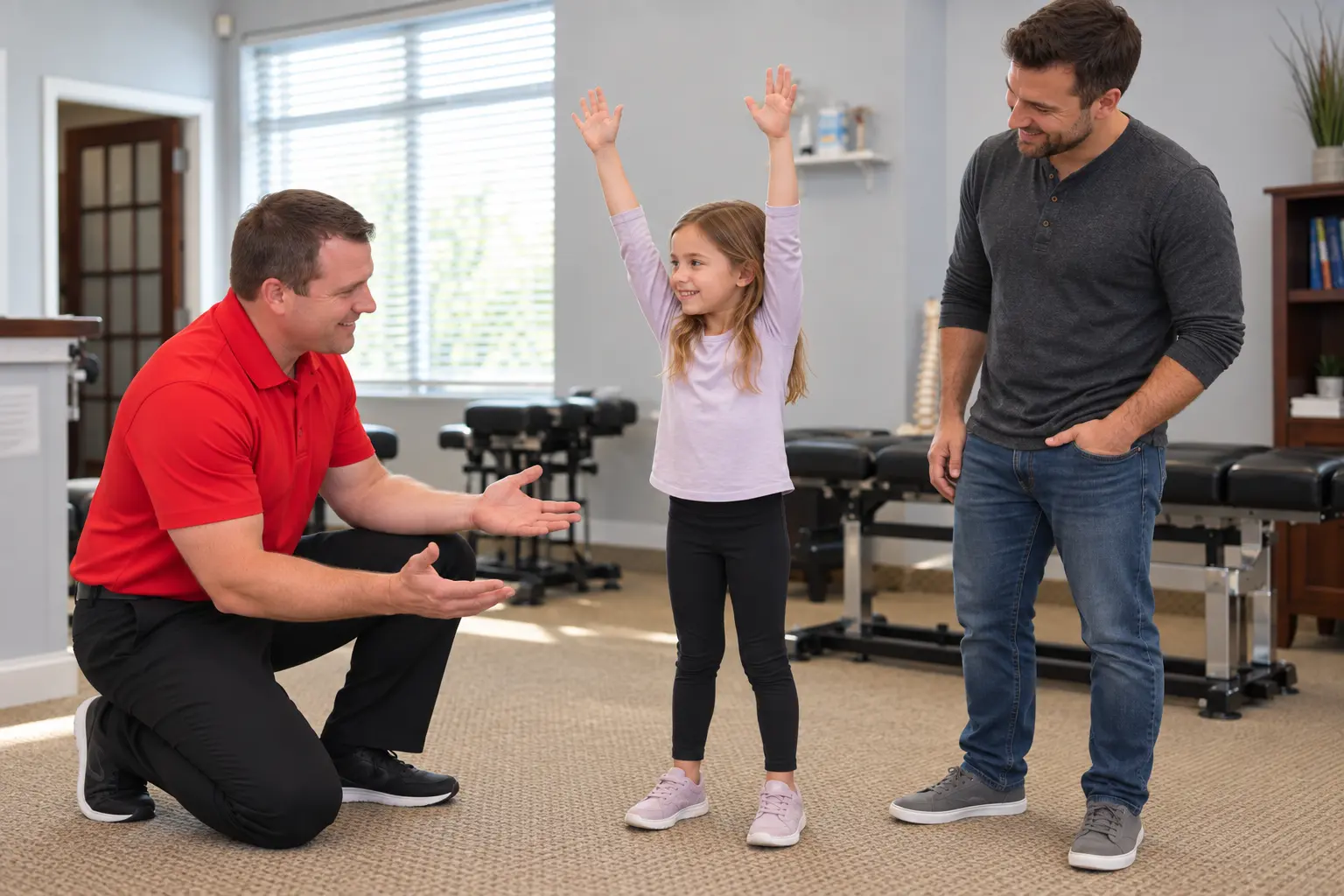
Backpacks, Screen Use, and School-Related Discomfort
Backpacks, classroom seating, homework, gaming, and device use can place repeated demands on a child’s neck, shoulders, and back. These activities do not automatically damage the spine, but they may contribute to muscle fatigue or discomfort when a child remains in one position for a long time or repeatedly carries an uncomfortable load.
A backpack should fit the child rather than being purchased with excessive room for future growth. Both shoulder straps should be used, heavier items should remain close to the back, and unnecessary contents should be removed regularly. A poorly fitted or overloaded backpack may contribute to temporary neck, shoulder, or back strain, but backpacks have not been shown to cause scoliosis.
Screen habits should be approached similarly. There is no single posture a child must hold perfectly throughout the day. Changing positions, taking movement breaks, bringing the screen closer to eye level, and using a supported seat may be more realistic than repeatedly telling a child to sit up straight.
Parents may want to pay attention when symptoms:
- Develop during or after school
- Increase while using a phone, tablet, or computer
- Occur while carrying a backpack
- Improve after moving or changing position
- Interfere with concentration, sleep, sports, or normal activity
- Continue after reasonable adjustments have been made
Team Chiropractic can evaluate whether joint restrictions, muscle tension, an injury, or another musculoskeletal factor may be contributing. Persistent pain should not be dismissed as ordinary posture or school-related strain.
Sports, Exercise, and Youth Activity
Sports can support strength, confidence, coordination, and overall health, but young athletes are not simply smaller adults. Their bodies are still developing, and their training schedules, recovery needs, equipment, technique, and stage of growth can all influence symptoms.
Sports-related concerns may develop after a specific fall, collision, awkward movement, or increase in training. Others appear gradually when the same motion is repeated without adequate recovery.
An evaluation may consider:
- How and when the symptoms began
- The sport, position, and movements involved
- Recent increases in practices, games, or training intensity
- Previous injuries and return-to-play history
- Joint motion, strength, balance, and functional movement
- Whether the child can safely complete normal daily activities
- Whether imaging or medical evaluation should occur before treatment
A young athlete should not be encouraged to play through significant pain. Swelling, visible deformity, inability to bear weight, inability to use an arm, progressive weakness, or severe pain following an injury requires prompt medical assessment.
Any child with a suspected concussion should be removed from activity and evaluated by an appropriate healthcare professional. Chiropractic care does not diagnose concussion clearance or replace a medically supervised return-to-school and return-to-sport process.
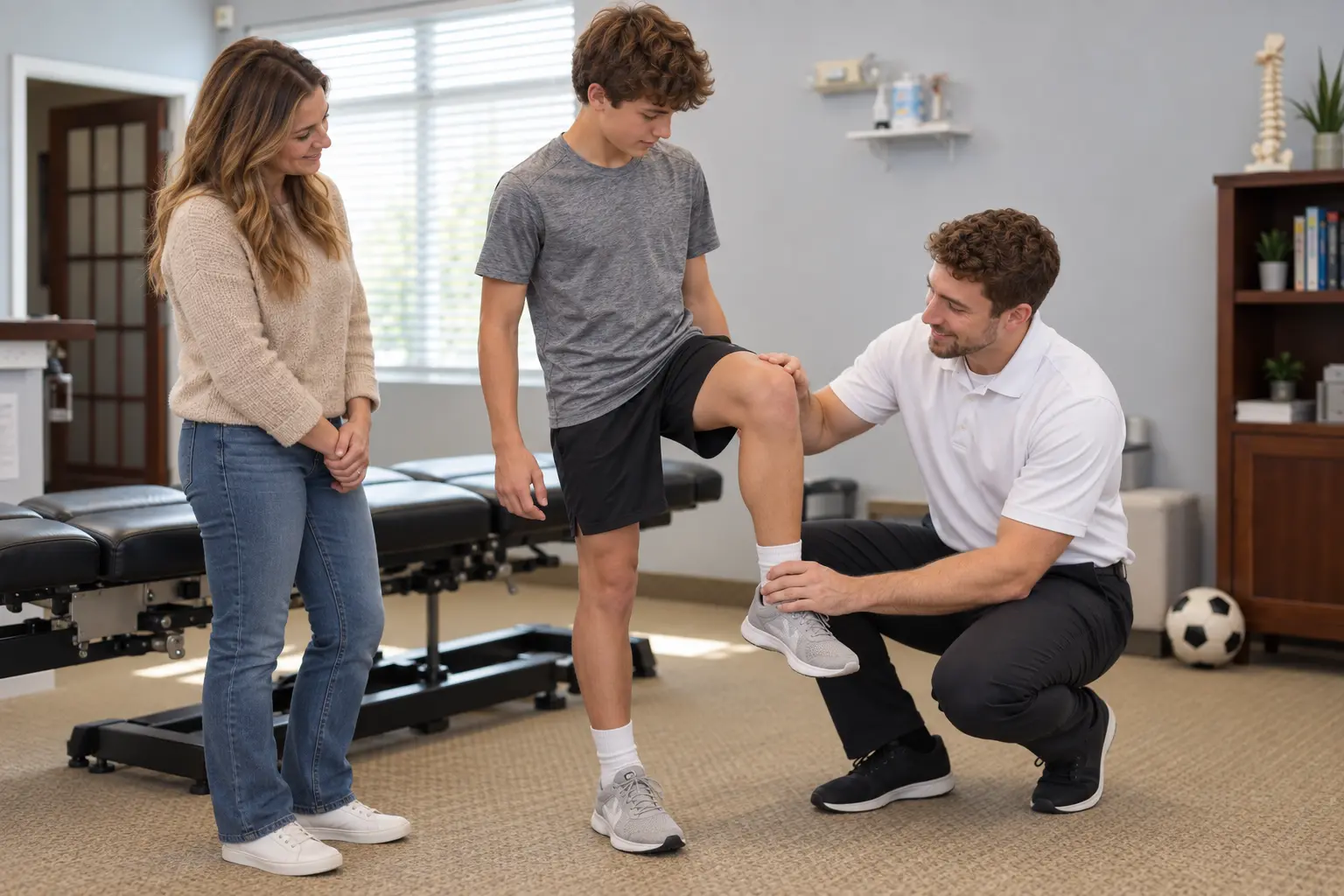
What Is a Chiropractic Adjustment for a Child Like?
Pediatric chiropractic care should be adapted to the child rather than delivered through one standard technique. The chiropractor considers the child’s age, size, health history, symptoms, comfort, and examination findings before deciding whether an adjustment is appropriate.
Some children may receive gentle joint mobilization or a carefully controlled adjustment. Others may benefit more from movement guidance, soft-tissue care, exercises, activity modifications, or referral to another professional. An adjustment does not need to create a popping sound to be considered effective.
A parent or guardian should be involved in the decision-making process. The doctor should explain what is being recommended, why it is being considered, and what alternatives are available. Older children and teenagers should also be encouraged to ask questions and communicate whether they are comfortable with the proposed care.
If a child is frightened, uncomfortable, or unable to tolerate a position, the appointment should be modified or stopped. Care should never depend on forcing a child to participate.
Is Chiropractic Care Safe for Children?
No healthcare treatment is appropriate for every child or completely free of risk. Research specifically examining the effectiveness and safety of spinal manipulation in children is more limited than research involving adults. Parents should receive realistic information about potential benefits, limitations, alternatives, and risks before consenting to care.
Safety begins before treatment. Tell Team Chiropractic about your child’s:
- Medical conditions and diagnoses
- Medications and allergies
- Previous injuries, fractures, surgeries, or concussions
- Developmental or neurological conditions
- Current pediatric, orthopedic, or specialist care
- Recent fever, illness, unexplained fatigue, or weight change
- Pain that wakes the child or becomes progressively worse
- Instructions or activity restrictions from another provider
Team Chiropractic may modify the examination, avoid certain techniques, request medical input, or recommend that another healthcare professional evaluate the child first.
Parents should also tell the child’s pediatrician about complementary care being considered or received. Chiropractic care should work within an appropriate healthcare plan rather than operate separately from the professionals responsible for the child’s overall health.
How Team Chiropractic Evaluates Children and Teens
Health and Injury History
We review current symptoms, medical history, previous injuries, medications, and relevant recommendations from the child’s healthcare providers.
Symptoms and Daily Activities
Your doctor asks when symptoms occur and how school, sports, exercise, sleep, backpacks, devices, or other activities affect them.
Movement and Joint Assessment
The examination may include age-appropriate checks of movement, joint motion, strength, balance, flexibility, tenderness, or neurological function.
Appropriate Next Steps
We explain the findings and whether care, imaging, activity modification, monitoring, or referral to another provider should be considered.

How the Pediatric Chiropractic Process Works
Parent and Child Consultation
Age-Appropriate Evaluation
Findings and Recommendations
Care and Progress Review
What to Expect at a Pediatric Chiropractic Visit
You can begin with a free consultation to discuss your child’s symptoms and learn whether Team Chiropractic may be an appropriate place to start. The free consultation is separate from any examination, imaging, or treatment that may subsequently be recommended.
If you decide to move forward, the doctor will review your child’s medical history, previous injuries, medications, daily activities, sports participation, and current symptoms. Bring relevant medical instructions, imaging reports, athletic restrictions, or information from the pediatrician, physical therapist, athletic trainer, or specialist.
The physical evaluation will be adapted to the child’s age and reason for visiting. It may include observing movement and examining relevant joints, muscles, strength, balance, or neurological function. Not every child needs X-rays, and treatment during the first appointment is not guaranteed.
After the evaluation, the doctor will explain the findings and whether chiropractic care, another Team Chiropractic service, monitoring, medical follow-up, or referral is recommended.
Children should wear comfortable clothing that allows them to move. Parents are encouraged to remain involved, ask questions, and help their child communicate when something feels uncomfortable.

What Pediatric Chiropractic Care May Include
Chiropractic Adjustments
Controlled adjustments or joint mobilization may be considered when restricted movement appears relevant to the child’s symptoms. The technique, position, and amount of force are selected according to the individual child.
Soft Tissue Release
Soft-tissue techniques may be used when muscular tension, overuse, or restricted movement contributes to discomfort. Pressure and positioning should be appropriate for the child’s age, tolerance, and area being addressed.
Sports Rehabilitation
Sports rehabilitation may incorporate movement assessment, mobility work, strengthening, and progressive return-to-activity guidance. Significant injuries and concussion concerns require the appropriate medical evaluation before rehabilitation proceeds.
Custom Orthotics
Foot and lower-body mechanics may be considered when a child experiences relevant foot, ankle, knee, hip, or lower-back concerns. Custom orthotics are not automatically necessary for flat feet, normal growth, or every lower-body complaint.
What Pediatric Chiropractic Does Not Replace—and When to Contact the Pediatrician
Pediatric chiropractic care does not replace the child’s regular medical care. It should not be used instead of:
- Routine pediatric checkups and preventive care
- Developmental, behavioral, vision, or hearing screening
- Diagnosis and treatment of illness or infection
- Vaccination discussions
- Emergency or urgent medical care
- Orthopedic evaluation of fractures or significant injuries
- Medical concussion assessment and clearance
- Physical, occupational, speech, or feeding therapy
- Mental health assessment or treatment
- Care from a pediatric specialist
Chiropractic care should not be presented as a treatment for ear infections, asthma, allergies, ADHD, autism, digestive disease, immune problems, seizures, developmental delays, or other pediatric medical conditions.
Contact your child’s pediatrician or seek prompt medical evaluation for:
- Pain accompanied by fever or signs of illness
- Persistent pain that has no clear explanation
- Pain that repeatedly wakes the child
- Unexplained weight loss, fatigue, or reduced appetite
- Progressive numbness, tingling, weakness, or loss of coordination
- A new limp or difficulty walking
- Pain following a significant fall, collision, or other trauma
- Increasing swelling, bruising, or inability to use an arm or leg
- Severe or recurring headaches
- Changes in bowel or bladder control
- Symptoms that continue to worsen despite rest or activity changes
- Any suspected concussion
Supporting Your Child Between Chiropractic Visits
Between-visit recommendations should reflect the child’s age, symptoms, activities, and healthcare needs. Children should not be expected to follow a complicated routine or complete exercises that have not been demonstrated specifically for them.
Helpful steps may include:
- Encourage regular movement instead of prolonged time in one position.
- Adjust backpacks, desks, screens, or sports equipment when they appear uncomfortable.
- Follow activity restrictions provided by the pediatrician, specialist, coach, or athletic trainer.
- Complete only the exercises recommended for the child.
- Avoid stretching, manipulating, or attempting to adjust the child’s neck or back at home.
- Track which activities improve or aggravate symptoms.
- Allow appropriate recovery between demanding practices and events.
- Encourage the child to report pain rather than hide it to remain in a sport.
- Support consistent sleep, hydration, and regular meals.
- Tell Team Chiropractic and the child’s pediatrician when symptoms change.
The goal is to help the child participate comfortably in normal life—not make the child fearful of movement, posture, sports, or everyday activity.
Why Parents Choose Team Chiropractic
Age-Appropriate Evaluations
Examinations and techniques are adapted to the child’s age, size, symptoms, and comfort.
Parent-Involved Decisions
Parents receive clear explanations and remain involved in decisions about recommended care.
Experience With Active Patients
Our team understands the physical demands associated with youth sports, exercise, school, and recreation.
Two Convenient Offices
Families can seek care at our Raleigh chiropractic office or Wakefield chiropractic office near Wake Forest.
Schedule Today!
Tuesday: 7:30AM–12PM & 3PM–6PM
Wednesday: 7:30AM–12PM
Thursday: 7:30–12PM & 3PM–6PM
Friday: 7:30AM–12PM
Saturday & Sunday: Closed
What age can a child see a chiropractor?
There is no single starting age that makes chiropractic care appropriate for every child. The child’s health history, symptoms, stage of development, pediatric guidance, and reason for seeking an evaluation are more important than reaching a particular age.
For children younger than one, parents can learn more about Team Chiropractic’s separate approach to infant chiropractic care.
Is pediatric chiropractic care safe?
No healthcare treatment is entirely free of risk, and research specifically examining spinal manipulation in children remains limited. Appropriate screening, age-adapted techniques, parental consent, communication with the child, and coordination with pediatric care are important.
How is a child’s chiropractic adjustment different from an adult adjustment?
The technique, positioning, and amount of force should be selected according to the child’s age, size, examination findings, and comfort. A pediatric appointment should not automatically reproduce the same techniques used for an adult.
Does pediatric chiropractic involve cracking or popping?
Not necessarily. An adjustment does not need to produce a sound. Depending on the child’s findings, the chiropractor may use gentle mobilization, a controlled adjustment, soft-tissue care, exercises, or another approach.
Can a chiropractor evaluate back or neck pain in children?
A chiropractor can evaluate possible musculoskeletal factors associated with back or neck discomfort. Persistent, severe, nighttime, unexplained, or injury-related pain may require pediatric, orthopedic, or other medical evaluation.
Can backpacks cause back pain in children?
A backpack that is too large, poorly fitted, worn on one shoulder, or unnecessarily heavy may contribute to temporary neck, shoulder, or back strain. Backpacks have not been shown to cause scoliosis or another permanent spinal deformity.
Can screen use cause poor posture?
Prolonged screen use may contribute to muscle fatigue, stiffness, or discomfort, particularly when a child remains in one position for a long time. The goal should be comfortable support and regular movement rather than maintaining one perfect posture.
Can children visit a chiropractor after a sports injury?
Some musculoskeletal sports concerns may be appropriate for chiropractic care or sports rehabilitation after evaluation. Suspected fractures, concussions, significant swelling, deformity, instability, or inability to bear weight require appropriate medical assessment first.
Can chiropractic care treat scoliosis?
Chiropractic care should not be presented as a cure for structural scoliosis or as a replacement for pediatric or orthopedic monitoring. Conservative care may sometimes address coexisting muscular discomfort or mobility concerns, but the child’s scoliosis care plan should remain coordinated with the appropriate medical provider.
Does pediatric chiropractic treat ear infections, asthma, ADHD, or developmental conditions?
No. Chiropractic care should not replace evidence-based pediatric treatment for infections, respiratory conditions, behavioral concerns, developmental differences, neurological disorders, or other medical conditions.
Does my child need a pediatrician’s referral?
A referral is not required to schedule a consultation, but insurance requirements and individual medical circumstances vary. Parents should keep the child’s pediatrician informed about complementary care, especially when the child has an existing condition or receives specialist care.
Will my child need X-rays?
Not every child needs X-rays. Team Chiropractic can take X-rays when clinically appropriate, but imaging should have a clear reason based on the child’s history, age, symptoms, and examination findings.
Will my child receive treatment during the first appointment?
Treatment during the first appointment is not guaranteed. The doctor may recommend further evaluation, imaging, pediatric follow-up, activity modification, or another form of care before beginning chiropractic treatment.
How often would a child need chiropractic care?
There is no standard schedule for every child. Any recommended frequency should reflect the child’s findings, goals, response, and continued need for care. The plan should be reassessed rather than continued automatically.
Is pediatric chiropractic care available at both locations?
Team Chiropractic serves families through its Raleigh office on West Millbrook Road and its Wakefield office in North Raleigh near Wake Forest. Contact your preferred office before scheduling to confirm pediatric provider availability.