Pain that begins near the lower back or buttock and travels toward the leg is often called sciatica. However, irritation around the sacroiliac joint can produce a surprisingly similar pattern.
The simplest distinction is that SI joint pain originates around the joint connecting the pelvis and sacrum, while sciatica involves irritation or compression of a nerve root in the lower spine. SI joint pain is commonly concentrated in one side of the lower back or buttock. Sciatica is more likely to cause nerve-related symptoms—such as burning pain, tingling, numbness, or weakness—that travel farther down the leg.
Those patterns provide clues, but they do not confirm the cause. Hip problems, lumbar disc injuries, muscle irritation, and other conditions can produce overlapping symptoms. A thorough examination is the best way to determine what may be contributing to the pain.
What Is the SI Joint?
The sacroiliac joints—usually shortened to SI joints—sit where the sacrum at the base of the spine meets the right and left sides of the pelvis.
These joints do not move through a large range of motion. Instead, they help transfer force between the upper body and the legs while providing stability during walking, bending, climbing stairs, and changing positions.
Pain may develop when the tissues around an SI joint become irritated or when the joint is not managing load effectively. This can be associated with stiffness, reduced stability, pregnancy-related changes, an uneven loading pattern, repetitive activity, or a sudden force such as a fall.
SI joint pain is frequently felt:
- On one side of the lower back
- Near the “dimple” area at the back of the pelvis
- Deep within one buttock
- Around the outside of the hip
- In the groin or upper thigh
- Occasionally along the back of the thigh
Although SI joint symptoms may extend into the leg, pain is commonly more concentrated around the pelvis and buttock than true nerve-root pain.
What Is Sciatica?
Sciatica describes symptoms caused by irritation or compression of one or more nerve roots that contribute to the sciatic nerve. It is a symptom pattern rather than a diagnosis by itself.
A lumbar disc problem is one possible cause, but it is not the only one. Degenerative changes, narrowing around a nerve, inflammation, or other conditions affecting the lower spine may also produce sciatic symptoms.
Common signs include:
- Sharp, burning, or electric pain
- Pain traveling from the lower back or buttock into the leg
- Tingling or “pins and needles”
- Numbness in part of the leg or foot
- Leg or foot weakness
- Symptoms that follow a recognizable nerve distribution
- Increased pain with coughing, sneezing, prolonged sitting, or certain spinal movements
Someone can experience sciatica with significant back pain, mild back discomfort, or almost no back pain at all. Learn more about sciatica symptoms and care at Team Chiropractic.
SI Joint Pain vs. Sciatica at a Glance
| Symptom or Pattern | SI Joint Pain | Sciatica |
|---|---|---|
| Likely source | Joint and surrounding tissues where the pelvis meets the sacrum | Irritated or compressed nerve root in the lower spine |
| Common location | One side of the low back, pelvic-dimple area, or buttock | Lower back or buttock with pain extending into the leg |
| Typical pain quality | Aching, sharp, catching, or localized tenderness | Burning, electric, shooting, or searing |
| Tingling or numbness | Less typical | More common |
| Muscle weakness | Not usually caused by the SI joint alone | Possible when nerve function is affected |
| How far pain travels | Often buttock, hip, groin, or thigh | May travel below the knee and into the calf or foot |
| Common aggravating activities | Stairs, standing on one leg, rolling in bed, long strides, or rising from a chair | Sitting, bending, coughing, sneezing, or movements that tension the affected nerve |
| Evaluation focus | SI joint provocation, pelvic function, hips, and surrounding muscles | Neurological function, lumbar movement, nerve tension, strength, sensation, and reflexes |
These are general tendencies rather than strict rules. Either condition can present differently, and both problems can occur at the same time.
Where Is SI Joint Pain Usually Felt?
SI joint pain is often strongest just below the beltline and slightly to one side rather than directly over the center of the spine. A patient may be able to point to the painful area with one finger near the back of the pelvis.
Symptoms may become more noticeable when:
- Getting into or out of a vehicle
- Turning over in bed
- Climbing stairs
- Standing on one leg to dress
- Moving from sitting to standing
- Walking with long strides
- Standing or sitting for an extended period
- Carrying weight primarily on one side
Some people also notice discomfort after running, lifting, or suddenly increasing their activity. Pregnancy and the postpartum period can change how forces move through the pelvis, although pelvic pain during pregnancy still requires an individualized evaluation.
What Does Sciatica Usually Feel Like?
Sciatica tends to have a more distinctly neurological character. Patients frequently describe the pain as shooting, burning, electric, or traveling along a line.
Depending on which nerve root is involved, symptoms can extend through the back or side of the thigh and into the calf, ankle, foot, or toes. Numbness and tingling may affect a specific region rather than the entire leg.
A person may also notice:
- Difficulty lifting the front of the foot
- Weakness when pushing through the toes
- A difference in strength between the legs
- Reduced sensation in part of the leg or foot
- Symptoms that worsen with coughing or sneezing
Pain below the knee can increase suspicion of nerve involvement, but location alone is not enough to diagnose sciatica. Other tissues can refer pain into the leg, and not every case follows a textbook pattern.
Why Are the Two Conditions So Easy to Confuse?
The lower spine, SI joints, hips, pelvic muscles, and nerves occupy a relatively small area. Irritation in one structure can also change how the surrounding areas move and absorb force.
For example, someone with lower-back pain may shift weight away from one side, placing more stress on the opposite SI joint. A painful SI joint may alter walking mechanics and cause the lower-back muscles to tighten. A hip problem can create buttock or thigh pain that resembles either condition.
This is why “the pain goes down my leg” does not automatically mean sciatica. It is an important clue, but the quality, distribution, triggers, neurological findings, and physical examination all matter.
Can SI Joint Pain Travel Down the Leg?
Yes. SI joint pain can refer into the buttock, hip, groin, and thigh. In some cases, discomfort may extend farther down the leg.
The important distinction is that referred SI joint pain does not necessarily mean a nerve is compressed. True sciatica is associated with irritation of a spinal nerve root and is therefore more likely to include numbness, tingling, reflex changes, or muscle weakness.
Because the patterns overlap, trying to identify the cause from a diagram or symptom checklist can be misleading. Research supports using a combination of history and physical tests rather than relying on a single maneuver to identify possible SI joint involvement.
Common Causes and Contributing Factors
SI joint symptoms may begin after:
- A fall onto the hip or buttock
- Missing a step or landing awkwardly
- Repetitive running or jumping
- Frequently carrying a child or heavy object on one side
- Pregnancy or postpartum changes
- A difference in hip mobility or strength
- Prolonged asymmetrical sitting or standing
- Returning to activity too quickly
Sciatic symptoms may be associated with:
- A lumbar disc bulge or herniation
- Degenerative changes in the lower spine
- Narrowing around a spinal nerve
- Inflammation near a nerve root
- An injury affecting the lumbar spine
- Repetitive bending, lifting, or twisting
Finding one of these factors does not automatically establish the diagnosis. The same activity can aggravate several different structures.
How Team Chiropractic Evaluates Buttock and Leg Pain
At Team Chiropractic, the evaluation is designed to identify the most likely source of the symptoms—not simply attach the word “sciatica” to any pain traveling into the leg.
Symptom History and Pain Pattern
Your chiropractor will ask where the symptoms begin, where they travel, what they feel like, and which activities make them better or worse. Changes in sensation, strength, balance, and bladder or bowel function are also important.
SI Joint Provocation Testing
Rather than relying on one isolated test, the examination may use several controlled maneuvers that place stress across the SI joint. A consistent response across multiple tests provides more useful information than a single positive finding.
Neurological Examination
Strength, sensation, reflexes, and nerve-tension testing can help determine whether a lumbar nerve root may be involved. These findings are particularly important when symptoms include numbness, tingling, or weakness.
Lower-Back, Hip, and Movement Assessment
The examination may also assess lumbar movement, hip mobility, pelvic control, muscle function, posture, gait, and the activities that reproduce symptoms. This broader assessment helps identify overlapping or contributing problems.
Will You Need an X-Ray or MRI?
Not every person with lower-back, buttock, or leg pain needs immediate imaging. Clinical guidelines generally discourage routine imaging for uncomplicated low-back pain without red flags because an image does not always explain the symptoms or change the initial care plan.
Team Chiropractic can take X-rays when they are clinically appropriate. X-rays may help evaluate bone structure, alignment, degeneration, or the effects of trauma, but they do not directly show every disc, nerve, ligament, or soft-tissue problem.
If the examination suggests that MRI, laboratory testing, an injection, or another medical evaluation may be necessary, the team can explain why and coordinate an appropriate referral.
Care Options Depend on the Actual Cause
SI joint pain and sciatica should not automatically receive the same treatment. Care should reflect the examination findings, symptom severity, health history, and functional goals.
A plan at Team Chiropractic may include:
Chiropractic Adjustments
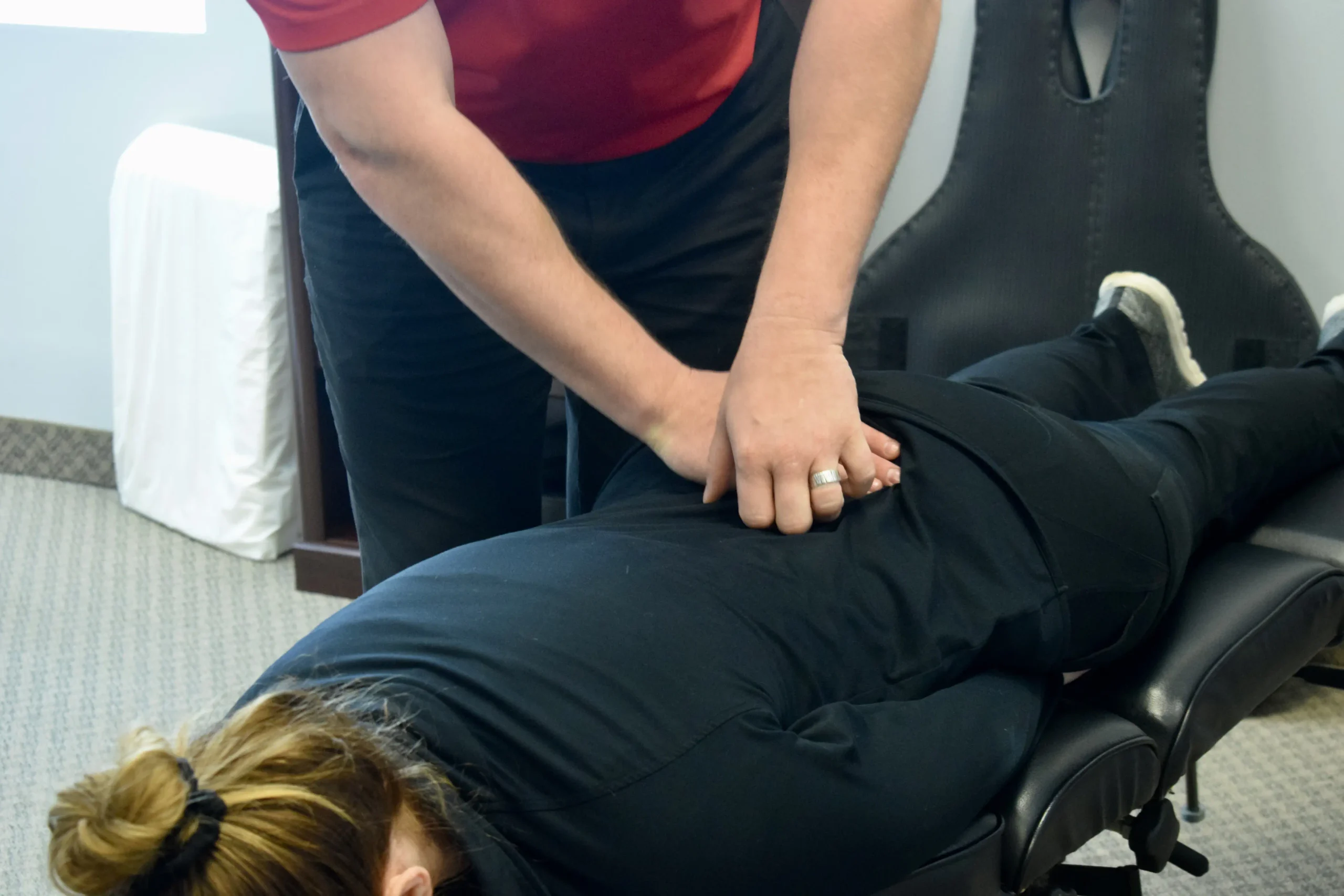
Carefully selected chiropractic adjustments may be used to address restricted movement in the lower back, pelvis, or other contributing areas. The technique and intensity are adapted to the individual.
Soft-Tissue Care
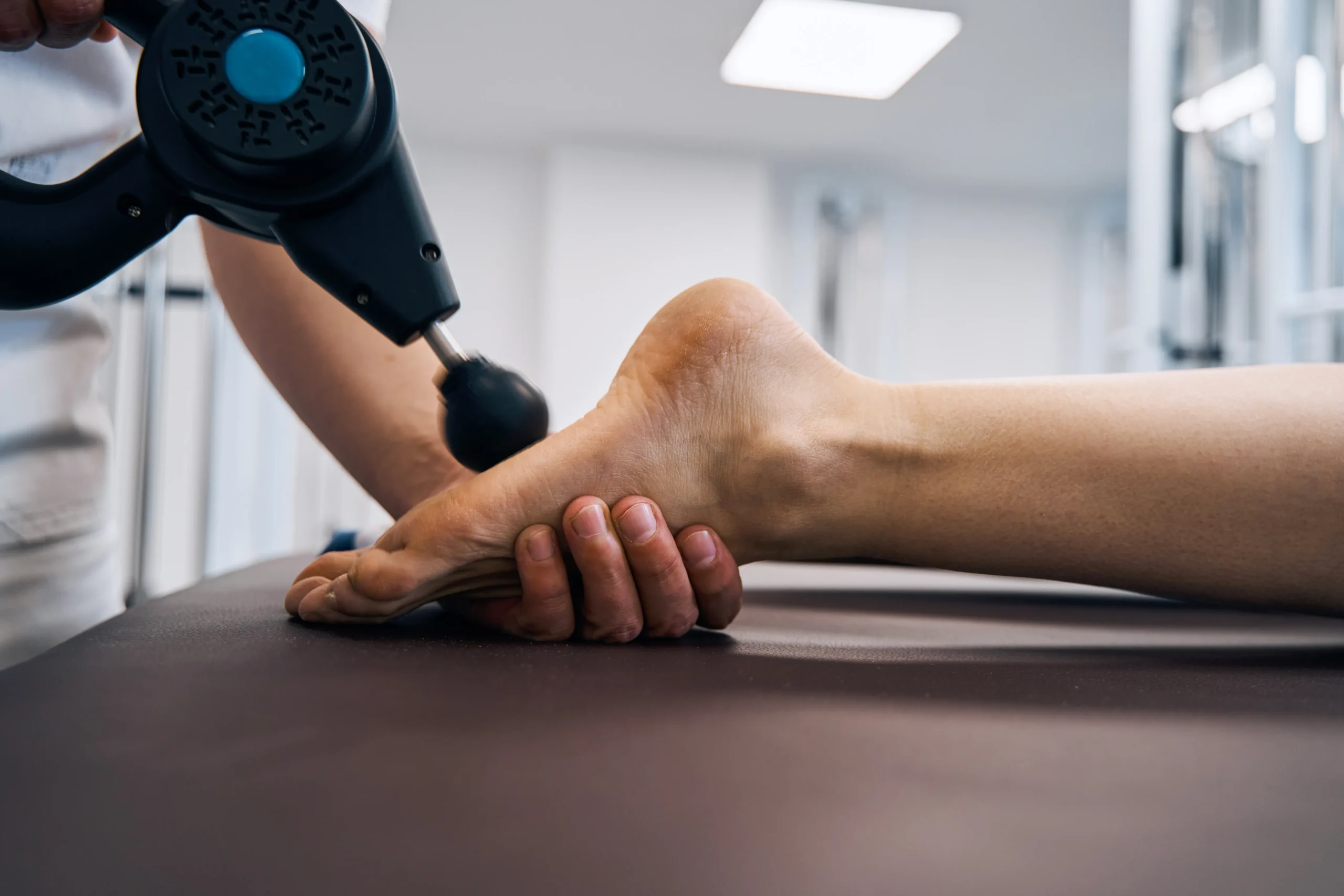
Soft-tissue release may be incorporated when muscle tension or restricted tissue movement around the hips, pelvis, or lower back contributes to discomfort.
Rehabilitation and Stabilization
Exercises may focus on trunk control, hip strength, pelvic stability, mobility, and gradually rebuilding tolerance for daily or athletic activity. The goal is not merely to reduce symptoms temporarily, but to improve how the area manages load.
Spinal Decompression
Spinal decompression therapy may be considered in selected cases involving certain lumbar disc or nerve-related presentations. It is not automatically appropriate for every person with leg pain and is not a primary treatment for every SI joint complaint.
Gait and Foot Support
When walking mechanics or lower-extremity loading appear relevant, the examination may include the feet and gait. In selected cases, custom orthotics may be considered as one component of a broader plan.
What Can You Do While Waiting for an Evaluation?
Avoid repeatedly forcing a stretch simply because it appears in a general “sciatica routine.” A movement that helps one cause of leg pain may aggravate another.
Until you understand the likely source:
- Change positions regularly instead of remaining seated for hours.
- Take short, comfortable walks if walking does not increase symptoms.
- Avoid repeatedly lifting and twisting through pain.
- Notice whether symptoms remain near the buttock or travel farther down the leg.
- Pay attention to numbness, tingling, or changes in strength.
- Use heat or cold based on comfort and medical guidance.
- Avoid aggressively manipulating the painful area yourself.
Complete bed rest is rarely the best long-term response to uncomplicated back pain. Comfortable movement is generally preferable, but the appropriate activity level depends on the symptoms and examination findings.
When Leg Pain Needs Prompt Medical Attention
Seek urgent medical evaluation if lower-back or leg symptoms are accompanied by:
- New loss of bladder or bowel control
- Numbness around the groin, genitals, or inner thighs
- Rapidly progressing leg weakness
- Symptoms affecting both legs suddenly
- Severe pain after a significant accident or fall
- Fever, chills, or signs of infection
- Unexplained weight loss
- A history of cancer with new or unusual back pain
New bowel or bladder dysfunction, saddle-area numbness, and progressive neurological weakness are recognized warning signs requiring urgent assessment.
Find the Source Before Choosing the Treatment
SI joint pain and sciatica can both produce lower-back, buttock, and leg symptoms, but they involve different structures and may require different approaches.
Team Chiropractic evaluates the lower back, pelvis, hips, neurological function, and movement patterns to determine what may be contributing to the problem. From there, the team can recommend appropriate conservative care or refer for further medical evaluation when needed.
Patients can visit Team Chiropractic’s Raleigh chiropractic office or Wakefield chiropractic office, serving North Raleigh and the Wake Forest area.
A free consultation is an opportunity to discuss your concerns and determine whether the office may be a good fit. Any examination, imaging, or treatment is separate and will be discussed with you before proceeding.
Frequently Asked Questions
Is SI joint pain the same as sciatica?
No. SI joint pain originates around the joint between the sacrum and pelvis. Sciatica describes symptoms produced by irritation or compression of a nerve root in the lower spine. Their pain patterns can overlap, which is why an examination is important.
Can SI joint pain cause pain below the knee?
SI joint pain most often refers into the buttock, hip, groin, or thigh, but symptom patterns can vary. Pain below the knee—especially when accompanied by tingling, numbness, or weakness—raises greater concern for nerve involvement or another cause and should be evaluated.
Does sciatica always cause numbness or tingling?
No. Some people primarily experience pain. However, burning, tingling, numbness, and weakness are more suggestive of nerve involvement than isolated SI joint irritation.
Does sciatica always reach the foot?
No. Sciatic symptoms may end in the buttock, thigh, or calf, depending on the affected nerve root and severity. The distance pain travels is only one part of the evaluation.
Can someone have SI joint pain and sciatica at the same time?
Yes. A person can have more than one contributing problem. Pain may also change movement patterns in ways that place added stress on surrounding joints, muscles, and nerves.
How is SI joint pain diagnosed?
Evaluation usually includes a detailed history, examination of the lower back and hips, and a cluster of SI joint provocation tests. No single symptom or test is definitive in every case. In some situations, a physician may use a diagnostic injection to confirm that the SI joint is the primary pain source.
Do I need an X-ray for SI joint pain or sciatica?
Not necessarily. Imaging decisions depend on the history, examination, duration of symptoms, trauma, neurological findings, and presence of warning signs. Team Chiropractic offers X-rays when clinically appropriate and can recommend further medical imaging when necessary.
Can chiropractic care help SI joint pain or sciatica?
Conservative care may help some people, but the approach depends on what is causing the symptoms. Chiropractic adjustments, soft-tissue care, exercise, and other services should be selected after an appropriate evaluation rather than applied as a one-size-fits-all treatment.
How long does recovery take?
Recovery time varies according to the cause, severity, duration, health history, and demands placed on the area. A recent mechanical irritation may improve relatively quickly, while persistent nerve symptoms or recurring pelvic instability may require a longer, progressive plan.
Should I see a chiropractor or a medical doctor?
A chiropractor can evaluate many mechanical causes of lower-back, pelvic, and leg pain. Medical or emergency evaluation is more appropriate when symptoms involve significant trauma, progressive weakness, bowel or bladder changes, saddle numbness, infection signs, or another serious concern. Team Chiropractic can also recommend a referral when findings fall outside the appropriate scope of conservative chiropractic care.