Knee pain on stairs is often associated with the kneecap and surrounding tissues, but it can also come from a tendon injury, arthritis, meniscus problem, or changes in how the hips, ankles, and feet control movement.
The direction that bothers you may provide a clue. Going downstairs generally requires the front thigh muscles to control your body as you lower onto one leg. Going upstairs requires those muscles to generate enough force to lift your body. Both movements bend and load the knee, but they challenge it in different ways.
That means pain only on stairs is still worth evaluating—especially when it keeps returning, affects other activities, or comes with swelling, locking, or instability.
Why Do Stairs Place So Much Demand on the Knees?
Walking across a level surface allows the hips, knees, and ankles to move through a relatively modest range. Climbing stairs requires greater knee bending and more muscular force. Descending requires controlled lowering while your body weight is supported primarily by one leg.
During stair use:
- The quadriceps control bending and straightening of the knee.
- The kneecap moves within a groove at the end of the thigh bone.
- The hip muscles help control the position of the thigh and pelvis.
- The ankle must allow the lower leg to move forward.
- The foot provides a stable base as weight transfers between steps.
Pain may appear when a tissue is irritated, when the joint is sensitive to load, or when one part of this movement is limited. The knee may be the painful area without being the only area contributing to the problem.
Knee Pain Going Downstairs vs. Going Upstairs
The difference between ascending and descending can help guide an examination, but it does not establish a diagnosis.
Pain Going Downstairs
Descending stairs requires the quadriceps to work while lengthening so your body does not simply drop onto the next step. The knee also remains bent while supporting weight.
Pain going downstairs is frequently associated with:
- Patellofemoral pain around or behind the kneecap
- Irritation of the cartilage or tissues around the kneecap
- Quadriceps weakness or reduced control
- Limited hip or ankle function
- Knee arthritis
- Difficulty absorbing force after an injury
Patellofemoral pain commonly becomes worse during activities that load a bent knee, including descending stairs, squatting, and sitting for an extended period.
Pain Going Upstairs
Climbing requires the quadriceps, gluteal muscles, and calf to generate force to raise the body onto the next step.
Pain while going up may involve:
- Patellofemoral pain
- Patellar or quadriceps tendon irritation
- Knee arthritis
- Muscle weakness or fatigue
- A recent increase in running, jumping, or strength training
- An injury that makes pushing through the leg uncomfortable
Pain going up and down stairs can involve the same condition. Your doctor will also consider where the pain occurs, whether it began suddenly or gradually, and which other movements produce symptoms.
Common Causes of Knee Pain on Stairs
Several conditions can make stair use uncomfortable. Some have overlapping symptoms, so the painful location is only one part of the evaluation.
Patellofemoral Pain
Patellofemoral pain is felt around or behind the kneecap. It is sometimes called “runner’s knee,” although it can affect people who do not run.
Common symptoms include:
- Dull or aching pain around the kneecap
- Pain while climbing or descending stairs
- Discomfort during squats, lunges, or running
- Pain after sitting with the knee bent
- Grinding or clicking that may or may not be painful
- Symptoms following an increase in activity
This pain is not always caused by the kneecap being structurally damaged or permanently “out of place.” Training load, strength, coordination, mobility, previous injuries, and tissue sensitivity may all contribute.
Patellar or Quadriceps Tendon Irritation
The quadriceps tendon connects the thigh muscles to the kneecap. The patellar tendon extends from the kneecap toward the shin.
Tendon pain is frequently more localized than general kneecap pain. Patellar tendon symptoms often occur just below the kneecap, while quadriceps tendon symptoms may be felt directly above it.
Pain may become more noticeable during:
- Jumping or landing
- Running hills
- Climbing stairs
- Squatting
- Accelerating or changing direction
- Rising from a low chair
Tendon problems often develop after activity increases faster than the tissue can adapt. Complete rest is not always the long-term solution, but continuing the same aggravating workload can prevent recovery.
Knee Osteoarthritis
Knee osteoarthritis becomes more common with age but does not affect everyone in the same way. It may cause pain, stiffness, swelling, grinding, or reduced motion.
Symptoms can include:
- Pain during weight-bearing activities
- Difficulty climbing stairs or rising from a chair
- Stiffness after resting
- Reduced ability to fully bend or straighten the knee
- Swelling that changes with activity
- A gradual decline in walking or exercise tolerance
The severity of changes visible on an X-ray does not always match the severity of symptoms. Evaluation should consider both imaging and how the knee functions.
Meniscus Injury or Irritation
The menisci are cartilage structures that help distribute load within the knee. An injury may occur during a twisting movement, deep squat, awkward landing, or sports activity. Degenerative meniscal changes can also develop gradually.
Possible symptoms include:
- Pain along the inner or outer joint line
- Swelling after activity
- Pain with twisting or deep bending
- Catching or clicking
- A sensation that the knee may give way
- True locking that prevents the knee from fully moving
Clicking without pain is common and does not automatically indicate a meniscus tear. A knee that becomes physically locked or markedly swollen requires more prompt evaluation.
Sprain, Strain, or Other Injury
Pain may also follow a direct impact, awkward step, sudden direction change, or fall. Ligaments, muscles, tendons, cartilage, or bone may be affected.
An injury is more concerning when it causes immediate swelling, a loud pop, an inability to bear weight, visible deformity, or significant instability.
Team Chiropractic evaluates sports injuries and activity-related knee pain and can determine when conservative care is appropriate or an orthopedic referral is needed.
Why Your Hips, Ankles, and Feet Matter
The knee operates between the hip and ankle. Restricted ankle movement may change how the knee travels forward over the foot. Reduced hip strength or control may alter the position of the thigh and knee during a step-down. Footwear and foot mechanics can also affect how force moves through the leg.
This does not mean every knee problem begins in the feet or that one visible movement pattern is automatically harmful. Instead, the entire lower limb should be considered when the symptoms repeatedly occur during stairs, running, squatting, or jumping.
For example, two people with pain near the kneecap may need different plans:
- One may need gradual quadriceps strengthening and better control during step-down movements.
- Another may need improved ankle mobility and temporary activity modification.
- A third may have joint irritation that requires medical evaluation before progressing exercise.
The useful question is not simply, “Are my knees moving perfectly?” It is, “Which findings are connected to my symptoms and can be safely modified?”
Does Cracking or Grinding Mean the Knee Is Damaged?
Knees frequently pop, crack, or grind during stairs and squats. These sounds are sometimes called crepitus.
Noise without pain, swelling, locking, or loss of function is not automatically a sign of damage. It may occur as tissues move or pressure changes within the joint.
Noisy movement should be evaluated when it is accompanied by:
- Persistent or increasing pain
- Recurrent swelling
- Catching or locking
- A recent injury
- Instability
- Loss of motion
- Difficulty bearing weight
The sound itself is less important than the symptoms and functional changes occurring with it.
What Can You Do About Knee Pain on Stairs?
Avoid repeatedly pushing through sharp or increasing pain. At the same time, completely avoiding movement for an extended period may reduce strength and make returning to activity more difficult.
Short-term strategies may include:
- Use the handrail to reduce demand on the painful leg.
- Take stairs slowly and avoid rushing.
- Temporarily reduce repeated stair workouts, deep squats, or jumping.
- Choose a lower step height when completing necessary tasks.
- Avoid suddenly increasing running mileage or leg-training volume.
- Wear stable shoes appropriate for the activity.
- Use an elevator temporarily when stair use causes significant pain.
- Note whether the pain occurs going up, down, or in both directions.
- Monitor swelling, locking, instability, and changes in strength.
Do not force a stretch or copy a rehabilitation routine solely because someone online has pain in the same location. Patellofemoral pain, tendon irritation, arthritis, and meniscal injuries do not necessarily require the same exercises.
How Team Chiropractic Evaluates Knee Pain
A useful knee evaluation includes the knee itself and the surrounding areas that help control stair movement.
Symptom and Activity History
Your doctor will ask where the pain occurs, when it began, and whether there was an injury or recent change in activity. Swelling, clicking, locking, instability, and previous knee problems are also important.
Knee Motion and Tissue Assessment
The examination may assess active and passive motion, tenderness, swelling, strength, and how comfortably the knee bends and straightens.
Functional Movement
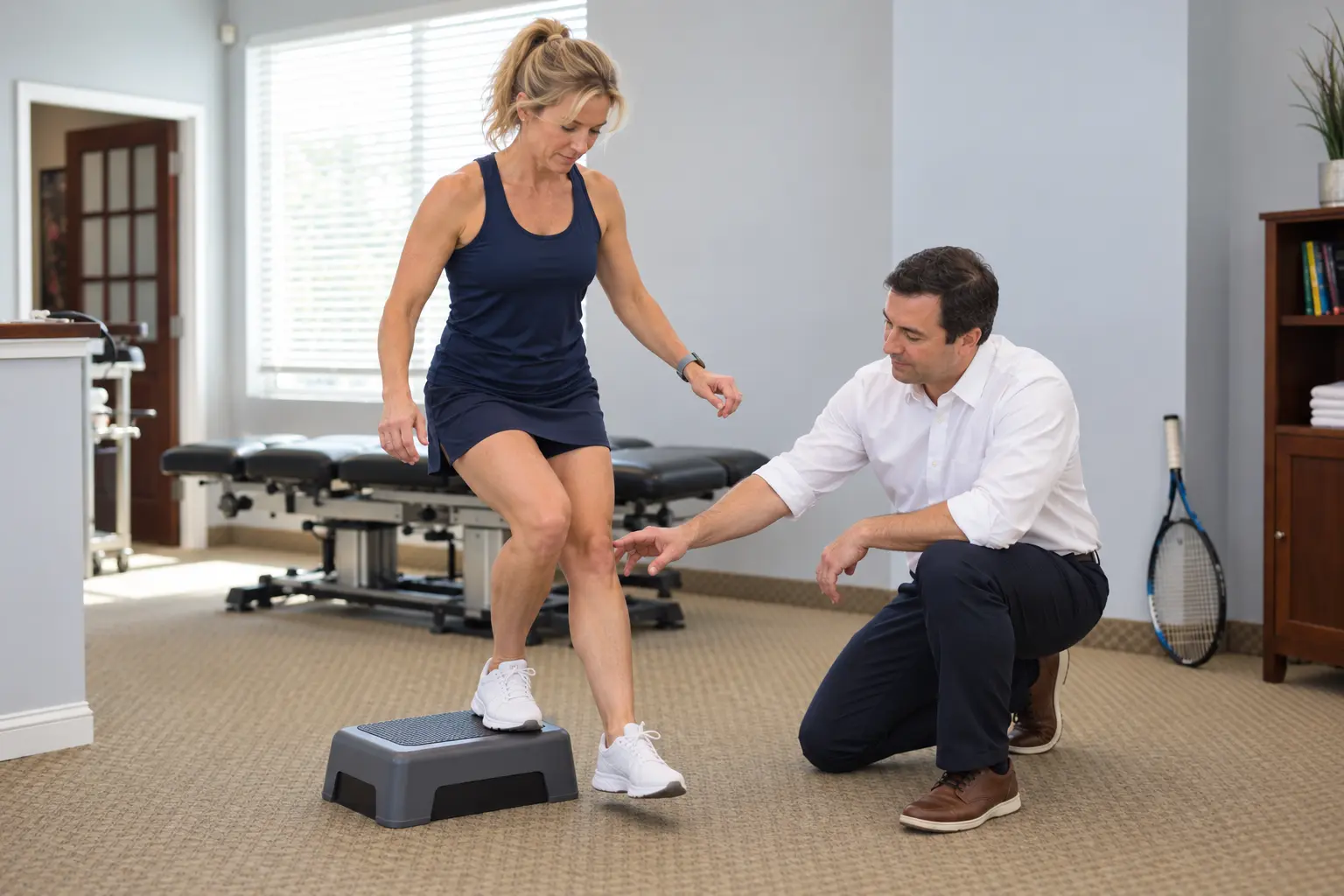
You may be asked to complete a squat, step-up, step-down, walking task, or another movement related to your symptoms. The purpose is not to grade your form as “good” or “bad,” but to identify movements that reproduce the pain and factors that may be modified.
Hip, Ankle, and Foot Evaluation
Hip strength, ankle mobility, balance, gait, and foot mechanics may be assessed when they appear relevant. Knee evaluation is most useful when findings are considered together rather than relying on one isolated test.
Will You Need an X-Ray or MRI?
Not every person with knee pain needs immediate imaging.
X-rays may be helpful when the examination suggests arthritis, fracture, significant joint changes, or another bone-related concern. For chronic knee pain requiring initial imaging, radiographs are commonly the first recommended study. Team Chiropractic can take X-rays when they are clinically appropriate.
However, X-rays do not directly show every tendon, ligament, cartilage, or meniscus injury. MRI or another imaging study may be considered when the history and examination suggest a significant soft-tissue injury or when symptoms persist despite appropriate care.
If advanced imaging, medication management, an injection, or an orthopedic opinion is needed, Team Chiropractic can explain the findings and recommend an appropriate referral.
What Knee Pain Care May Include
Care depends on the likely source, severity, health history, activity demands, and goals. No single service is appropriate for everyone with knee pain.
Sports Rehabilitation
Sports rehabilitation may include progressive exercises for quadriceps strength, hip control, balance, mobility, and tolerance for stairs or athletic activity. The program should increase demand gradually instead of forcing painful movement too quickly.
Soft-Tissue Release
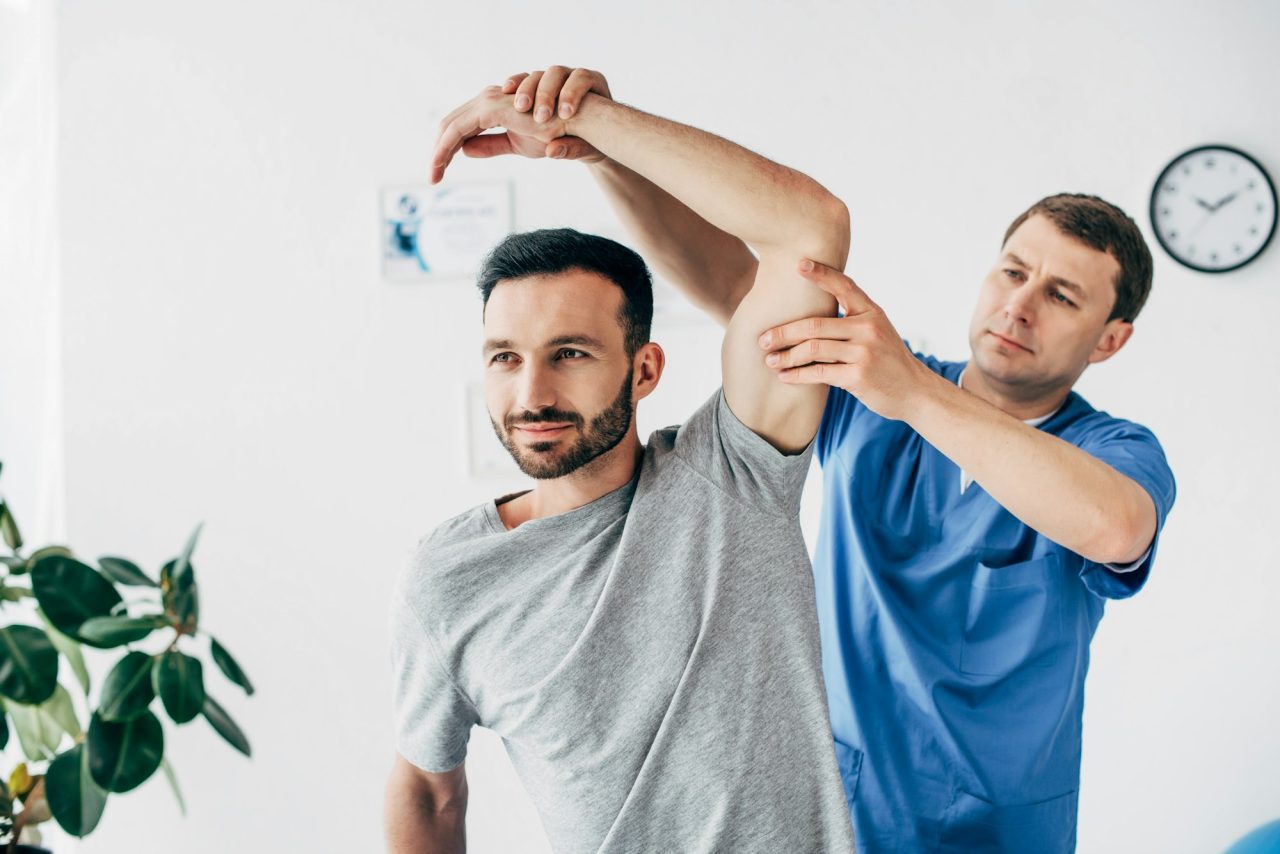
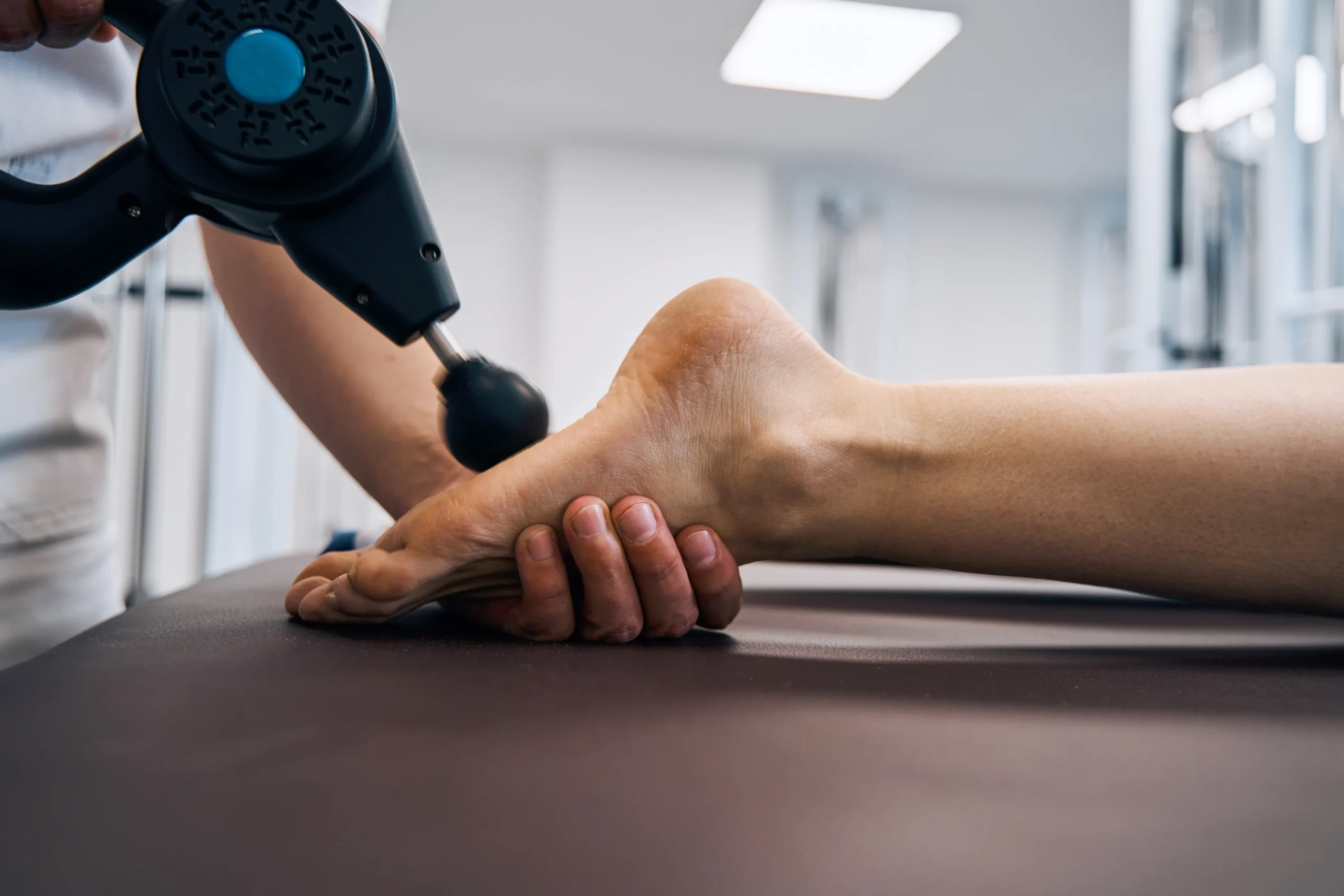
Soft-tissue release may be incorporated when muscular or soft-tissue restrictions appear to contribute to discomfort or limited movement.
Chiropractic Adjustments
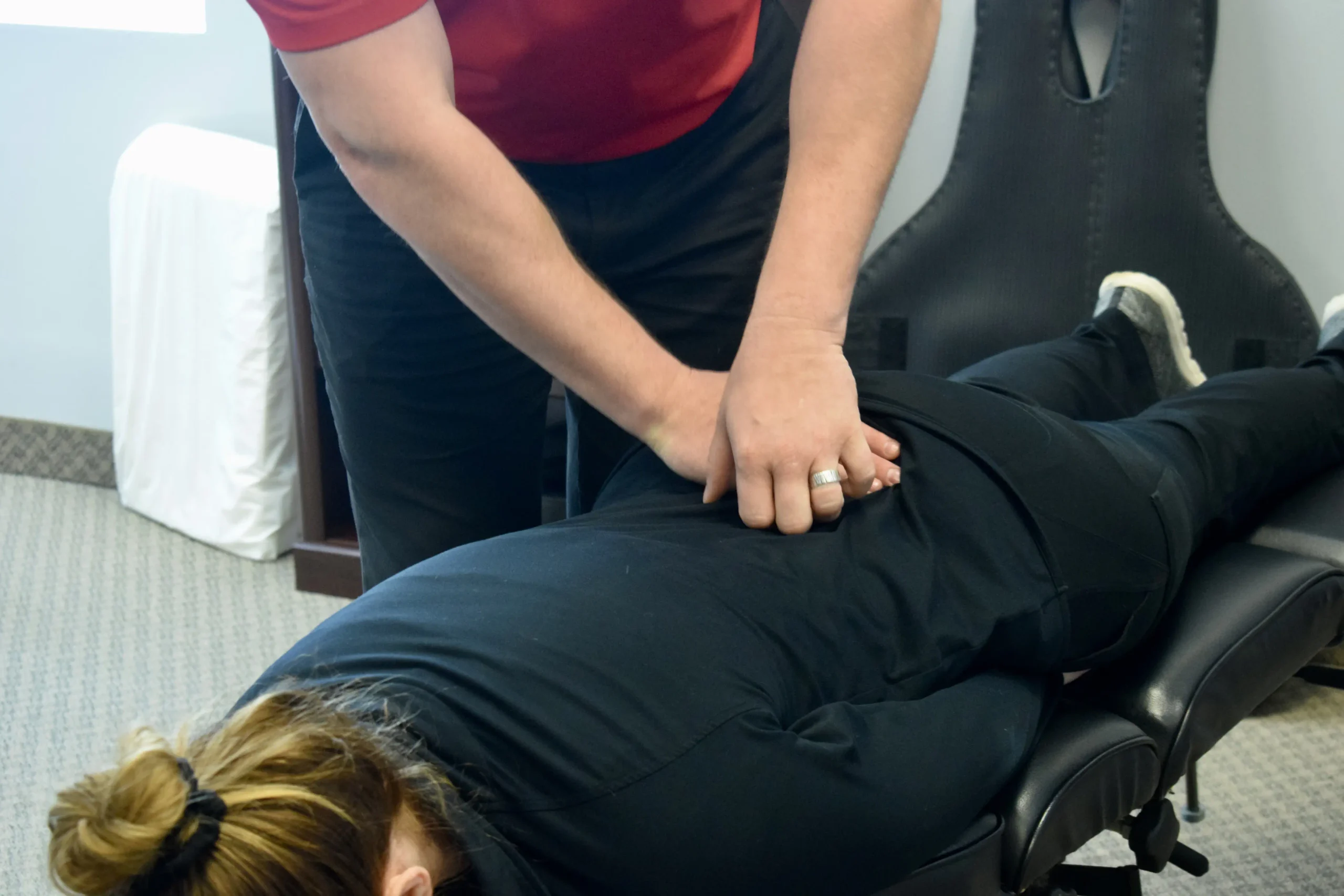
When restricted movement in the knee, hip, ankle, pelvis, or spine appears relevant, selected chiropractic adjustments may be included. Joint treatment should complement—not replace—appropriate strengthening and activity progression.
Custom Orthotics
If the examination identifies relevant foot mechanics or difficulty creating a stable base during walking and stair use, custom orthotics may be considered. Orthotics are not automatically needed for every case of kneecap pain.
Shockwave Therapy
Shockwave therapy may be considered for selected persistent tendon conditions. It is not appropriate for every type of knee pain, acute injury, or joint condition.
Your doctor should explain what each recommended service is intended to address and how progress will be measured.
When Knee Pain Needs Prompt Medical Attention
Seek prompt medical evaluation when:
- You cannot bear weight on the leg.
- The knee appears deformed.
- Significant swelling developed quickly after an injury.
- You heard or felt a pop followed by instability or loss of function.
- The knee is physically locked and cannot fully bend or straighten.
- The knee is hot, red, and swollen, especially with fever.
- The calf becomes swollen, warm, or painful.
- Numbness, weakness, or color changes develop in the lower leg or foot.
A painful but stable knee that gradually became irritated may not require emergency care. A traumatic, locked, severely swollen, or visibly abnormal knee requires a different level of attention.
When Should You Schedule an Evaluation?
Consider an evaluation when knee pain:
- Continues beyond several days without improvement
- Repeatedly returns during stairs, squats, or exercise
- Interferes with work, sleep, or daily activities
- Is accompanied by swelling or instability
- Prevents you from returning to normal activity
- Began after a fall, twist, collision, or other injury
- Is becoming more frequent or severe
Team Chiropractic evaluates knee and other joint pain at its Raleigh and Wakefield offices. The goal is to determine which structures and movement demands may be involved, identify when imaging or referral is appropriate, and develop a plan based on your findings.
A free consultation allows you to discuss your concerns and determine whether Team Chiropractic may be an appropriate place to begin. Any examination, imaging, or treatment is separate and will be explained before proceeding.
Frequently Asked Questions
Why does my knee hurt going downstairs but not upstairs?
Going downstairs requires the quadriceps to control your body while the knee remains bent and loaded. This can make patellofemoral pain, arthritis, weakness, or difficulty absorbing force more noticeable. The direction of pain is a clue, not a diagnosis.
Why does my knee hurt going upstairs but not downstairs?
Climbing requires the leg muscles to generate force to lift your body. Pain may involve the kneecap, quadriceps or patellar tendon, arthritis, or reduced strength following an injury or period of inactivity.
Does pain around the kneecap mean I have runner’s knee?
Not necessarily. Patellofemoral pain is one common cause, but tendon problems, arthritis, trauma, and other conditions can cause pain in the same general area.
Should I avoid stairs if my knee hurts?
Temporarily reducing unnecessary stair use may help if each trip significantly aggravates the knee. However, indefinite avoidance can reduce strength and capacity. An evaluation can help determine how to modify stair use while safely rebuilding tolerance.
Is it safe to exercise with knee pain?
That depends on the cause, severity, and type of exercise. Mild discomfort that does not worsen may be managed differently from sharp pain, swelling, locking, or instability. Avoid exercises that substantially increase symptoms until the knee has been evaluated.
Do weak muscles cause knee pain on stairs?
Reduced quadriceps or hip strength can contribute to difficulty managing stair loads, but weakness is not the only possible cause. Pain itself can also inhibit muscle function, so the relationship can work in both directions.
Can foot problems contribute to knee pain?
Foot and ankle mechanics can influence how force travels through the leg. In some patients, footwear changes, ankle mobility work, or custom orthotics may be helpful. Not everyone with knee pain needs orthotics.
Does knee cracking mean I have arthritis?
No. Knee sounds are common and may occur without arthritis or injury. Cracking becomes more important when it is accompanied by pain, swelling, locking, instability, or reduced function.
Will an X-ray show what is causing my knee pain?
An X-ray can show fractures, arthritis, alignment, and other bone-related findings. It cannot directly show every tendon, ligament, cartilage, or meniscus problem. The appropriate imaging depends on the history and examination.
Can a chiropractor help with knee pain?
Chiropractic care may be appropriate for some musculoskeletal causes of knee pain. Team Chiropractic may incorporate joint care, soft-tissue techniques, rehabilitation, orthotics, or another available service based on the evaluation. Significant injuries and medical conditions require appropriate referral or coordinated care.