Pain between the shoulder blades commonly comes from muscles, joints, or movement patterns involving the upper back, neck, ribs, or shoulders. Long periods at a computer, repeated lifting, an unfamiliar workout, stress-related muscle tension, and previous injuries can all contribute.
However, not every ache in this area is a posture problem or “muscle knot.” Pain between the shoulder blades can sometimes be referred from the neck, shoulder, or another part of the body. Sudden or severe pain accompanied by chest pressure, shortness of breath, sweating, weakness, or other unusual symptoms requires immediate medical attention.
The location of the pain provides a starting point, but determining the cause requires looking at how the symptoms began, which movements affect them, and whether neurological or medical warning signs are present.
What Area Is Between the Shoulder Blades?
The region between the shoulder blades includes the thoracic spine, ribs, muscles, joints, nerves, and connective tissues of the upper and middle back.
Important structures in this area include:
- Thoracic vertebrae: The middle portion of the spine, located between the neck and lower back
- Rib joints: The areas where the ribs connect with the thoracic spine
- Rhomboid muscles: Muscles connecting the shoulder blades to the spine
- Trapezius muscle: A broad muscle extending across the neck, shoulders, and upper back
- Shoulder-blade muscles: Muscles that position and control the scapula during reaching, pulling, and lifting
- Cervical nerves: Nerves from the neck that may refer symptoms toward the shoulder blades or arms
Because these structures work together, pain in one area can influence movement and muscle tension elsewhere.
What Does Pain Between the Shoulder Blades Feel Like?
People may describe upper-back pain as:
- A dull or persistent ache
- Tightness or pressure
- A burning sensation
- A sharp pain during movement
- A knot beside the spine or shoulder blade
- Pain when turning the head or upper body
- Discomfort during a deep breath
- Pain that extends into the neck, shoulder, arm, or chest
The character of the pain matters, but it cannot confirm the cause alone. A muscle strain, irritated joint, neck problem, rib concern, or non-musculoskeletal condition may produce symptoms in a similar location.
Common Causes of Pain Between the Shoulder Blades
Muscle Strain or Overuse
The muscles around the shoulder blades help control the arms and stabilize the upper back. They may become irritated after:
- Repetitive pulling, rowing, or lifting
- Carrying a heavy backpack or bag
- Beginning a new workout
- Working overhead
- Moving furniture
- Throwing or swinging during sports
- Holding the arms in one position for an extended period
A muscular problem may cause tenderness, tightness, fatigue, or pain that changes when you move the shoulder or upper body. It may be focused on one side or affect both sides.
Pain should not automatically be labeled a rhomboid strain simply because it is located near that muscle. Other structures can produce discomfort in the same area.
Prolonged Sitting and Screen Use
Computer work, driving, gaming, crafting, and phone use can keep the neck, shoulders, and upper back in relatively fixed positions.
The problem is not necessarily one “bad” posture. Even a supported position may become uncomfortable when maintained for hours without movement. Workstation setup, screen location, arm support, stress, sleep, previous injuries, and general activity level can all affect how the area feels.
Symptoms related to sustained positions may:
- Build gradually during the day
- Improve after walking or changing position
- Return during computer work
- Occur with neck or shoulder tension
- Feel worse during stressful periods
- Improve temporarily with heat or gentle movement
Team Chiropractic evaluates these factors without assuming that every upper-back symptom can be corrected by simply sitting straighter. Learn more about chiropractic care for posture-related discomfort.
Thoracic Joint or Rib Irritation
The joints of the thoracic spine and the connections between the ribs and spine can become stiff, sensitive, or irritated.
Pain may be more noticeable when:
- Rotating the upper body
- Reaching overhead
- Bending backward
- Taking a deep breath
- Coughing or sneezing
- Moving after remaining still
- Pressing near the painful area
Pain with breathing does not automatically mean a rib or spinal joint is responsible. Lung, heart, infection, and other medical conditions can also produce pain influenced by breathing, especially when shortness of breath, fever, dizziness, or chest symptoms are present.
Pain Referred From the Neck
A neck problem may produce discomfort around one shoulder blade even when neck pain is mild.
Possible signs of neck involvement include:
- Pain affected by turning or tilting the head
- Tingling or numbness in an arm or hand
- Burning or electric sensations
- Symptoms extending below the elbow
- Changes in grip or arm strength
- Pain beginning near the neck and spreading toward the shoulder blade
Neck and upper-back symptoms commonly overlap because the muscles, joints, and nerves in these regions are closely connected. Neck problems can also produce symptoms into the arms and hands.
Team Chiropractic can evaluate whether the symptoms appear to originate from the neck, thoracic spine, shoulder, or a combination of areas. Patients with neck-related symptoms can learn more about neck pain evaluation and relief.
Shoulder and Shoulder-Blade Mechanics
Reaching, lifting, and rotating the arm require movement at both the shoulder joint and shoulder blade. Pain may develop between the shoulder blades when the surrounding muscles are overloaded or when a shoulder injury changes how the arm is used.
Shoulder involvement may be more likely when pain occurs with:
- Raising the arm overhead
- Reaching behind the back
- Pulling or rowing
- Carrying an object
- Throwing or serving
- Lying on the affected shoulder
- Repetitive work with the arms
Shoulder pain and neck-related pain can overlap, so the examination may include both active and passive shoulder motion along with neck and neurological testing.
Injury or Whiplash
A collision, fall, sports injury, or sudden force may strain muscles and irritate joints in the neck and upper back. Symptoms do not always reach their maximum intensity immediately after an accident.
Following an injury, pay attention to:
- Increasing neck or upper-back pain
- Headaches or dizziness
- Numbness or tingling
- Weakness or loss of coordination
- Pain during breathing
- Significant bruising
- Symptoms that interfere with sleep or normal movement
Team Chiropractic evaluates auto accident injuries and can determine when X-rays, medical referral, or another form of evaluation should occur before treatment.
Does Pain on the Left or Right Side Mean Something Different?
One-sided pain frequently occurs with muscle strain, joint irritation, repeated reaching, carrying a bag on one side, or sleeping in an uncomfortable position. It can also be referred from the neck or shoulder.
Pain on the left side is not automatically heart-related, and pain on the right side is not automatically caused by a gallbladder problem. However, location alone cannot rule those conditions in or out.
Seek immediate medical attention when upper-back or shoulder-blade pain occurs with:
- Chest pressure or tightness
- Shortness of breath
- Sweating
- Nausea or vomiting
- Dizziness or fainting
- Pain extending into the jaw or arm
- Sudden severe or tearing pain
- A feeling that something is seriously wrong
Do not wait for a chiropractic appointment when symptoms suggest a heart, lung, vascular, or other medical emergency.
Why Does It Hurt When You Take a Deep Breath?
Deep breathing expands the rib cage and moves the thoracic joints and surrounding muscles. A strain or irritated rib joint may therefore hurt during inhalation.
Other possible causes include respiratory infection, inflammation around the lungs, a blood clot, or another medical condition. Seek urgent medical attention if pain with breathing is accompanied by:
- New or unexplained shortness of breath
- Chest pain
- Coughing up blood
- Fever or chills
- Rapid heart rate
- Lightheadedness
- Recent surgery or prolonged immobility
- Unexplained calf swelling or pain
Pain that changes with movement or pressure may be musculoskeletal, but that pattern does not guarantee that a serious cause is absent.
Is It a Muscle Knot?
A tender area that feels like a knot may involve a tense or sensitive muscle. Massage, heat, or movement may provide temporary relief, but the presence of a tender spot does not fully explain why the symptoms developed.
Repeatedly pressing hard into a painful area can further irritate it. If the same “knot” repeatedly returns, an evaluation may help identify contributing factors such as:
- Repetitive work
- Limited neck or upper-back movement
- Shoulder weakness
- Poor exercise recovery
- Breathing mechanics
- Previous injury
- Stress and muscle guarding
- A workspace that limits position changes
The goal should not necessarily be to force the knot to release. A better plan considers what loads the area and how its tolerance can be gradually improved.
What Can You Do for Mild Upper-Back Pain?
When pain is mild, began gradually, and is not accompanied by warning signs, reasonable starting steps may include:
- Change positions regularly.
- Take brief walking or movement breaks.
- Temporarily reduce movements that cause sharp pain.
- Avoid repeatedly forcing the upper back to crack.
- Use heat or cold based on comfort.
- Support the arms during prolonged computer work.
- Keep frequently used objects within an easy reach.
- Resume normal movement gradually as tolerated.
- Notice whether neck, shoulder, breathing, or arm movements affect the symptoms.
Avoid spending several days completely inactive unless a healthcare professional recommends it. At the same time, do not attempt to stretch aggressively through sharp pain or perform heavy pulling exercises simply to “loosen” the area.
How Team Chiropractic Evaluates Pain Between the Shoulder Blades
A responsible evaluation considers both musculoskeletal and medical causes before care is recommended.
Symptom and Health History
Your doctor will ask when the pain began, what it feels like, which activities affect it, and whether there was an injury. Breathing symptoms, chest discomfort, fever, numbness, weakness, and other health changes are also important.
Neck and Neurological Assessment
Neck movement, strength, sensation, reflexes, and nerve-related symptoms may be evaluated when the pain travels or appears connected to head or arm position.
Thoracic Spine and Rib Assessment
The examination may assess upper-back movement, joint tenderness, muscle tension, breathing-related motion, and movements that reproduce the symptoms.
Shoulder and Functional Movement
Shoulder motion, shoulder-blade control, strength, and relevant activities may be assessed. This is particularly important when pain occurs during reaching, lifting, pulling, or exercise.
Findings are considered together. No single tender muscle, postural observation, or movement test confirms the cause.
Will You Need X-Rays or Other Imaging?
Not everyone with pain between the shoulder blades needs immediate imaging.
For uncomplicated thoracic pain without trauma, neurological findings, or medical warning signs, an examination may be the most appropriate first step. Imaging becomes more important when symptoms are associated with significant trauma, osteoporosis, prolonged steroid use, suspected fracture, infection, cancer, or neurological involvement.
Team Chiropractic can take X-rays when they are clinically appropriate. X-rays may help evaluate bone structure, fractures, degeneration, or other skeletal changes, but they do not directly show every muscle, disc, nerve, or internal-organ condition.
If MRI, laboratory testing, cardiac evaluation, pulmonary evaluation, or another form of medical care is indicated, Team Chiropractic can explain the concern and refer appropriately.
What Care May Include
Care depends on the source of the pain, examination findings, health history, and daily demands.
Chiropractic Adjustments
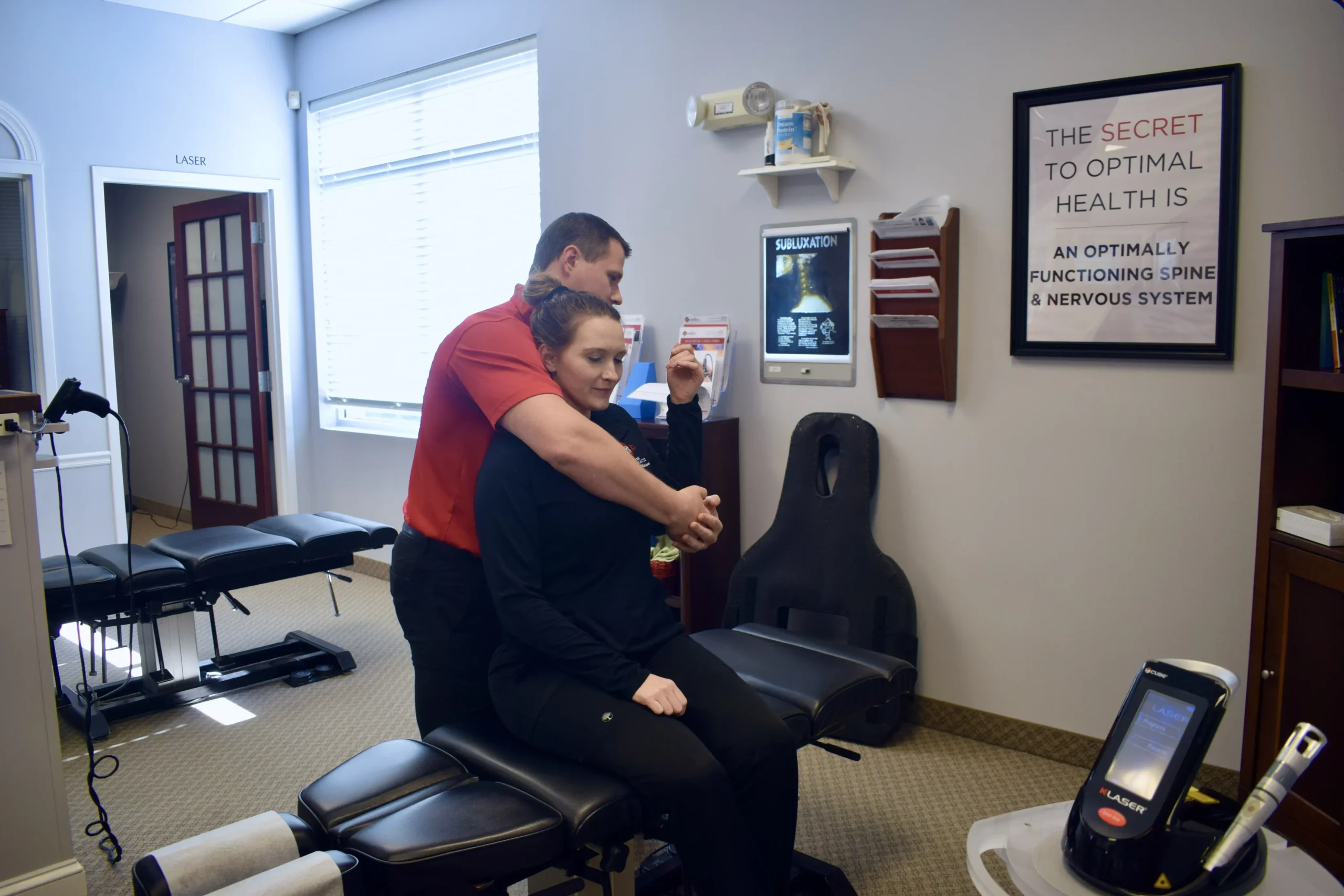
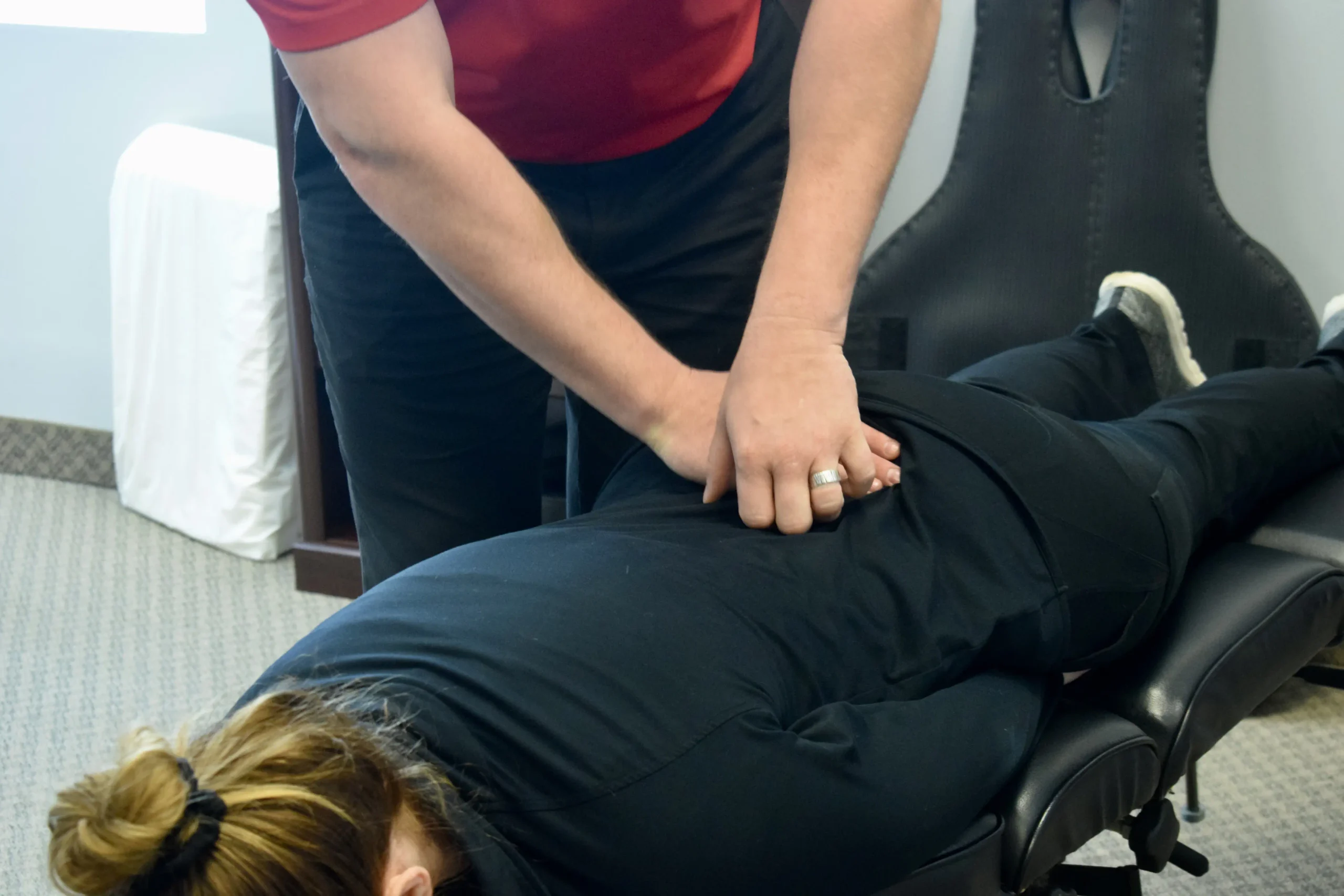
Selected chiropractic adjustments may address restricted movement in the thoracic spine, neck, ribs, or other relevant joints. Technique and force should be adapted to the individual.
Soft-Tissue Release
Soft-tissue release may be considered when muscular tension or restricted tissue movement contributes to pain around the shoulder blades.
Spinal Re-Engineering
Spinal re-engineering may combine appropriate chiropractic care with individualized exercises and recommendations addressing movement, strength, and function.
Sports Rehabilitation
When symptoms are connected to lifting, throwing, swimming, rowing, or another physical activity, sports rehabilitation may help rebuild mobility, strength, and tolerance for the activity.
K-Laser Therapy
K-Laser therapy may be incorporated for selected musculoskeletal concerns when clinically appropriate. It is not a replacement for evaluation or a guaranteed solution for every source of upper-back pain.
No service is automatically recommended based solely on where you feel pain. The plan should reflect the structures and activities that appear relevant to your symptoms.
When Pain Between the Shoulder Blades Needs Medical Attention
Seek prompt or emergency medical care for:
- Chest pressure, tightness, or pain
- Shortness of breath
- Sudden severe or tearing upper-back pain
- Sweating, nausea, dizziness, or fainting
- Pain extending into the jaw or arm
- Coughing up blood
- Fever with severe back pain
- New loss of balance or coordination
- Progressive arm or leg weakness
- Numbness affecting multiple limbs
- Significant pain after a collision or fall
- A painful rash or blisters
- Unexplained weight loss or persistent night pain
- A history of cancer with new thoracic pain
Thoracic pain accompanied by trauma, osteoporosis, immunosuppression, suspected infection, or neurological symptoms may warrant imaging or medical referral rather than routine conservative care.
When Should You Schedule an Evaluation?
Consider an evaluation when the pain:
- Persists or repeatedly returns
- Interferes with sleep, work, or exercise
- Becomes more frequent or severe
- Follows an accident or sports injury
- Travels into the neck, chest, shoulder, or arm
- Occurs with numbness, tingling, or weakness
- Does not improve after changing positions and reducing aggravating activity
- Limits breathing or ordinary movement
Team Chiropractic evaluates upper, middle, and lower back pain at its Raleigh and Wakefield offices. The goal is to identify the likely source, determine whether chiropractic care is appropriate, and coordinate medical evaluation when necessary.
A free consultation allows you to discuss your symptoms and learn whether Team Chiropractic may be an appropriate place to begin. Any examination, imaging, or treatment is separate and will be explained before proceeding.
Frequently Asked Questions
What is the most common cause of pain between the shoulder blades?
Muscle strain, prolonged positioning, and irritation involving the neck or upper-back joints are common contributors. However, the location alone cannot establish the cause.
Can poor posture cause pain between the shoulder blades?
Remaining in one position for a long time can contribute to muscle fatigue and discomfort. The issue is often sustained positioning rather than one universally “bad” posture. Workstation setup, activity, stress, sleep, and previous injuries may also matter.
Can neck problems cause pain between the shoulder blades?
Yes. Joint or nerve problems in the neck may refer pain toward one or both shoulder blades. Neck-related symptoms may also include arm pain, numbness, tingling, or weakness.
Why does the pain feel like a knot?
A tense or sensitive muscle may feel like a knot, but this does not identify why the muscle became painful. Repetitive activity, prolonged positioning, stress, joint restriction, or compensation for another painful area may contribute.
Should I massage pain between my shoulder blades?
Gentle pressure may feel helpful when the pain appears muscular. Avoid aggressive pressure over a recent injury, severe pain, unexplained swelling, or symptoms accompanied by chest or breathing concerns.
Why does my upper back hurt when I breathe?
Muscles, ribs, and thoracic joints move during breathing, so a musculoskeletal problem can hurt during a deep breath. Because lung and other medical problems can cause similar symptoms, pain with shortness of breath, fever, chest symptoms, or coughing up blood requires urgent evaluation.
Can stress cause pain between the shoulder blades?
Stress may increase muscle tension, alter breathing patterns, affect sleep, and make pain more noticeable. Stress can contribute to symptoms, but persistent pain should not automatically be dismissed as stress-related.
Is pain between the shoulder blades a sign of a heart problem?
Most pain in this area is not caused by the heart, but heart problems can produce upper-back, shoulder, arm, jaw, or chest symptoms. Call emergency services when pain occurs with chest pressure, shortness of breath, sweating, nausea, dizziness, or other concerning symptoms.
Will I need an X-ray?
Not necessarily. Imaging decisions depend on trauma, age, health history, neurological findings, duration, and other warning signs. Team Chiropractic can take X-rays when appropriate and refer for other testing when necessary.
Can a chiropractor help with pain between the shoulder blades?
Chiropractic care may be appropriate when the pain involves joints, muscles, movement restrictions, or other musculoskeletal factors. Care may include adjustments, soft-tissue techniques, exercise, or another available service. Medical or emergency conditions require appropriate referral instead.