Muscle soreness usually develops gradually after an unfamiliar or demanding workout, affects the muscles that were trained, and improves over several days. A sports injury is more likely to cause sudden or focused pain, swelling, bruising, instability, reduced motion, or symptoms that become worse when you continue the activity.
Timing and symptoms provide useful clues, but the distinction is not always obvious. Some overuse injuries develop gradually, while muscle soreness can be intense after a new workout. If pain changes how you walk, lift, throw, or perform your sport, it is safer to reduce the activity and have the area evaluated.
What Is Normal Post-Workout Muscle Soreness?
Delayed-onset muscle soreness, commonly called DOMS, is the aching and stiffness that may appear after strenuous or unfamiliar exercise.
It is especially common after activities in which muscles lengthen while producing force, such as:
- Lowering weights
- Walking or running downhill
- Descending stairs
- Landing from jumps
- Performing lunges or squats
- Returning to exercise after a break
- Completing more repetitions or weight than usual
DOMS does not necessarily begin during the workout. It often appears later, becomes most noticeable during the next one to three days, and then gradually improves. Research commonly places peak soreness between 24 and 72 hours after exercise.
Typical muscle soreness may involve:
- A dull or aching feeling
- Tenderness when pressing the muscle
- Stiffness when beginning to move
- Temporary fatigue or reduced strength
- Discomfort when stretching or contracting the muscle
- Similar symptoms on both sides when both sides completed the same work
Normal soreness should follow the muscles that were challenged. It should also show a general trend toward improvement rather than becoming progressively more limiting.
What Is a Sports Injury?
A sports injury involves damage or irritation affecting a muscle, tendon, ligament, joint, bone, or another tissue. Injuries can happen suddenly or develop gradually through repeated loading.
Acute injuries may occur after:
- A fall or collision
- A sudden change of direction
- An awkward landing
- A forceful throw or swing
- Lifting a weight that cannot be controlled
- Feeling a pull, snap, or pop
- Twisting an ankle or knee
Overuse injuries may develop when training demand repeatedly exceeds the tissue’s current capacity. Examples include certain tendon problems, stress injuries, shin pain, and recurring joint irritation.
A strain involves a muscle or tendon, while a sprain affects a ligament. Both can cause pain, swelling, and difficulty moving the injured area.
Muscle Soreness vs. Sports Injury at a Glance
| Pattern | Post-Workout Soreness | Possible Sports Injury |
|---|---|---|
| Onset | Usually develops hours after exercise | May begin suddenly or build over time |
| Location | Broadly within muscles that were trained | Often focused in one spot, joint, tendon, or side |
| Sensation | Dull, aching, tender, or stiff | Sharp, catching, burning, unstable, or highly localized |
| Swelling | Usually minimal | May be visible or increase after activity |
| Bruising | Not typical | May occur with a tear or impact |
| Movement | Stiff at first but often eases with gentle activity | May become worse or feel unsafe with movement |
| Strength | Temporary fatigue may occur | Noticeable weakness or inability to use the area may occur |
| Joint stability | Usually unaffected | Giving way or instability may be present |
| Progress | Generally improves over several days | May persist, worsen, or repeatedly return |
| Effect on technique | Usually manageable without major compensation | May cause limping or altered lifting, running, or throwing |
These differences are not absolute. An injury may become painful only after activity, and severe soreness may temporarily reduce strength. Look at the entire pattern rather than relying on one symptom.
Signs It May Be More Than Muscle Soreness
The Pain Began During a Specific Movement
A sudden pull, sharp pain, pop, or immediate loss of function during activity is more concerning for injury than DOMS.
Try to remember:
- Which movement caused the pain
- Whether contact or a fall occurred
- Whether you could continue
- Whether swelling developed
- Whether strength or motion changed immediately
Continuing to play after a sudden injury can make some conditions worse. MedlinePlus advises stopping the activity after a sports injury rather than attempting to push through it.
The Pain Is Focused in One Small Area
DOMS commonly affects a broader portion of a muscle. Pain located directly over a joint, tendon, ligament, or bone may suggest something else.
Examples include:
- Pain directly below the kneecap
- Tenderness over one ankle ligament
- Pain at the front of the shoulder during lifting
- A precise painful spot along the shin or foot
- Pain near the attachment of the hamstring or Achilles tendon
Location alone cannot diagnose the injury, but a consistently focal point of pain deserves attention.
You Have Swelling, Bruising, or Deformity
Visible swelling or bruising is more consistent with tissue injury than ordinary soreness. A joint or limb that appears out of position requires urgent medical evaluation.
Swelling that develops rapidly after a knee, ankle, or shoulder injury may indicate a more significant injury inside the joint.
The Area Feels Unstable
A knee that gives way, an ankle that repeatedly rolls, or a shoulder that feels as though it may slip should not be treated as ordinary soreness.
Instability may involve a ligament, joint, muscle-control problem, or previous injury that has not fully recovered.
You Cannot Use the Area Normally
Seek an evaluation when pain prevents you from:
- Bearing weight
- Walking without a limp
- Lifting the arm
- Gripping an object
- Fully bending or straightening a joint
- Pushing through the foot
- Completing an ordinary daily task
Temporary stiffness from DOMS is common. A significant loss of function is more concerning.
Symptoms Are Not Improving
Muscle soreness should gradually settle. If pain remains unchanged, becomes worse, or returns every time you perform the same activity, the problem may be related to an injury or training-load issue.
Persistent pain does not always mean severe structural damage, but it does mean the area is not responding as expected.
Can a Sports Injury Appear the Next Day?
Yes. Delayed symptoms do not automatically mean normal muscle soreness.
Some tendon, joint, and mild muscle injuries become more noticeable after activity has ended. Swelling may also develop gradually. Overuse injuries can build over several practices or workouts without one obvious event.
Ask yourself:
- Is the pain spread throughout a trained muscle or concentrated in one spot?
- Does gentle movement help, or does it make the pain sharper?
- Is there swelling, bruising, locking, or instability?
- Can you perform ordinary movements normally?
- Is the pain improving each day?
- Does it return during the same exercise?
When the answers are unclear, reducing the aggravating activity and arranging an evaluation is safer than using the timing alone to decide it is soreness.
Should You Exercise When You Are Sore?
Light movement may feel comfortable when soreness is mild. Walking, easy cycling, mobility work, or training a different area may allow you to stay active while the sore muscles recover.
Consider modifying the workout when:
- Your movement quality is noticeably different.
- Soreness limits your normal range of motion.
- You cannot control the weight safely.
- The muscle feels unusually weak.
- Pain increases as the session continues.
- You need to compensate to complete the exercise.
Soreness is not required for a workout to be effective. Repeatedly chasing severe soreness may interfere with technique, training consistency, and recovery.
Rest and recovery are part of training, not evidence that you are falling behind.
When Should You Stop a Workout?
Stop or substantially modify the activity if you experience:
- Sudden sharp pain
- A pop followed by pain or weakness
- Joint instability
- Rapid swelling
- Numbness or tingling
- Dizziness or confusion
- Chest pain or unusual shortness of breath
- Loss of coordination
- Pain that changes your gait or technique
- An inability to use the affected area normally
Do not repeatedly “test” a newly injured area at full speed or under heavy resistance. The absence of unbearable pain does not guarantee that returning to activity is safe.
What Should You Do Immediately After a Possible Injury?
The appropriate response depends on the body part and severity, but reasonable early steps may include:
- Stop the activity that caused the pain.
- Protect the area from another impact or uncontrolled movement.
- Use relative rest rather than repeatedly reproducing the pain.
- Apply cold for comfort if it feels helpful, using a barrier to protect the skin.
- Elevate a swollen limb when practical.
- Avoid aggressive stretching or massage over a possible tear.
- Do not return to play simply because the pain temporarily decreases.
- Arrange an evaluation when function, stability, or motion is affected.
Compression or bracing may be appropriate for certain injuries, but an improperly fitted device can create other problems. Medication decisions should be discussed with an appropriate healthcare professional, particularly if you have other health conditions or take prescription medication.
How Team Chiropractic & Sports Medicine Evaluates Sports Pain
The purpose of an evaluation is to identify which tissue may be involved, determine the severity, and decide whether conservative care is appropriate.
How the Symptoms Began
Your doctor will ask whether the pain appeared during one movement, developed after training, or gradually increased over several sessions. Recent changes in volume, intensity, surface, equipment, or technique are important.
Motion, Strength, and Stability
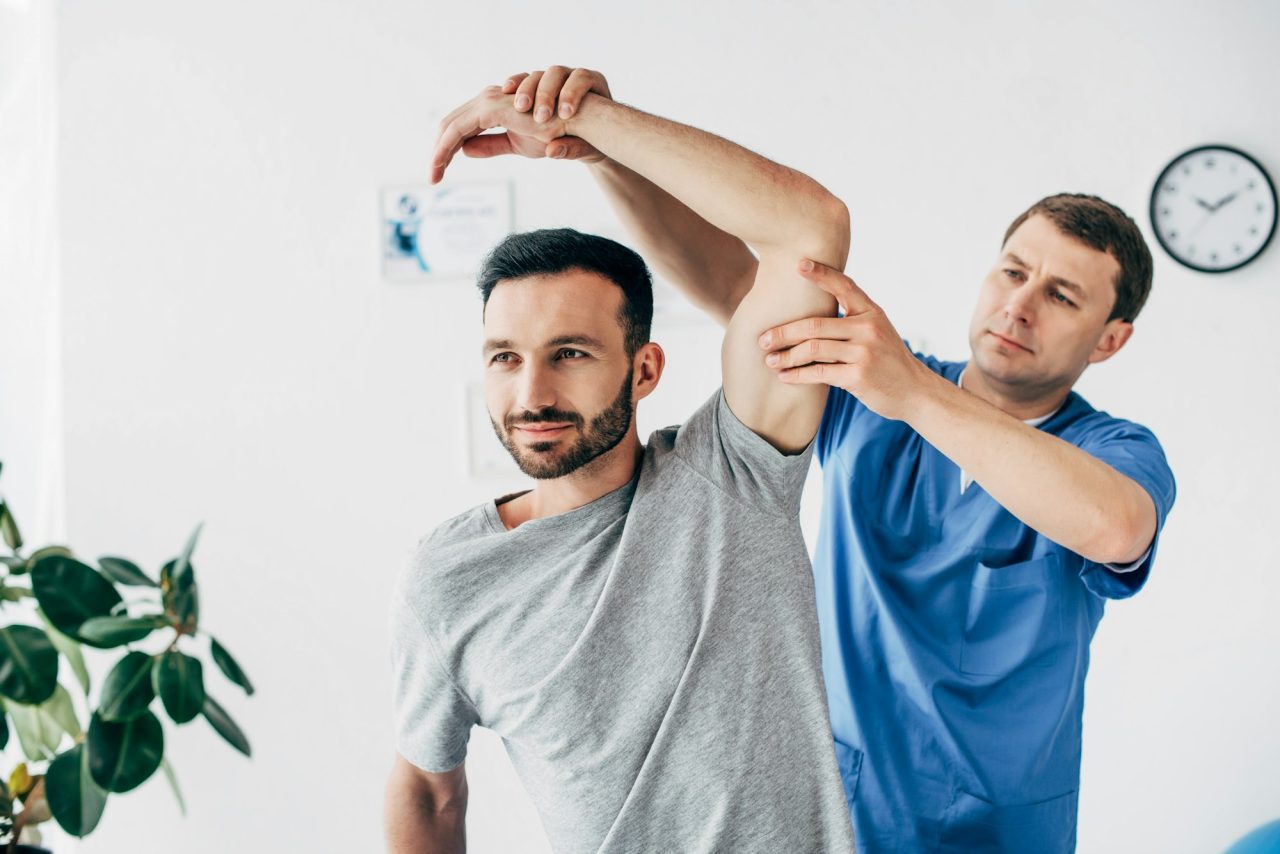
The examination may assess joint movement, muscle strength, swelling, tenderness, balance, and stability. The injured side may be compared with the opposite side when appropriate.
Sport-Specific Movement
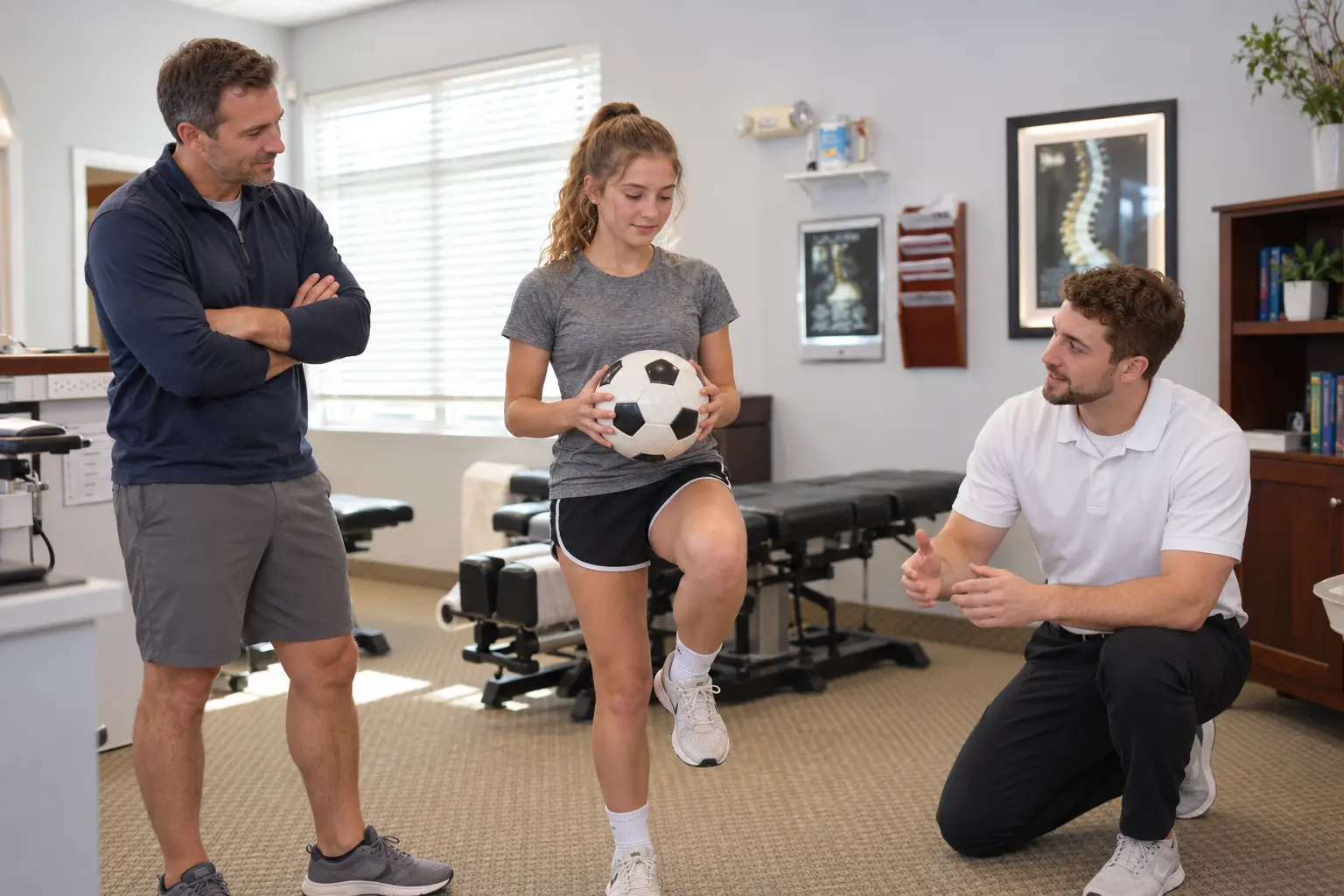
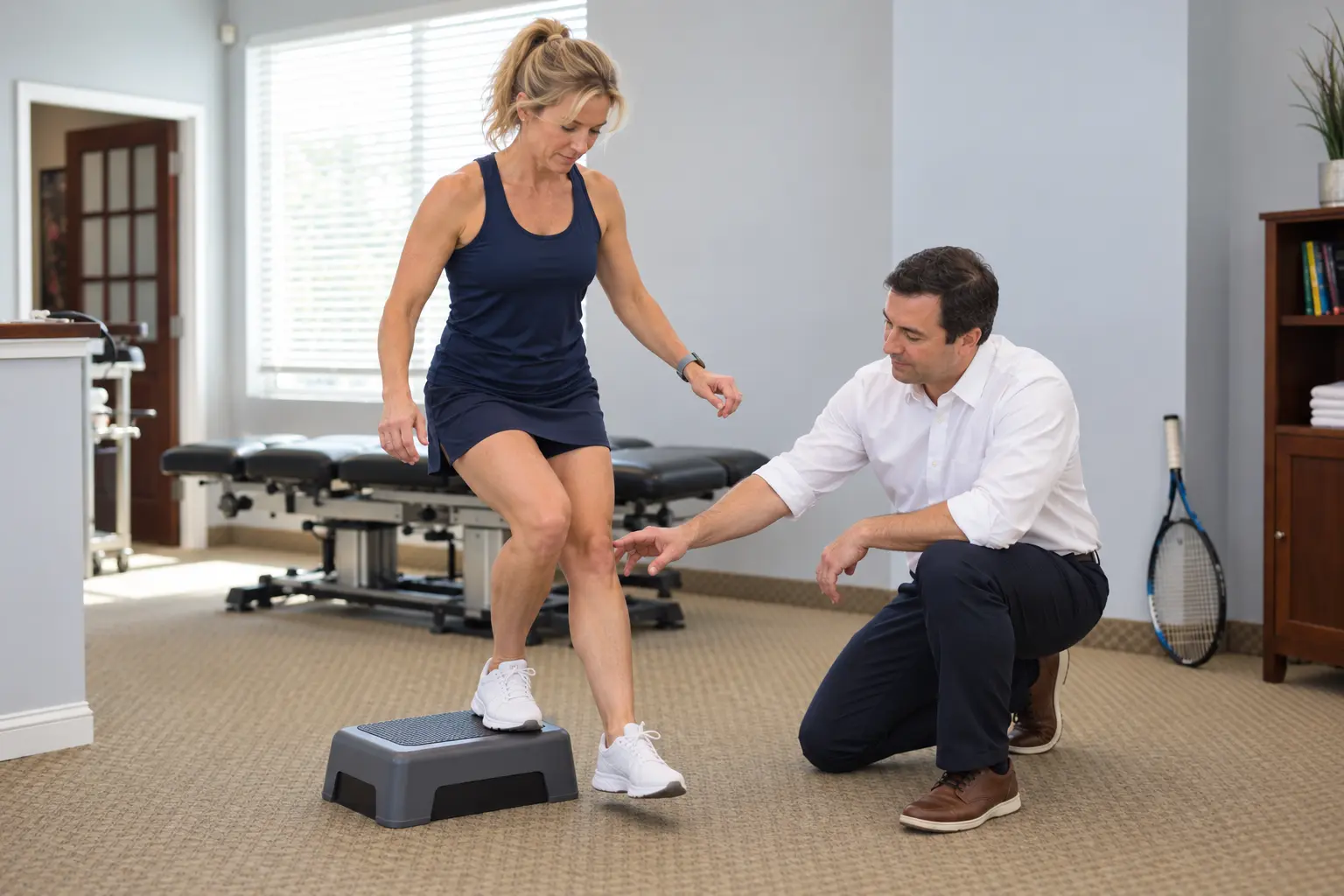
You may be asked to perform a modified version of a relevant movement, such as a squat, step-down, reach, or balance task. High-speed or heavily loaded activity should not be used simply to provoke severe pain.
Medical and Imaging Decisions
The evaluation also screens for fractures, significant tears, neurological problems, concussion symptoms, infection, and other concerns that require medical referral. Team Chiropractic & Sports Medicine can take X-rays when clinically appropriate and refer for MRI or an orthopedic evaluation when necessary.
Will an X-Ray Show a Sports Injury?
X-rays can help evaluate fractures, dislocations, joint position, and certain bone-related findings. They do not directly show every muscle, tendon, ligament, cartilage, or nerve injury.
MRI, ultrasound, or another study may be considered when a significant soft-tissue injury is suspected or when the results would affect treatment decisions.
Not every injury requires imaging. History, function, physical examination, severity, and progress all help determine whether imaging is likely to be useful.
Care and Rehabilitation May Include
Recommendations depend on the injury, sport, current function, and examination findings. No service is automatically appropriate for every athlete.
Sports Rehabilitation
Sports rehabilitation may include progressive mobility, strength, balance, stability, and sport-specific exercises. The plan should bridge the gap between feeling better and safely performing the demands of the activity.
Soft-Tissue Release
Soft-tissue release may be included when muscle or connective-tissue restrictions appear relevant. It should not be used aggressively over a suspected acute tear.
Chiropractic Adjustments
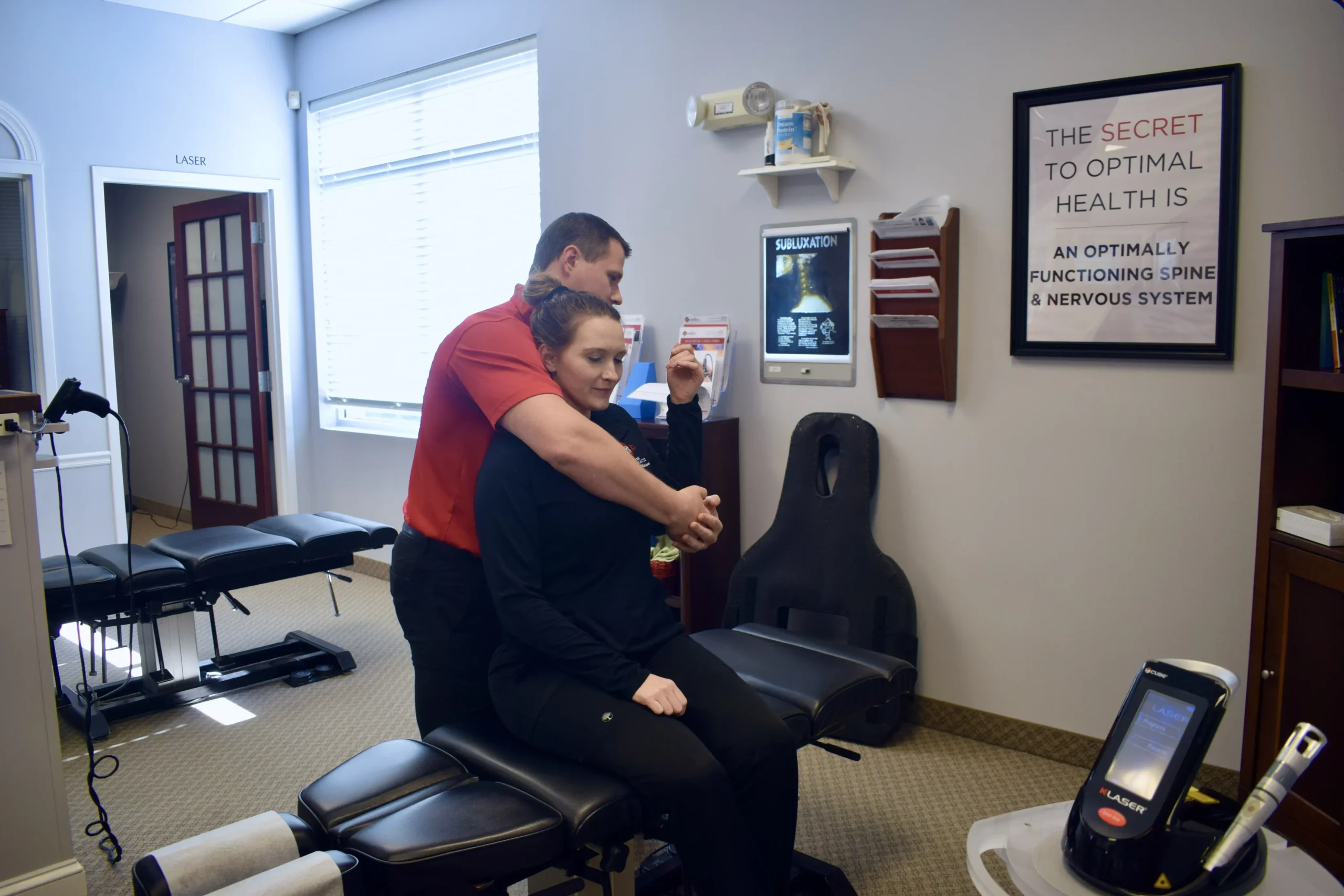
Selected chiropractic adjustments may address restricted movement in the spine or extremity joints when those findings relate to the injury. Adjustments should complement—not replace—progressive rehabilitation.
Shockwave Therapy
Shockwave therapy may be considered for certain persistent tendon conditions. It is not an immediate treatment for every new sprain, strain, or painful joint.
K-Laser Therapy
K-Laser therapy may be incorporated for selected musculoskeletal injuries when clinically appropriate. It is one possible component of care, not a substitute for determining what was injured and rebuilding function.
How Do You Know When You Are Ready to Return?
Feeling less pain is important, but it is not the only return-to-sport requirement.
Before returning fully, you may need to demonstrate:
- Comfortable motion
- Adequate strength
- Balance and control
- Tolerance for running, jumping, throwing, or changing direction
- Ability to complete sport-specific tasks
- No significant swelling after activity
- Confidence using the injured area
Returning directly from rest to full-speed practice can expose the tissue to more demand than it is ready to handle. A graded return allows the body to adapt and gives you an opportunity to monitor the response.
When a Sports Injury Needs Urgent Medical Attention
Seek urgent or emergency care for:
- A visible deformity
- An open wound over a suspected fracture
- Inability to bear weight after an injury
- A joint that is locked or clearly out of position
- Rapid or severe swelling
- Loss of feeling or movement
- A pale, blue, or cold hand or foot
- Severe neck or back pain after a collision
- Confusion, vomiting, worsening headache, or loss of consciousness after a head impact
- Chest pain, fainting, or unusual shortness of breath during exercise
Extreme muscle pain, profound weakness, severe swelling, or dark brown urine after intense exercise can indicate rhabdomyolysis, a potentially serious breakdown of muscle tissue. Seek immediate medical care rather than assuming it is severe DOMS.
Reduce Future Injury Risk Without Avoiding Training
Not every injury can be prevented, but training can be managed more thoughtfully.
Helpful strategies include:
- Increase volume and intensity gradually.
- Use rest or lower-intensity days between demanding sessions.
- Practice technique appropriate for the activity.
- Replace damaged or poorly fitting equipment.
- Avoid using pain medication simply to continue competing.
- Cross-train instead of loading the same tissues identically every day.
- Address recurring pain before it substantially limits activity.
- Rebuild sport-specific capacity after time away.
Cross-training can distribute exercise demands across different muscle groups and may help reduce overuse associated with repeating one activity.
Get the Right Answer Before Returning to Full Activity
Muscle soreness usually improves with time and appropriate recovery. A sports injury may require activity modification, rehabilitation, imaging, referral, or another form of care.
Team Chiropractic & Sports Medicine evaluates acute and overuse sports injuries for athletes and active individuals in Raleigh, Wakefield, and the Wake Forest area. The goal is to identify what may be injured, protect the area when necessary, and develop a progressive plan for returning to activity.
A free consultation allows you to discuss what happened and determine whether Team Chiropractic & Sports Medicine may be an appropriate place to begin. Any examination, imaging, or treatment is separate and will be explained before proceeding.
Frequently Asked Questions
How long should normal muscle soreness last?
DOMS generally develops after exercise, peaks within approximately one to three days, and then gradually improves. Soreness that remains severe, continues worsening, or does not follow a general improvement pattern should be evaluated.
Can DOMS cause weakness?
Temporary fatigue and reduced force can occur with muscle soreness. Sudden, substantial, or worsening weakness—especially after feeling a pop or pull—is more concerning for injury.
Is sharp pain ever normal after a workout?
A dull ache and tenderness are more typical of DOMS. Sharp, focused, catching, or electric pain is less typical and should not be ignored, especially when it affects movement.
Does swelling mean I am injured?
Visible swelling is more consistent with injury than ordinary muscle soreness. Rapid swelling after a joint injury requires prompt assessment.
Should I stretch sore muscles?
Gentle movement may feel comfortable, but aggressive stretching is not necessary and may aggravate a strain. Do not force a painful area beyond its comfortable range.
Should I use ice or heat?
Cold may feel helpful after a recent injury, while heat may feel more comfortable for general stiffness. Neither determines the diagnosis or replaces appropriate evaluation. Protect your skin and stop if either method worsens symptoms.
Can I train a different muscle group while injured?
Sometimes, but the alternative workout should not stress the injured area or require unsafe compensation. The safest choice depends on the injury and activity.
Is soreness a sign that a workout was effective?
No. A productive workout does not need to cause soreness. DOMS is more closely connected to unfamiliar or demanding loading than to the overall quality of a workout.
When should I get a sports injury evaluated?
Schedule an evaluation when pain changes your movement, limits normal function, causes swelling or instability, repeatedly returns, or does not begin improving as expected. Significant trauma, deformity, inability to bear weight, neurological symptoms, or concussion signs require more urgent care.
Can a chiropractor help with a sports injury?
Chiropractic care may be appropriate for selected musculoskeletal sports injuries. Team Chiropractic & Sports Medicine may incorporate joint care, soft-tissue techniques, progressive rehabilitation, or another available service. Fractures, dislocations, significant tears, concussions, and other medical conditions require appropriate referral or coordinated care.