
Sciatica Chiropractor in Raleigh, NC
Team Chiropractic provides personalized evaluations and conservative care for pain, tingling, numbness, or weakness that travels from the lower back or buttock into the leg. Visit our Raleigh or Wakefield office to better understand your symptoms and whether chiropractic care may be appropriate.
Get in Touch
What Is Sciatica?
Sciatica describes symptoms that follow the path of the sciatic nerve. This large nerve begins with nerve roots in the lower spine and extends through the buttocks and into the legs.
Sciatica commonly develops when one or more nerve roots associated with the sciatic nerve become compressed, irritated, or inflamed. Symptoms may begin in the lower back, but the defining feature is often discomfort or altered sensation that travels into the buttock, thigh, calf, or foot.
Important things to understand include:
- Sciatica is a symptom pattern: It describes nerve-related symptoms rather than one specific injury or diagnosis.
- Symptoms commonly affect one side: Some people experience symptoms in both legs, but one-sided symptoms are more typical.
- Back pain is not always present: Leg pain, numbness, or tingling may be more noticeable than discomfort in the lower back.
- The underlying cause matters: Disc changes, narrowing around a nerve root, an injury, and other conditions can produce similar symptoms.
- Not every case requires the same care: Recommendations should be based on the cause, severity, neurological findings, and individual health history.
An evaluation can help determine whether your symptoms appear consistent with sciatica and whether chiropractic care, imaging, medical treatment, or another form of care should be considered.
What Can Sciatica Feel Like?
Sciatica does not feel exactly the same for every person. Symptoms may remain relatively mild, become disruptive during certain activities, or interfere with sitting, walking, sleeping, working, and exercising.
Common symptoms include:
- Radiating pain: Discomfort may travel from the lower back or buttock into the thigh, calf, or foot.
- Sharp or burning pain: Some people describe the sensation as burning, searing, or similar to an electric shock.
- Tingling: A pins-and-needles sensation may develop anywhere along the affected leg.
- Numbness: Part of the buttock, leg, or foot may feel less sensitive than usual.
- Muscle weakness: The affected leg or foot may feel weaker or less stable during movement.
- One-sided symptoms: Pain or altered sensation commonly affects one side of the body.
- Symptoms influenced by position: Sitting, bending, lifting, walking, coughing, or changing positions may affect the intensity of symptoms.
Someone may experience pain in one part of the leg and numbness in another. Because other musculoskeletal and neurological problems can cause similar sensations, symptoms should be evaluated rather than automatically labeled as sciatica.
What Can Cause Sciatica?
Disc-Related Changes
A spinal disc can bulge, herniate, or otherwise change in a way that affects a nearby nerve root. Disc-related irritation may cause symptoms that extend from the lower back into the buttock, leg, or foot.
A disc finding on an image does not automatically explain someone’s symptoms. Examination findings and the location of the symptoms must also be considered.
Spinal Stenosis and Degenerative Changes
Changes involving the joints, discs, or bones of the lower spine may reduce the space available around a nerve root. This narrowing is commonly referred to as spinal stenosis and may contribute to leg pain, numbness, tingling, or weakness.
Symptoms associated with narrowing may be influenced by standing, walking, or certain spinal positions. Individual patterns vary and require evaluation.
Vertebral and Joint Changes
Changes in the position or movement of the vertebrae can sometimes affect the space around a nerve root. This may involve joint restrictions, age-related changes, or conditions such as spondylolisthesis.
The presence of a structural change does not determine treatment by itself. Your doctor will consider whether the finding corresponds with your symptoms and examination.
Injury and Repetitive Physical Demands
A fall, collision, lifting injury, sports-related incident, or repeated physical demand may irritate structures in the lower back. Inflammation and muscle guarding following an injury can also affect comfort and movement.
Symptoms beginning after significant trauma should be evaluated promptly so fractures, severe nerve involvement, and other injuries can be ruled out before treatment begins.
What Is the Difference Between Sciatica and Back Pain?
Back pain generally refers to discomfort located in the lower, middle, or upper back. It may involve muscles, ligaments, joints, discs, or other structures and does not necessarily include nerve symptoms.
Sciatica is more specific. It usually involves pain, tingling, numbness, or weakness that travels from the lower back or buttock into the leg along a nerve-related pattern. The leg symptoms may be more noticeable than the back discomfort, and some people experience sciatica without significant back pain.
The two conditions can occur together, but they should not be treated as interchangeable terms. Someone with localized muscular back pain may require a different approach than someone experiencing nerve-related leg symptoms.
Team Chiropractic evaluates where your symptoms occur, how they travel, what activities affect them, and whether neurological changes are present. Patients experiencing localized or generalized back discomfort can also learn more about our approach to back pain care.
Other Conditions That Can Cause Similar Symptoms
Musculoskeletal Back Pain
Muscles, ligaments, joints, and other structures in the lower back can produce discomfort that spreads into the buttock or upper leg. This referred pain may feel similar to sciatica but does not always follow a neurological pattern.
Hip and Joint Pain
Problems involving the hip or surrounding joints may cause pain through the groin, outer hip, buttock, or thigh. Examining hip movement and joint function can help distinguish these symptoms from those originating in the lower spine.
Sports-Related Strains
Injuries involving the hamstrings, gluteal muscles, or other soft tissues may create pain through the buttock or back of the thigh. A sports injury evaluation can help determine whether symptoms appear muscular, joint-related, or neurological.
Posture-Related Discomfort
Prolonged sitting, driving, or repetitive positions may contribute to lower-back, hip, and leg discomfort. These activities can also aggravate an existing nerve problem, making it important to evaluate the complete symptom pattern instead of blaming posture alone.
Activities That May Affect Sciatica Symptoms
Certain activities and positions can make sciatic nerve symptoms more noticeable, but the exact pattern depends on what is contributing to the irritation. Paying attention to these patterns can provide useful information during your evaluation.
Symptoms may change during:
- Prolonged sitting: Extended desk work, travel, or driving may increase discomfort for some people.
- Bending or lifting: Repeated bending, lifting from the floor, or combining lifting with twisting may aggravate symptoms.
- Coughing or sneezing: A sudden increase in pressure may temporarily intensify certain disc-related symptoms.
- Standing or walking: Some people experience more leg discomfort after standing or walking for a particular amount of time.
- Getting in and out of a chair or car: Position changes may reproduce pain through the lower back, buttock, or leg.
- Exercise: Specific movements may improve symptoms, have little effect, or make them worse depending on the underlying problem.
- Sleeping positions: Leg symptoms may interfere with sleep or become more noticeable in certain positions.
A movement that helps one person may aggravate another. Team Chiropractic uses your specific symptom response—not a generic list of “good” and “bad” movements—to guide recommendations.
How Team Chiropractic Helps Relieve Sciatica
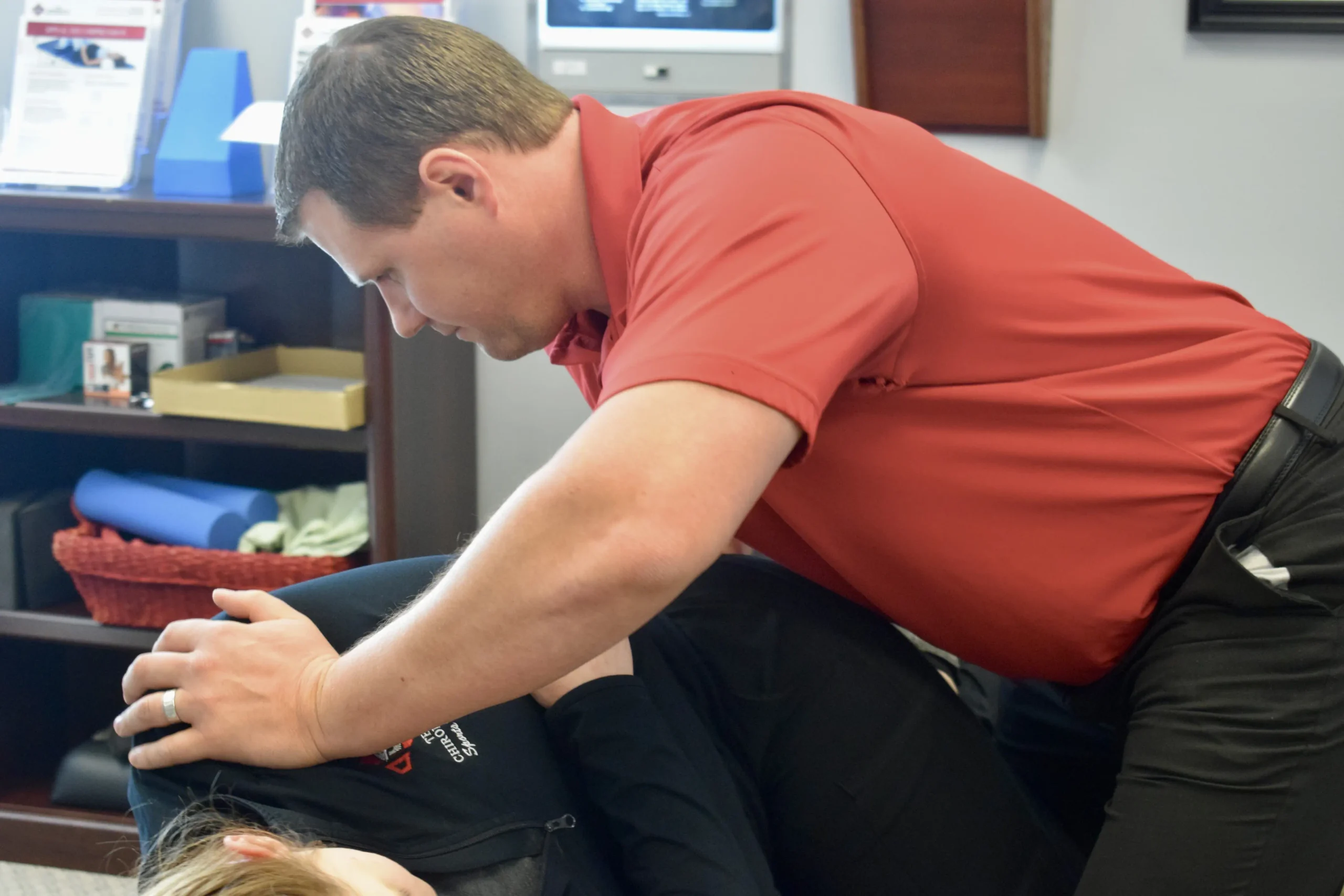
A sciatica evaluation involves more than identifying where it hurts. Your doctor will consider the path of your symptoms, neurological findings, movement, health history, and possible causes before determining whether chiropractic care is appropriate.
Health History and Symptom Pattern
Your doctor will ask when the symptoms began, where they travel, which activities affect them, and whether you have experienced an injury, previous episode, or relevant medical condition. Details about numbness, weakness, bowel or bladder changes, and previous treatment are particularly important.
Strength, Sensation, and Reflex Checks
The examination may include checking muscle strength, sensation, reflexes, and other signs of nerve function. These findings help determine whether a nerve may be involved and whether medical referral is needed.
Movement and Orthopedic Testing
Your doctor may assess spinal and hip movement, joint motion, muscle tension, walking, posture, and your response to relevant positions or tests. The goal is to identify which findings correspond with your symptoms.
Imaging and Referral Decisions
Not every patient with sciatica symptoms requires an X-ray or MRI. Your doctor will consider your history, examination findings, symptom severity, risk factors, and whether imaging would meaningfully affect the recommended next step.
What Sciatica Care May Include
Chiropractic Adjustments
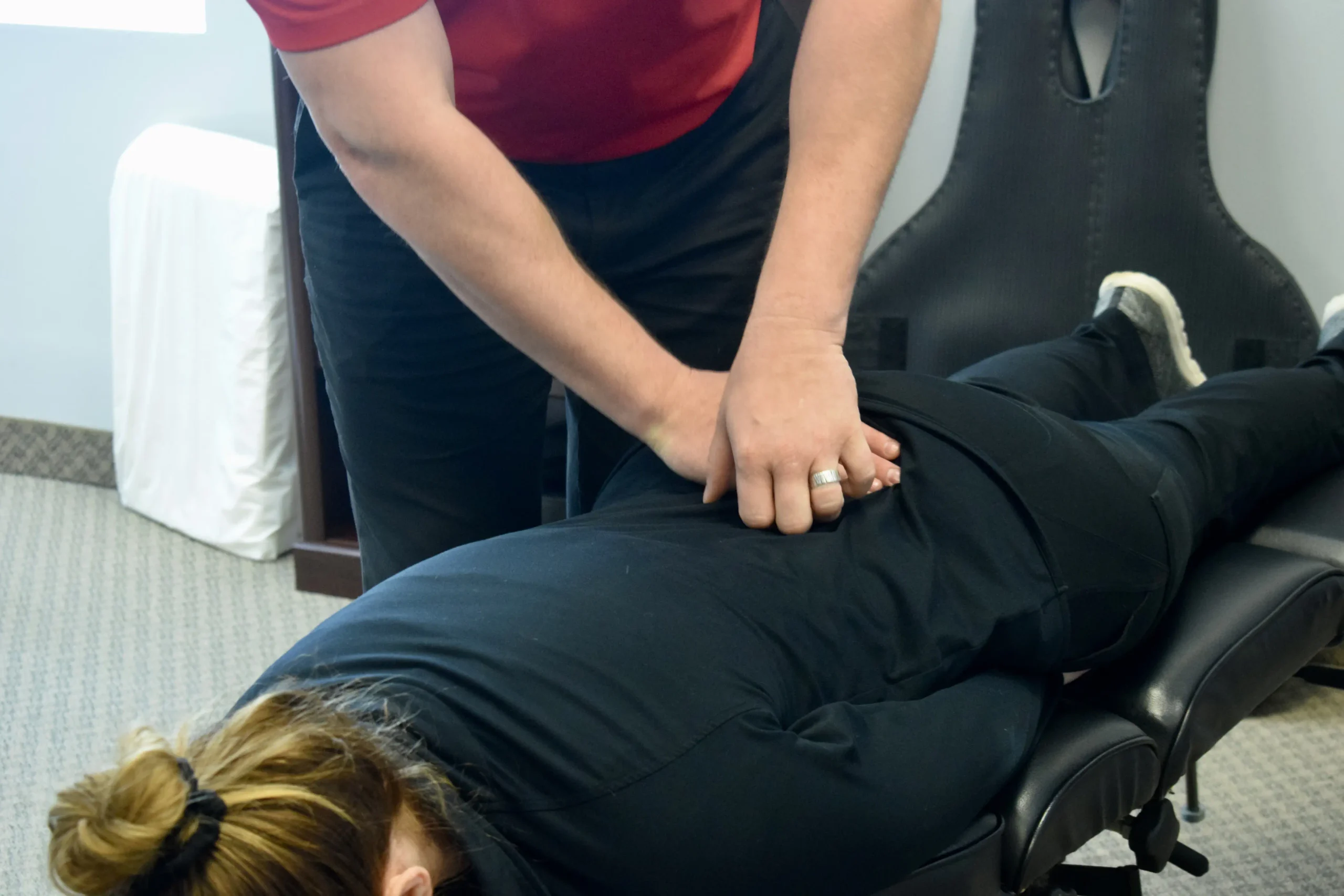
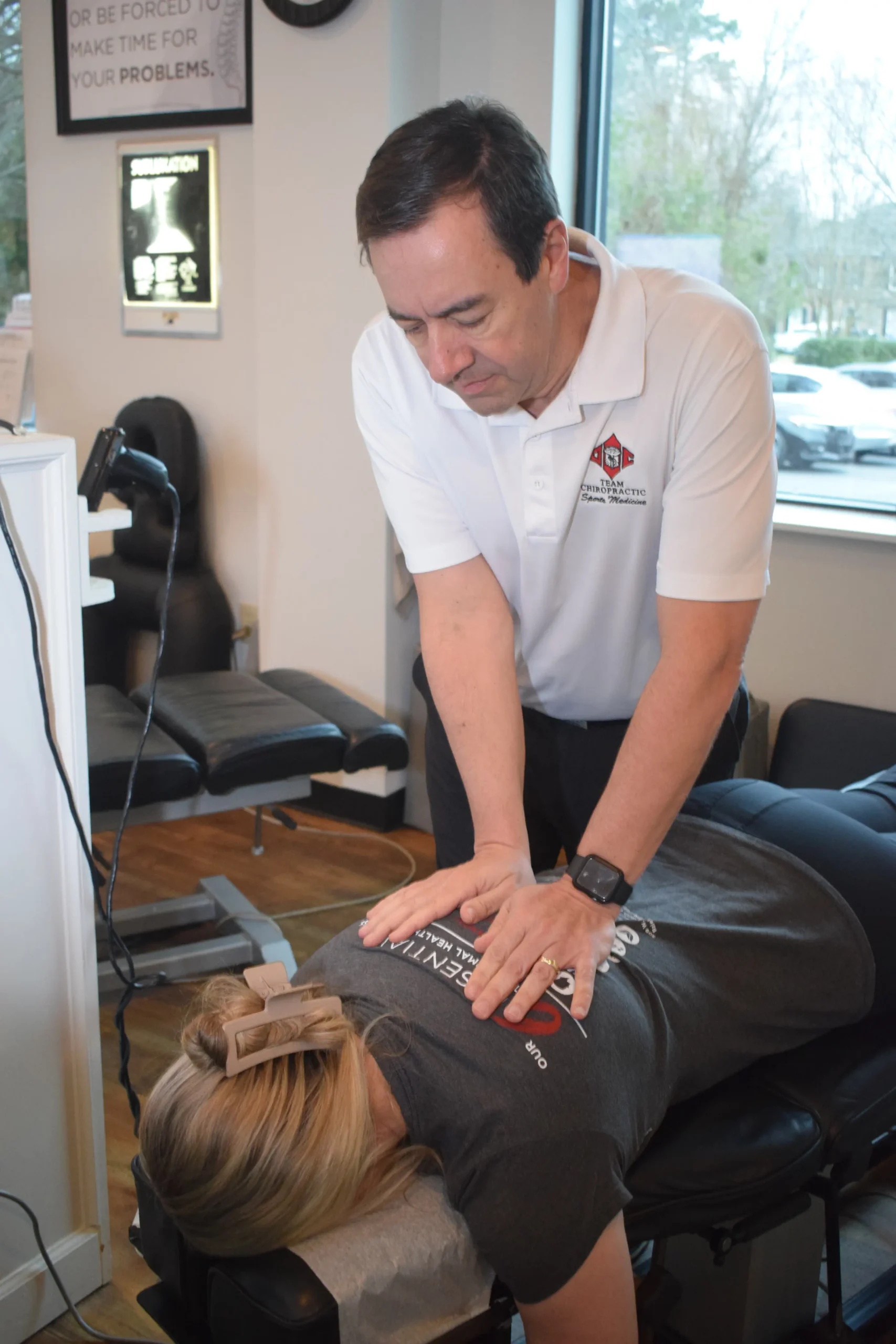
Chiropractic adjustments use controlled movements to address restricted joints and support spinal mobility. The technique and amount of force are selected according to the patient, examination findings, and area being treated.
Soft Tissue Release
Soft tissue release uses targeted manual techniques to address muscular tension and restricted movement. It may be incorporated when tight or overworked muscles are contributing to discomfort or affecting normal movement.
Spinal Re-Engineering
Spinal re-engineering may combine chiropractic care with individualized movement, mobility, and strengthening recommendations. Whether it is appropriate depends on your symptoms, examination findings, physical abilities, and goals.
Spinal Decompression Therapy
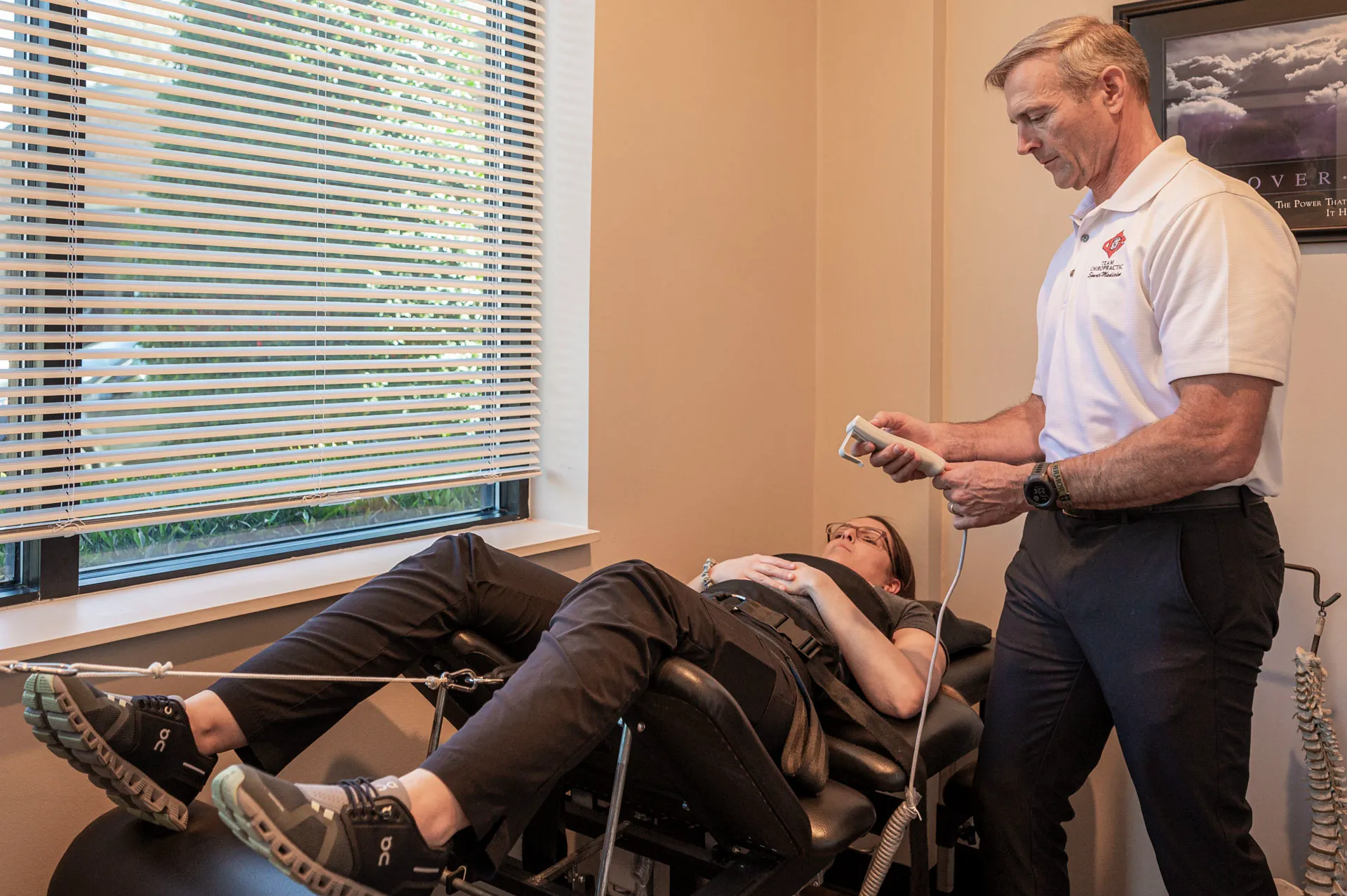
Spinal decompression uses controlled traction intended to reduce mechanical pressure on certain spinal structures. It may be considered for selected patients with disc-related or radiating symptoms, but it is not appropriate for every cause of sciatica.
Supporting Recovery From Sciatica Symptoms
Daily activities can affect how your symptoms respond over time. Recommendations should be individualized, but useful starting points may include:
- Avoid prolonged inactivity. A brief period of activity modification may be appropriate, but remaining inactive for extended periods can contribute to stiffness and reduced conditioning.
- Change positions regularly. Alternate between sitting, standing, and walking as tolerated instead of remaining in one position throughout the day.
- Modify aggravating activities. Temporarily adjust movements that repeatedly increase leg pain, numbness, or tingling while your symptoms are being evaluated.
- Use controlled lifting habits. Keep objects close to your body, avoid combining heavy lifting with twisting, and ask for assistance with awkward loads.
- Follow individualized exercises. Use the movements and frequency recommended for your findings rather than relying on a generic online sciatica routine.
- Track neurological symptoms. Pay attention to changes in numbness, strength, balance, or control of the leg or foot.
- Communicate changes promptly. Tell your doctor if symptoms begin traveling farther down the leg, become more intense, or affect your ability to walk or complete normal activities.
Recovery timelines vary. The cause of the symptoms, their duration, neurological findings, daily demands, health history, and response to care can all influence progress.

When Sciatica Symptoms Need Imaging or Medical Evaluation
Not every person with sciatica symptoms needs imaging. Team Chiropractic bases imaging decisions on your health history, examination findings, symptom severity, neurological changes, and whether the results are likely to affect your care.
When clinically appropriate, Team Chiropractic can perform X-rays in the office. X-rays may help your doctor evaluate spinal alignment, joint and bone changes, signs of degeneration, or injuries that should be considered before beginning care. Your doctor will explain why X-rays are or are not being recommended.
Because X-rays do not provide the same view of discs, nerve roots, and other soft tissues as advanced imaging, an outside MRI, CT scan, nerve study, or specialist evaluation may still be recommended in certain situations.
Additional imaging or medical evaluation may be appropriate when:
- Symptoms are severe, worsening, or not responding as expected
- Numbness, tingling, or weakness is progressing
The leg or foot becomes difficult to control - Symptoms began after an auto accident, fall, or other significant trauma
- Your health history raises concern about fracture, infection, or another medical condition
- Examination findings do not fit a routine musculoskeletal or nerve-root pattern
- More detailed imaging is needed to evaluate a possible disc or nerve problem
- The diagnosis needs to be clarified before conservative care can proceed safely
Some symptoms require immediate medical attention rather than an in-office X-ray or routine chiropractic appointment. Seek urgent or emergency care if you develop:
- New loss of bowel or bladder control
Numbness around the groin, inner thighs, or saddle area - Sudden or significant weakness in one or both legs
- Rapidly worsening loss of sensation or coordination
- Severe symptoms following a major accident or injury
- Back or leg pain accompanied by fever, confusion, or other signs of serious illness
Team Chiropractic can provide appropriate in-office X-rays, review the findings with you, and determine whether chiropractic care can proceed safely. When advanced testing, emergency care, or another healthcare specialist is needed, the team can explain the concern and help coordinate the appropriate next step.
Why Patients Choose Team Chiropractic for Sciatica Symptoms
Individualized Evaluations
Recommendations are based on your symptom pattern and examination findings rather than a standard sciatica treatment plan. We take time to understand where your symptoms travel and what affects them.
Multiple Conservative Care Options
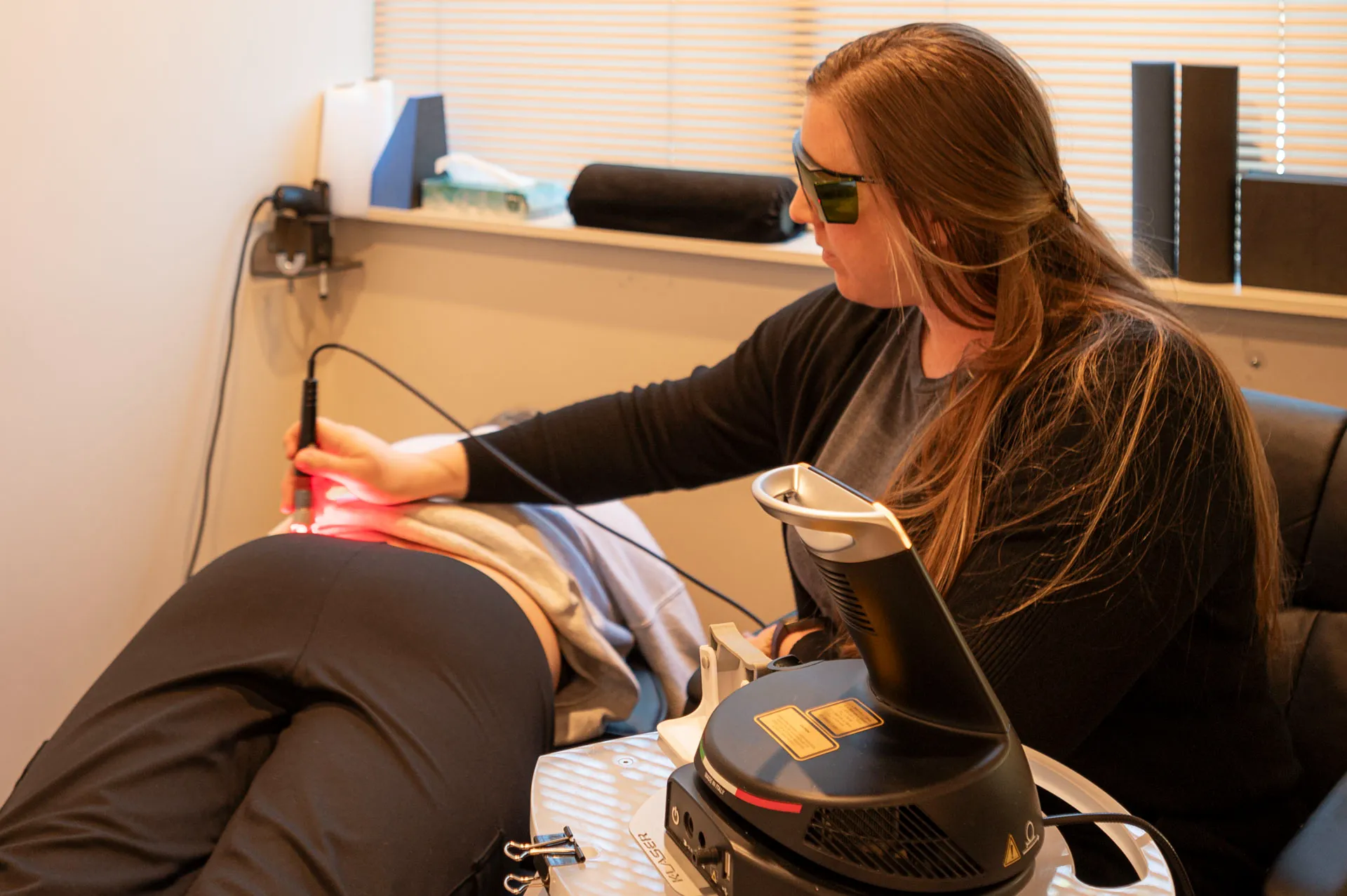
When appropriate, care may incorporate chiropractic adjustments, spinal decompression, soft tissue techniques, or individualized movement recommendations. Services are selected according to your findings rather than automatically combined.
Responsible Imaging and Referrals
Not every patient needs imaging, and not every case belongs in a chiropractic office. We explain when additional testing or medical evaluation may be appropriate and help you understand the reason for a referral.
Two Convenient Raleigh-Area Offices
Patients can schedule care at our Raleigh chiropractic office on West Millbrook Road or our Wakefield chiropractic office in North Raleigh near Wake Forest.

Schedule Today!
Tuesday: 7:30AM–12PM & 3PM–6PM
Wednesday: 7:30AM–12PM
Thursday: 7:30–12PM & 3PM–6PM
Friday: 7:30AM–12PM
Saturday & Sunday: Closed
What is sciatica?
Sciatica describes pain or other symptoms that follow the path of the sciatic nerve. It commonly involves discomfort, tingling, numbness, or weakness traveling from the lower back or buttock into one leg.
What does sciatica feel like?
Sciatica may feel like an ache, sharp pain, burning sensation, electric shock, tingling, numbness, or weakness. Symptoms may extend into the buttock, thigh, calf, foot, or toes and commonly affect one side.
Can a chiropractor help with sciatica?
Chiropractic care may be appropriate for certain patients whose symptoms involve mechanical or musculoskeletal factors. An evaluation is necessary to identify possible causes, check nerve function, and determine whether chiropractic care, imaging, or medical referral should be considered.
Is sciatica the same as lower-back pain?
No. Lower-back pain may remain localized and involve muscles, joints, ligaments, discs, or other structures. Sciatica generally includes symptoms that travel from the lower back or buttock into the leg along a nerve-related pattern.
Can you have sciatica without back pain?
Yes. Some people experience leg pain, tingling, numbness, or weakness without significant lower-back discomfort. The distribution of the symptoms and examination findings help determine whether a nerve root may be involved.
What causes sciatica?
Sciatica may result from a herniated or bulging disc, narrowing around a nerve root, degenerative spinal changes, vertebral changes, or an injury. Other medical conditions can occasionally produce similar symptoms, which is why an evaluation is important.
How does Team Chiropractic evaluate sciatica?
The evaluation may include a review of your symptoms and health history, strength and sensation checks, reflex testing, movement assessment, and orthopedic or neurological tests. Imaging or referral may be recommended when the findings indicate that additional evaluation is needed.
Will I need an X-ray or MRI for sciatica?
Not everyone with sciatica symptoms needs imaging. The decision depends on your symptoms, examination findings, health history, risk factors, duration of symptoms, and whether the imaging results would affect your care.
Is spinal decompression appropriate for sciatica?
Spinal decompression may be considered for selected patients with disc-related or radiating symptoms. It is not appropriate for every cause of sciatica, so an evaluation is required before it is recommended.
Should I rest when I have sciatica?
Brief activity modification may be appropriate when symptoms are aggravated, but prolonged bed rest is generally not recommended for uncomplicated sciatica. The appropriate amount and type of movement depend on your symptoms and underlying condition.
How long does sciatica take to improve?
There is no universal recovery timeline. Progress depends on the cause, symptom severity, duration, neurological findings, daily demands, health history, and recommended care.
When is sciatica an emergency?
Seek immediate medical attention for new bowel or bladder problems, numbness around the groin or saddle area, sudden or significant leg weakness, rapidly worsening loss of sensation, or severe symptoms following major trauma. These symptoms should not wait for a routine chiropractic appointment.
Do I need a referral to schedule a sciatica evaluation?
Many patients can schedule a chiropractic consultation without a physician’s referral. However, insurance requirements and individual medical circumstances vary, so contact your insurer or the office if you have questions.