If you’ve ever visited a chiropractor — or even searched online for back or neck pain relief — you’ve probably heard the term “misalignment.” But what does a spinal misalignment actually mean in modern chiropractic care?
Is it a bone “out of place”? Is it dangerous? Is it just marketing language?
At Team Chiropractic & Sports Medicine in Raleigh and Wake Forest, this is one of the most common questions patients ask during their first visit. Understanding what a misalignment truly means can help you feel more confident about chiropractic treatment and how it supports spinal health.
Misalignment Doesn’t Mean a Bone Is “Out of Place”
Let’s start by clearing up a common misconception.
In modern chiropractic care, a misalignment does not typically mean a bone has completely shifted out of position in a dramatic way. If that were the case, you would likely need emergency medical care.
Instead, what chiropractors are referring to is usually:
- Joint restriction
- Reduced mobility between vertebrae
- Subtle positional changes
- Abnormal movement patterns
- Irritation of surrounding nerves and soft tissue
These changes are often small — but because the spine protects the nervous system, even minor dysfunction can create pain, stiffness, or altered movement.
At Team Chiropractic & Sports Medicine, identifying these movement-based misalignments is a key part of performing precise chiropractic adjustments that restore normal function.
A More Accurate Term: Joint Dysfunction
In evidence-based chiropractic, many providers use the term joint dysfunction instead of misalignment.
Joint dysfunction occurs when a spinal segment:
- Doesn’t move properly
- Moves too much (instability)
- Becomes irritated or inflamed
- Creates compensation patterns
When one joint stops moving well, surrounding muscles tighten to protect the area. Over time, that compensation leads to:
- Chronic lower back pain
- Neck stiffness
- Headaches
- Reduced range of motion
- Postural imbalance
This is why patients seeking care for back pain relief in Raleigh, NC often learn that restricted joint motion is contributing to their symptoms.
How Misalignment Affects the Nervous System
Your spine houses and protects the spinal cord and nerve roots. When joints are restricted or inflamed, they can:
- Irritate nearby nerves
- Alter communication between brain and body
- Create muscular guarding
- Increase pain sensitivity
For example, a lumbar misalignment may contribute to symptoms such as:
- Lower back pain
- Sciatic nerve irritation
- Muscle tightness in the hips
The sciatica pain relief page explains how nerve-related symptoms can stem from spinal dysfunction rather than purely muscular issues.
Correcting joint restriction helps restore proper movement and reduce nerve irritation.
What Causes Spinal Misalignments?
Modern lifestyles create the perfect environment for spinal dysfunction.
Common causes include:
Prolonged Sitting
Desk jobs in Raleigh frequently lead to lumbar and cervical stiffness.
Poor Posture
Forward head posture and rounded shoulders increase strain on spinal joints.
Repetitive Stress
Lifting, bending, running, and even long commutes can create asymmetrical loading.
Old Injuries
Previous sports injuries or car accidents may leave subtle instability behind.
Disc Degeneration
Age-related disc changes can alter how vertebrae interact.
When these stressors accumulate, joint motion becomes restricted — leading to what many refer to as a “misalignment.”
Misalignment vs. Disc Problems
Not all spinal pain is due to joint restriction alone. In some cases, disc pressure contributes to symptoms.
If a disc bulges or herniates, it can increase mechanical stress on nearby joints. That’s why Team Chiropractic & Sports Medicine evaluates both joint mobility and disc health when patients present with persistent lower back pain.
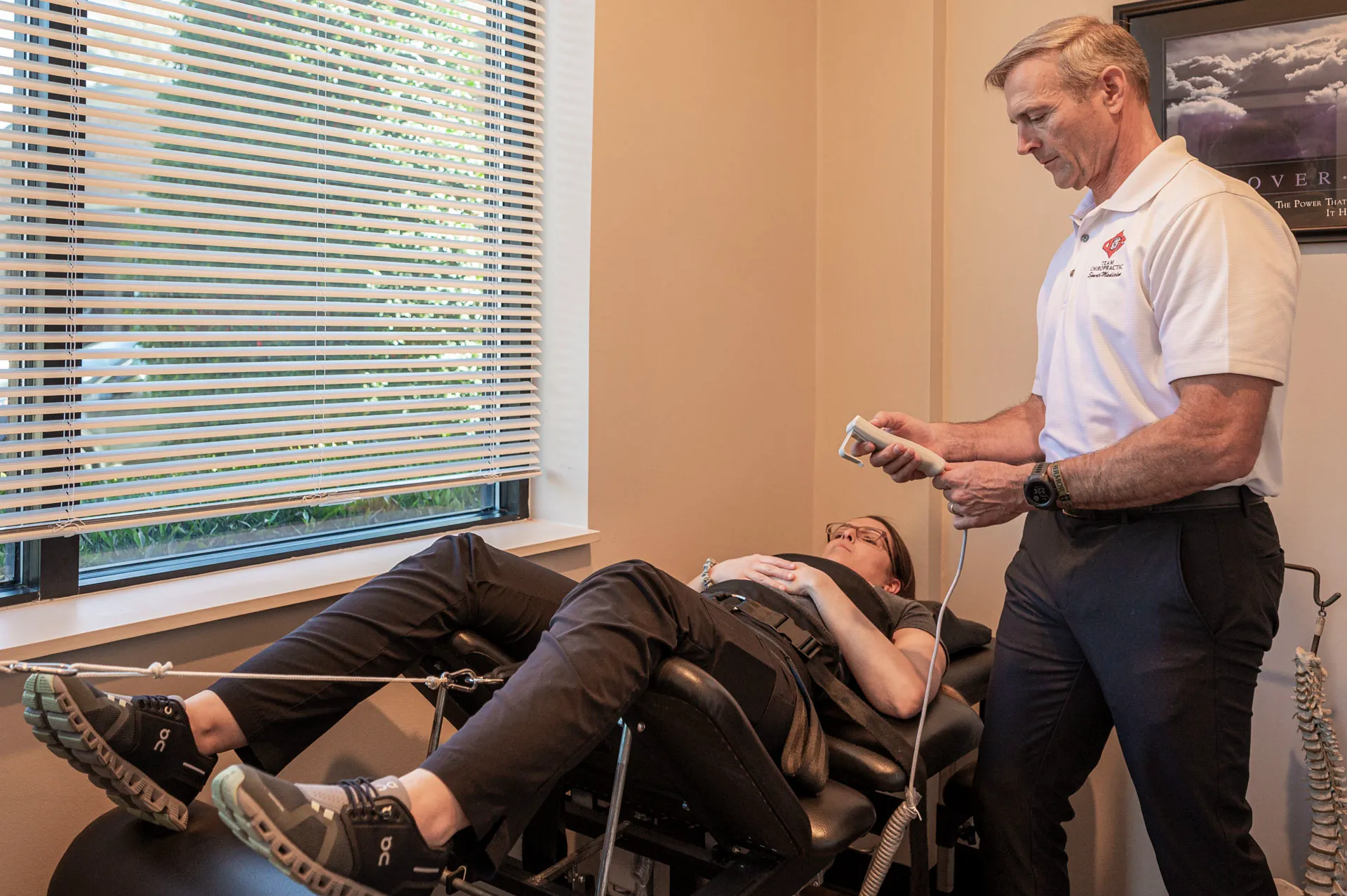
For individuals with confirmed disc involvement, spinal decompression therapy may be used to reduce pressure and support healing alongside chiropractic care.
This combined approach addresses both structural alignment and disc mechanics.
How Chiropractors Identify Misalignment
At Team Chiropractic & Sports Medicine, identifying misalignment involves more than just feeling for tight spots.
Evaluation typically includes:
- Postural assessment
- Range-of-motion testing
- Palpation of joint mobility
- Neurological screening
- Functional movement evaluation
Rather than guessing, modern chiropractic relies on movement analysis to determine which segments are restricted or unstable.
This allows care to be targeted and precise.
What Happens During a Chiropractic Adjustment?
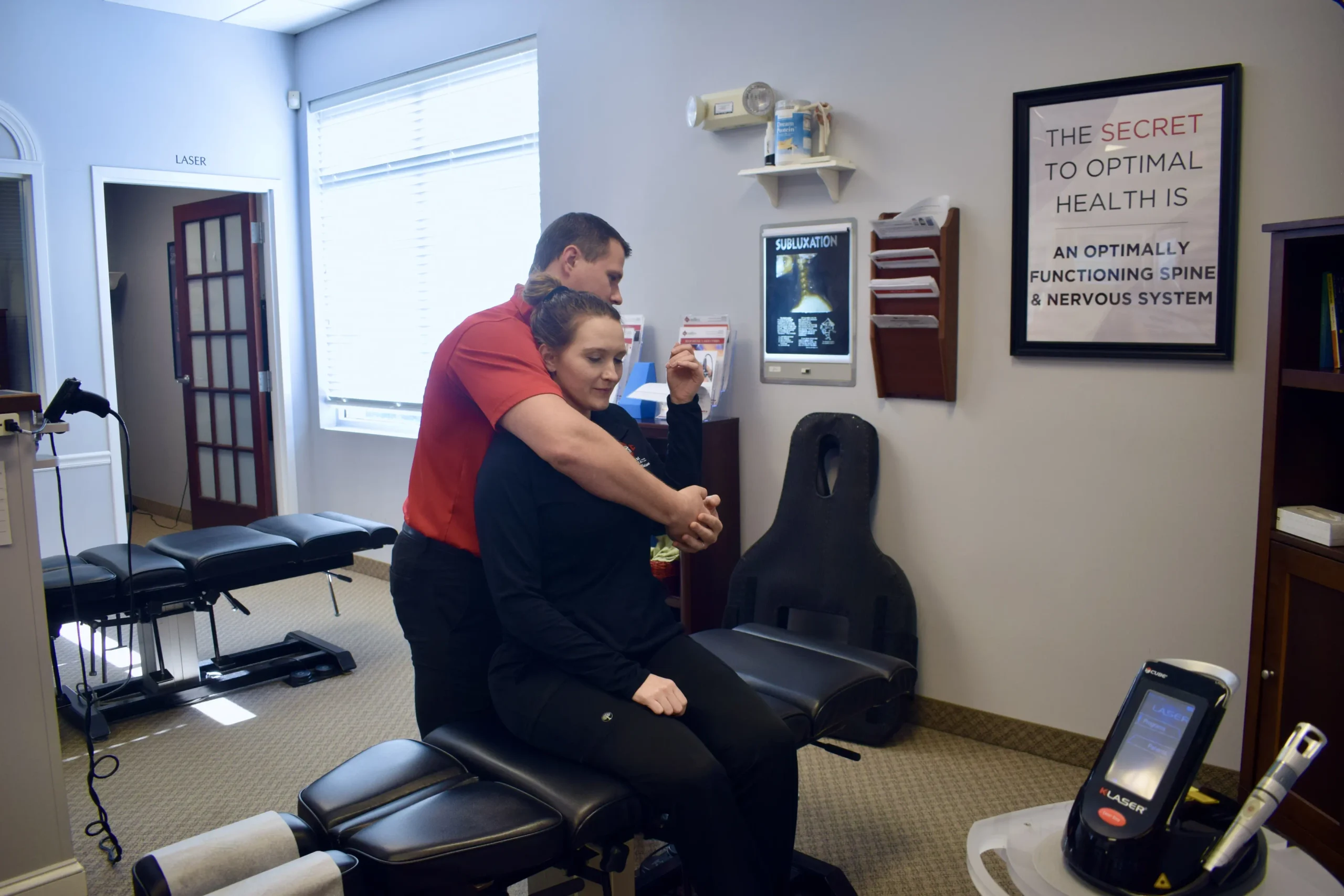
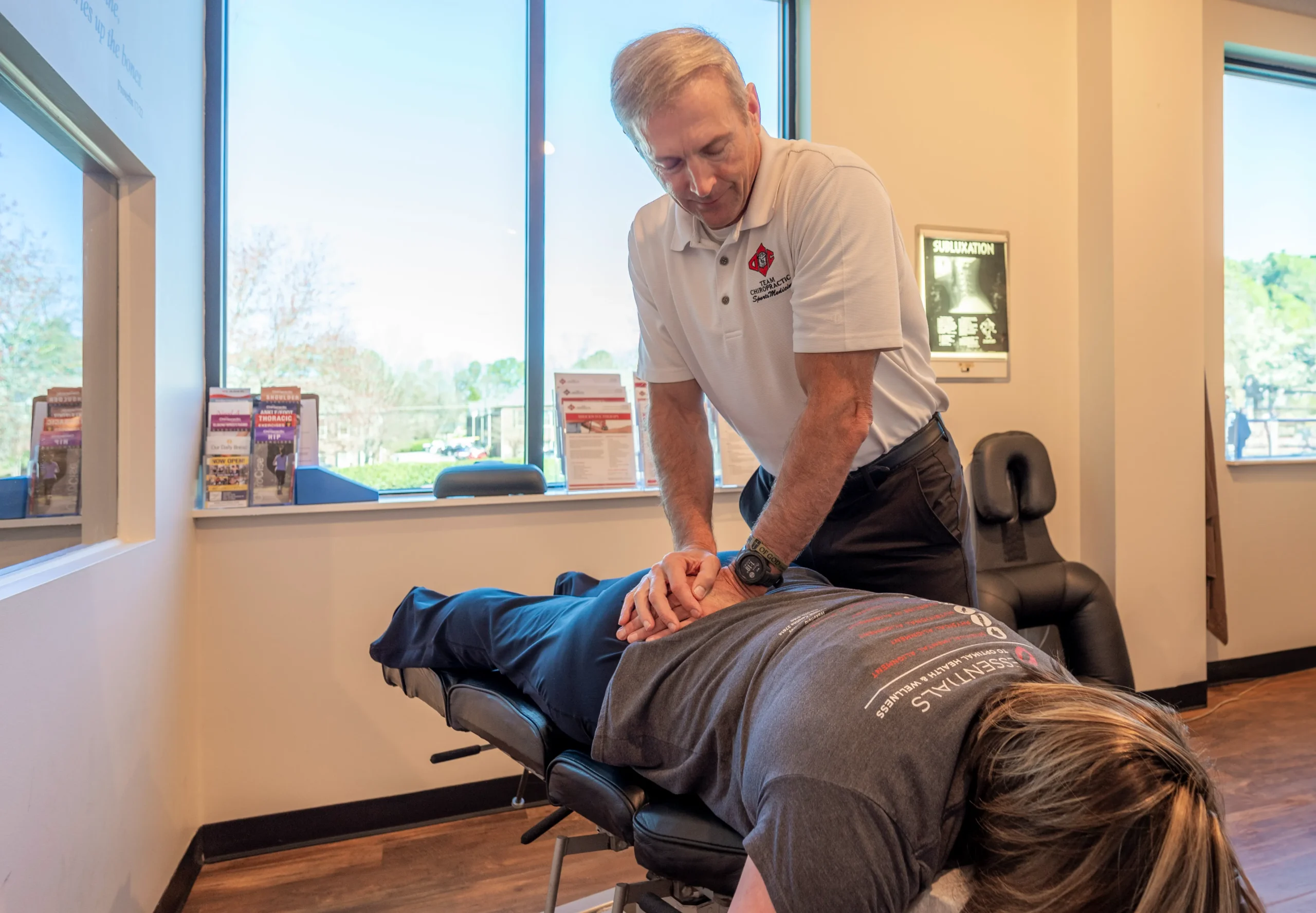
A chiropractic adjustment is designed to restore normal joint motion.
When a restricted segment is adjusted:
- Joint mobility improves
- Muscle guarding decreases
- Circulation increases
- Nervous system communication improves
Patients often report:
- Reduced stiffness
- Improved range of motion
- Decreased pain
- A sense of lightness or ease
Because misalignments often involve multiple segments, care plans are structured rather than one-time fixes.
Is Misalignment Dangerous?
In most cases, spinal misalignment is not dangerous — but it can be disruptive.
If left unaddressed, joint dysfunction may contribute to:
- Chronic pain patterns
- Recurring flare-ups
- Compensatory injuries
- Degenerative changes over time
That’s why many patients in Raleigh choose proactive care rather than waiting for symptoms to escalate.
Why “Cracking Your Own Back” Isn’t the Same
Some people try to self-adjust by twisting or stretching until they hear a pop.
The sound you hear during an adjustment is called cavitation — gas releasing from the joint capsule. While self-cracking may temporarily relieve pressure, it often doesn’t correct the actual restricted segment.
In fact, people tend to repeatedly mobilize joints that are already hypermobile while avoiding the truly restricted area.
Professional chiropractic care targets specific segments based on evaluation — not random movement.
Misalignment and Posture
Poor posture is one of the leading contributors to spinal dysfunction in Raleigh adults.
Forward head posture, rounded shoulders, and prolonged sitting shift load onto the cervical and lumbar spine.
Over time, this leads to:
- Neck pain
- Tension headaches
- Upper back stiffness
- Lower back strain
Corrective care combined with posture education helps prevent misalignments from recurring.
Misalignment in Athletes
Athletes often experience spinal dysfunction due to repetitive motion and impact.
Runners, golfers, weightlifters, and CrossFit athletes in Raleigh frequently develop:
- Pelvic rotation
- Lumbar joint restriction
- Thoracic stiffness
That’s why services like sports rehabilitation often include spinal alignment correction as part of recovery and performance optimization.
Proper joint motion improves biomechanics and reduces injury risk.
Why Modern Chiropractic Focuses on Function, Not Fear
In the past, some messaging around “misalignment” implied catastrophic consequences. Modern chiropractic is more measured and evidence-informed.
At Team Chiropractic & Sports Medicine, the focus is on:
- Restoring normal movement
- Improving function
- Reducing pain
- Supporting long-term spinal health
Misalignment isn’t a scare tactic — it’s a functional description of how joints are moving.
The Bottom Line
So what does a “misalignment” actually mean in modern chiropractic?
It usually refers to joint dysfunction — a segment of the spine that isn’t moving properly, is restricted, or is creating compensation patterns that lead to pain and stiffness.
Rather than bones dramatically out of place, misalignments are often subtle mechanical issues that accumulate over time through posture, stress, and repetitive strain.
Through targeted chiropractic adjustments, spinal decompression therapy when needed, soft tissue release, and structured care plans, Team Chiropractic & Sports Medicine helps patients in Raleigh and Wake Forest restore proper alignment and prevent recurring pain.
Understanding the terminology removes uncertainty — and allows you to make informed decisions about your spinal health with confidence.