If your pain seems to “move” from one side of your body to the other, you’re not imagining it — and it’s not random.
Many patients in Raleigh and Wake Forest come into Team Chiropractic & Sports Medicine frustrated because their pain keeps changing locations. One week it’s the left hip, the next it’s the right shoulder, and then suddenly the lower back starts acting up again. This pattern is often a sign of underlying structural imbalance rather than isolated injury.
Understanding why pain switches sides is key to identifying the root cause — and more importantly, fixing it for good.
Why Pain Doesn’t Always Stay in One Place
Pain is often the final signal, not the starting problem.
When the body develops imbalance — whether from posture, injury, or repetitive stress — it begins compensating. Instead of one area taking all the strain, different parts of the body rotate through overload depending on movement patterns and daily activity.
This is why many patients dealing with chronic discomfort eventually seek care for back pain relief or neck pain relief, only to realize the issue isn’t isolated to one region.
The real issue is often asymmetry.
What Causes Left vs Right Body Imbalances?
Your body is designed to function symmetrically — but very few people actually move that way.
Common causes of imbalance include:
- Favoring one side due to past injury
- Poor posture from desk work
- Uneven muscle development
- Repetitive movements (sports, work, daily habits)
- Leg length discrepancies or pelvic tilt
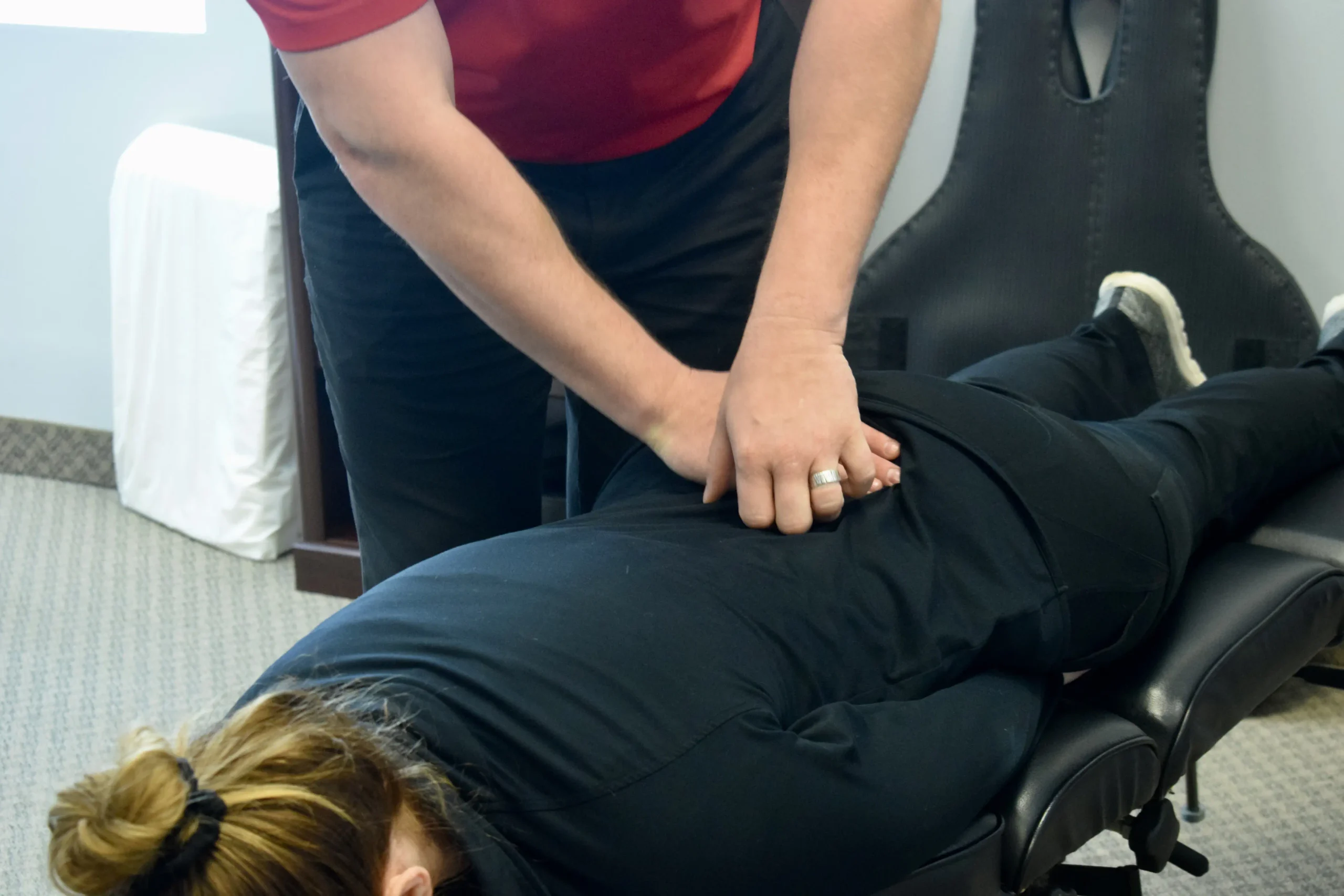
Over time, these factors can create uneven stress on the spine and joints. This is where structural correction methods like spinal re-engineering and chiropractic adjustments become essential for restoring balance.
How Compensation Leads to Side-Switching Pain
When one side of the body becomes weak, restricted, or injured, the opposite side often picks up the slack.
At first, this compensation helps you function. But over time, it creates a chain reaction:
- One side becomes overworked
- The other side becomes underactive
- Movement patterns become uneven
- Stress shifts back and forth between sides
This is why pain doesn’t stay consistent. Instead, it “travels” depending on which structures are being overloaded at any given time.
Patients often notice this pattern when dealing with issues like joint pain or muscle pain, where discomfort seems unpredictable but is actually part of a larger biomechanical problem.
The Role of Posture in Side-to-Side Pain
Posture is one of the biggest contributors to left-right imbalance.
In today’s world, many people:
- Sit unevenly at desks
- Cross the same leg repeatedly
- Carry bags on one shoulder
- Lean to one side while standing
Over time, these habits create asymmetrical loading on the spine and pelvis.
Forward head posture, in particular, can cause one side of the neck and shoulders to work harder than the other — contributing to recurring discomfort that may require posture correction care.
Common Patterns of Side-Switching Pain
Alternating Lower Back Pain
One side of the lower back may flare up, improve, and then shift to the opposite side.
This often indicates:
- Pelvic imbalance
- Core instability
- Compensation from hip dysfunction
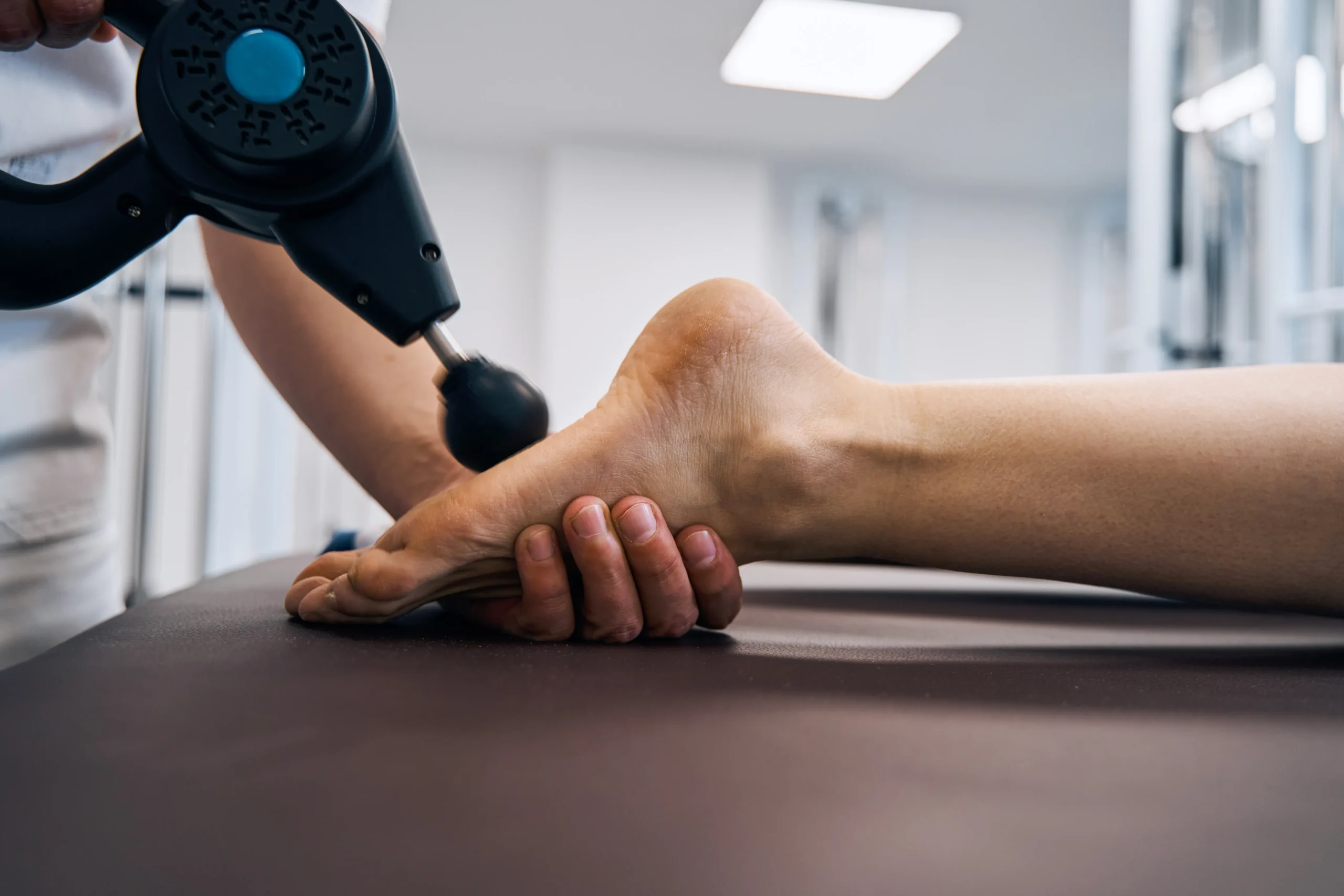
Targeted therapies like soft tissue release and spinal decompression therapy can help reduce strain while addressing underlying causes.
Switching Hip Pain
Pain may alternate between left and right hips depending on activity.
This is commonly linked to:
- Uneven gait patterns
- Weak stabilizing muscles
- Old injuries affecting movement
Patients dealing with these issues often benefit from sports rehabilitation to retrain balanced movement.
Shoulder and Neck Imbalance
Pain may move between shoulders or shift from one side of the neck to the other.
This is frequently caused by:
- Desk posture
- Muscle imbalances
- Repetitive strain
Care for neck pain combined with corrective strategies can help restore symmetry.
Sciatica That Changes Sides
While less common, some patients experience sciatica symptoms that alternate sides.
This can indicate:
- Pelvic misalignment
- Disc-related issues
- Compensation patterns affecting nerve pathways
Structured care for sciatica pain relief can help reduce nerve irritation and improve alignment.
Why Treating Only the Pain Doesn’t Work
One of the biggest mistakes patients make is chasing the symptom instead of addressing the system.
If you only treat:
- The sore muscle
- The inflamed joint
- The painful side
…you’re missing the bigger picture.
That’s why temporary solutions often fail. The body continues compensating, and the pain simply shifts elsewhere.
Long-term relief requires identifying:
- Where the imbalance started
- How the body adapted
- Which structures are overloaded
This is where comprehensive care — including chiropractic adjustments and soft tissue therapy — becomes critical.
How Structural Correction Fixes Side Imbalances
At Team Chiropractic & Sports Medicine, the goal isn’t just to reduce pain — it’s to restore balance.
This involves:
Restoring Proper Alignment
When the spine and pelvis are aligned correctly, stress is distributed evenly throughout the body.
Techniques like spinal re-engineering help correct long-standing structural imbalances.
Reducing Muscle Compensation
Overactive muscles need to be released, while underactive muscles need to be re-engaged.
Therapies such as K-Laser therapy and shockwave therapy can help improve tissue recovery and reduce inflammation.
Improving Movement Patterns
Correcting how your body moves is just as important as correcting alignment.
This is why rehabilitation and movement-based care — such as sports injury treatment — are often part of a comprehensive plan.
When Should You Be Concerned?
Occasional soreness isn’t unusual. But if your pain keeps switching sides, it may be time to get evaluated.
You should consider care if:
- Pain moves from left to right frequently
- Symptoms return after temporary relief
- You feel uneven when standing or walking
- One side of your body feels tighter or weaker
- You’ve had a previous injury that never fully healed
Early evaluation can prevent long-term dysfunction and help restore normal movement before the problem worsens.
Why This Is So Common in Raleigh Patients
Many patients in Raleigh and Wake Forest experience side-switching pain due to lifestyle factors like:
- Long hours sitting at a desk
- Driving frequently
- High physical demands from work or exercise
- Limited recovery between activities
These habits create repeated stress on the same movement patterns, reinforcing imbalance over time.
That’s why many people eventually seek care at a local Raleigh chiropractic office or Wake Forest chiropractic clinic when symptoms stop resolving on their own.
The Goal: Balanced, Symmetrical Movement
Your body is designed to move evenly.
When both sides of the body share the workload:
- Joints experience less stress
- Muscles function more efficiently
- Pain becomes less likely to return
Correcting imbalance isn’t just about relief — it’s about long-term function and stability.
Final Thoughts
If your pain keeps switching sides, it’s not random — it’s a sign your body is compensating.
Instead of chasing symptoms, the focus should be on identifying and correcting the underlying imbalance. With the right approach, it’s possible to restore proper alignment, improve movement patterns, and prevent recurring pain cycles.
At Team Chiropractic & Sports Medicine, patients in Raleigh and Wake Forest receive structured, non-surgical care designed to address the root cause of dysfunction — not just the symptoms.
If you’re ready to stop the cycle of shifting pain, you can schedule an appointment or contact the team to begin a personalized evaluation.